OK, I’ve been writing a basic theology for he last few blogs and I now have to answer the question, “So what difference does this make to practical matters, and why?”
Let’s take the issue of abortion laws, as this has been raised by the possibility that the Scottish Government might be able to make a new law for Scotland only. This has encouraged some American -style fundamentalist groups to begin agitating in an aggressive “pro-life” manner, for a law that would forbid all but a very few abortions. Even rape victims would not be guaranteed terminations. It’s worth having a look at the way this issue is handled in America.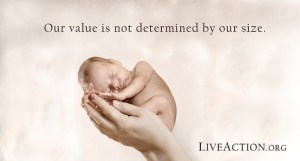
The Pro-life view is based on an argument that classes the foetus as a person and the ending of its life as if not murder then certainly a breach of the commandment not to kill. They argue that the thousands of terminations carried out every year are an affront to God the creator and to the Christian conscience.
This zeal for life is not carried over into other spheres of life by the American groups who put forward such views. They tend to be equally aggressive in favour of the possession of weapons, guns in the case of individuals and nukes in the case of the US and its allies. They have no interest in state services for the poor and destitute, are opposed to immigration, and back a violent foreign policy to make America great. Violence by citizens on each other, and by the state on its enemies is apparently no affront to the creator.
Those who are called pro- choice in America argue that a woman is in charge of her own body and must be allowed to decide whether or not to continue a pregnancy. The law should simply uphold her right to choose. These thoughtful people are appalled by gun killings, nuclear weapons, needless deaths of migrants and attacks on abortion clinics. But not by thousands of dead foetuses a year, anymore than they would be by the removal of thousands of tumours.
I find that surprising, when it’s clear that all but a tiny proportion of these could have been prevented by a moment’s thought. Even if we don’t think of the foetus as a person, most people don’t view it as equivalent to a malignant growth. Many doctors and nurses involved in terminations feel that this procedure is alien to the desire to cherish life which brought them into the medical profession.
So, in America there’s a fundamental conflict between a bunch of killers who want to save foetuses and a bunch of saviours who want to kill them. I know that’s crude but it serves to point up the contradictions.
In Scotland, where the annual number of terminations is around 12000, the Christian opposition to abortion is more nuanced because fundamentalist religion here is not on the whole contaminated by right-wing politics. Nevertheless, here too we find that people who are otherwise opposed to killing, defend the present law, or want it to be liberalised, so that abortion becomes even more a matter of choice.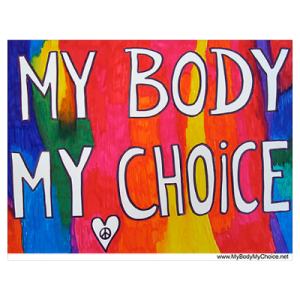
My experience of the world has led me to belong to a tradition in which people have imagined that the universe and all its living creatures owe their existence to a Goodness that is not of the world or the universe, but is lovingly involved in all aspects of its existence, including the processes of conception and birth, “persuading” them towards perfection. This tradition does not claim that all life is sacred as it is, but rather that it is sacred for what it shall be. My life is sacred not for what I am, which is a mixture of lots of ugliness with small bits of beauty, but for what God wants to make of me.
The natural processes of life are not perfect; the story we call evolution is far from complete and contains disasters as well as successes, but my tradition is convinced that one day it will be perfected, and that human beings are asked to play a role in its perfecting. But they are not in charge; they are asked to receive the whole universe and their own lives as a gift from God and to live responsibly with all God’s creatures.
This way of thinking is the greatest invention of human beings and I believe it points towards the truth of God.
From the perspective of this tradition I see the frequent use of abortion as part of a human mistake that imagines we are masters of life; that we know best, and even when we have made a mistake, like getting pregnant when we don’t want to be, we can sort it by a scientific fix. It’s the same mistake that led us to use pesticides that destroyed wild life, to make a hole in the ozone layer with CFC’s, and to set the world warming with carbon emissions. Of course we can sort all these things by some technical fix. We are in charge of this show!
The problem is arrogance.
I am not suggesting that every woman who wants a termination is arrogant, and I know that she didn’t get pregnant all on her own. I am suggesting that the system which has been developed in The UK to deal with this particular problem of human fertility is arrogant,in that it treats potential life as simply disposable; and also counter-productive, in that it encourages people to make the mistake it seeks to correct. Given all the means of contraception available how come 12000 of these modern, sexually educated men and women are making this mistake every year?
The practical legislator will want to reply that I may very well be right in this criticism, but wrong if I think that severe limits on abortion are the answer. For unwanted pregnancy does occur and has always occurred and we should know that the only beneficiaries of limited access to abortion will be illegal abortion agencies that will of course flourish. I will also be asked what benefit there is in forcing women to bring unwanted children into the world, when we know that unloved children live very miserable lives. Moreover, I will be pushed rightly by feminist critics to justify any diminution of a woman’s rights over her own body.
I have no answer to these criticisms, which provide clear reasons for maintaining the law in something like its present form. The state, for reasons of public and private good, should maintain its provision, and there should be no moral stigma on seeking a termination.
I am nevertheless opposed to there being 12000 abortions in Scotland every year. The routine treatment of potential life as mere tissue shows no reverence for the gift of life and no respect for what the foetus can become in the creator’s goodness, with human cooperation. It is also evidence of a lack of love in the man, whose sperm has helped make this foetus, for the woman who carries it. In some instances the woman herself may have been denied full personhood and self-respect.
One of the devices of the capitalism under which we live is to turn living things -say factory farmed pigs- into mere commodities. The present practice of NHS abortion is almost a classic model of this device. A foetus becomes something you either want or do not want to possess and anything that is surplus to requirements can be easily recycled.
I am not standing in judgement on the women who seek abortions. I am saying that from the point of view of my Christian tradition, the abortion statistics reveal something wrong in our current social morality, above all the continuing inequality of women and men.
For these reasons, I support the current abortion law or something like it, against its Christian attackers; but I do not support the sexual and social injustices, or the personal decisions,that make it necessary. Sometimes the way between competing death squads is a very narrow path indeed.





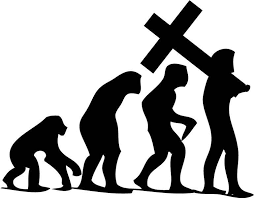
 For human beings, as the Christian tradition bears witness, are forever inventing themselves as masters of the world, and creating deities in their own murderous image. This is not just true of the monstrous empires of history, Rome, Spain, Britain, Germany, Russia, USA and their present day successors, but also of other human institutions, groups and individuals. The Bible word for this tendency is “sin.”
 But at the heart of my religious tradition is a victim, Jesus of Nazareth, the crucified Messiah. Here we are dealing with a real and not an invented person, although of course his whole life and death has been presented by the creativity of believers. His story encourages me to see him not only as a victim of worldly power and prejudice, but also as my victim, the one whom I have subjected, rejected or at best, failed to support. He points me to all the others whom I have made my victims.
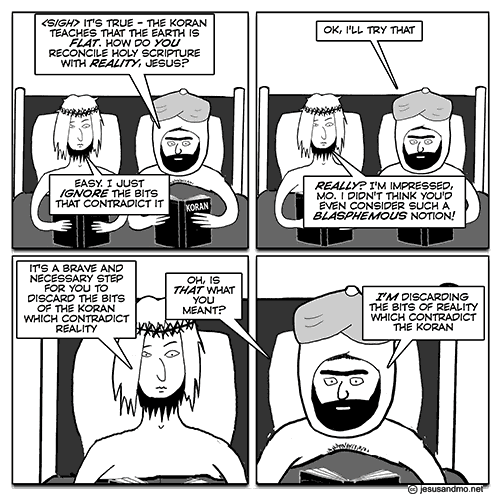
 I want to preface this blog by dealing with a fundamental objection levelled by a number of readers at my first principle of theology, that all gods are invented by human beings.
 Jesus, and the faith – community that followed him, were continually inventing and re-inventing God in ways which did justice to their experience of the world and of the one who is beyond all worlds.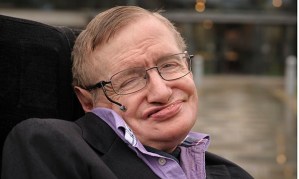

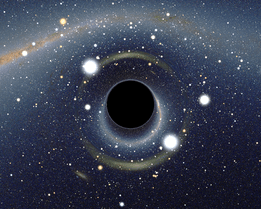 site, which allowed me to journey to a black hole in the Andromeda Galaxy and even to fall into it. As I understand it, black holes are objects of such great density that their own gravity makes it impossible for anything, including light to escape from them. This means that unless they have captured some light emitting body, they cannot be seen on the visible spectrum although they show up on the X-ray and radio spectrums. Many astronomers think that there is a massive black hole at the centre of all galaxies.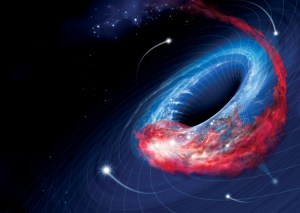
 So that’s the God invented by the Judaeo- Christian tradition, as a response to living in the same world as scientists. Scientists have some evidence that their inventions, their descriptions and laws correspond to reality. Is there any evidence that the invention of this very strange God corresponds to reality?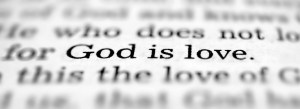
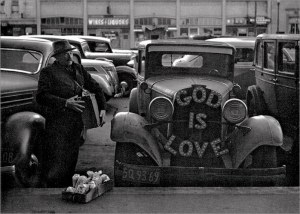 Keen eyed readers will have noticed that there is a lack of definition in my use of the word “goodness.” The Christian tradition defines goodness by identifying it with the character of God, which is revealed through a long process of development, culminating in one sentence in a letter of the first century CE, “God is love.” ( First Letter of John, chapter 4). Of course that ultimate simplicity contains many varied commands, illustrative stories and wise sayings, but all of these are to be interpreted in the light of the one simple truth of God’s love.
 I also listened to a video in which he described his atheism as “having found no necessity to believe in God,” especially in view of the comic jumble of absoluely certain descriptions of God’s character offered by the religions of the world, and sometimes by different groups within the one religion. Obviously, for example,there is considerable distance between the God of the Archbishop of Canterbury, who, wincing a little, can accept homosexual people as believers, and the God of many African bishops, for whom they are an abomination. Kenan Malik rightly observes that in spite of all the talk about unchanging truth and divine revelation, the views of Christian churches do change according to place, time and social mores. For Malik this is desirable because he sees the creativity of individuals and societies as the true driving force of humanity’s bumpy journey towards a better world.