I am totally in agreement with a war on terror, my only disagreement with the British and American  governments is about what weapons we should use. You cannot fight terror with terror. Sure, you may be able to kill a few terrorists and destroy some of the infrastructure of their organisation with bombs and missiles, but the ideology of terror cannot be so easily dismantled and will continue to inspire violence until overcome by something better.

image
Something better….an MSF field hospital

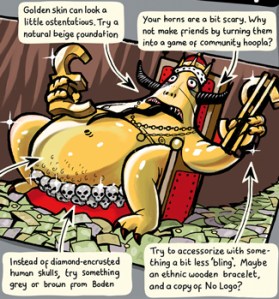
The first demonstration of that better thing would be the refusal of democratic nations to use violence in their own interests, for of course, the pretence that we use it to defend our populations is threadbare; the likelihood is that it will make our people more open to violent reprisal. No, we do it to defend what we call our interests, meaning ultimately our economic interest, our trade and commerce, our access to markets, commodities and crucially these days, energy. These are exactly the same interests that drive Daesh, although they like to conceal them under a cloak of religion. If all we can offer the world is competition as to who are the bigger or more effective terrorists, we will always be menaced by  groups who want to contest our superiority.

So we should stop not only our violence but also our pretence that we know what’s best for the world. It would be much better to show an example of patience, non- violence and intelligent diplomacy.

But you may say that that will do nothing for the poor souls caught up in a maelstrom of  jihadist killing in Syria and Iraq. True, it won’t do much, although it might prevent an escalation of killing. But to be of real help to the victims of these conflicts we have to put boots on the ground.

“Boots on the ground! ” I hear you cry, “I thought you were non- violent!”

I am. The people who have already put boots on the ground in the areas affected by war, are as always, the humanitarian agencies who try to assist the casualties of war. Refugee agencies have made heroic attempts to deal with the overwhelming number of people who simply want to get as far from violence as possible. They could doubtless benefit from the assistance of our armed forces in logistics and the protection of refugees, and from capital for food, sanitation and medicines. A fully coordinated effort to provide safe corridors for refugees,  more camps for temporary housing, and more opportunities for migration to permanent homes in the UK, Europe and the USA would be a huge demostration of the best values of citizens and in particular of Christian values.

image.jpeg
MSF field hospital under attack

There is no doubt that those who have dared to put their boots on the ground are already making a difference. Medicins Sans Frontieres/ Doctors Without Borders, have provided staff for field stations all over the region, putting themselves at risk not only from the savagery of Daesh and Assad, but also from careless missile attacks by the US- led coalition. Their staff come from all round the world including Syria and Iraq. If, instead of wasting resources on missile attacks, we were to provide resources and protection for the work of MSF, we would demonstrate compassion, practicality and courage,  in real contrast to the savagery, religious mania and cowardice of Daesh.

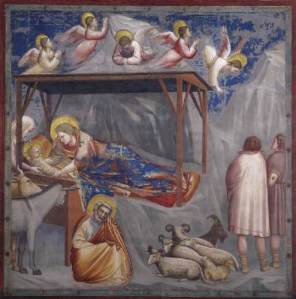
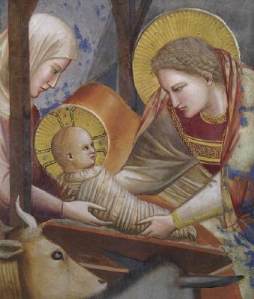
Indeed, once we start to think of putting boots on the dangerous ground that the victims of war inhabit, we will realise that there are many ways in which peaceful but determined interventions can be made. It’s not a bad time of year to be considering such a programme, especially for Christian believers, as it’s the time when we celebrate the refusal of God to solve human evil by divine violence and his decision to put his boots on the ground in the person of the child of Bethlehem, the man of Galilee.

I hope Christian and other peaceful people will advocate this course of action and also make a serious donation now to MSF or any other NGO that has put boots on the ground in the conflict zone.


Sun Reporter: So, thanks for giving us this exclusive interview Jesus…..

Jesus: This interview is exclusive to you, the others I give will be exclusive to the Mail, the Times, the Mirror….

Sun R: Yeah well, still, it is good of you especially at this time of year….

Jesus: This time?

Sun R: I mean like Christmas, I guess  it’s your busy time?

Jesus: You may be mixing me up with Santa Claus……image

Sun R: Ha-ha, very good, but seriously, it’s been suggested you might not approve of Christmas all that much, like it’s so materialistic now and not at all spiritual…

Jesus: No, no, I never was what people call spiritual, I’m Jewish after all, we’re pretty down to earth. I was more concerned with people’s bodies and relationships than with their spirits…

Sun R: Right, that’s brilliant, Jesus, you mean you’re not against tinsel and turkey…

Jesus: As long as you’re not stuffing yourself while your neighbour has to use what she could get from the food bank….Being materialistic means we know we all need food because our bodies are material. We shouldn’t let anything spiritual persuade us that others can live on air or prayer.

Sun R: “…Air or prayer…” You could write headlines, Jesus. So if it’s not the materialism, is there something else you dislike about Christmas?

Jesus: The thing I most dislike about it, is it’s all about me.

Sun R: But ministers and priests are always telling us it is all about you, that we should put Christ back into Christmas…

Jesus: But most of my life was spent attending to others, as a carpenter and as a preacher. I tried to get people to love God and their neighbour and not to get caught up in a lot of religious twaddle. I never pointed to myself, because that kind of thing is always a bad example. So, all this baby Jesus stuff gets up my nose. Apart from anything else it’s as if I never grew up. Now if  so-called Christmas was about God and our  neighbour, that would please me….

SunR: But surely you don’t want to deprive people of the manger and the shepherds and the wise men and the star and all that magic of Christmas…

Jesus: Yes, I’m afraid I do….

Sun R: But listen Jesus, excuse me trying to teach you, but those things are your bigggest selling point, they’re massive still after all this time!

Jesus: Listen, I was born in my parent’s house in Nazareth, my mum wasn’t a virgin, there were no wise men, no strange stars, no angels, not even any shepherds….

Sun R: But the Bible says…

Jesus. There are four gospels and two of them say nothing about my birth at all. And the other two contradict each other. Angels and wandering stars are fine as long as we don’t confuse them with the facts.

Sun R: “Mum not a virgin”!! Wow! This is hot stuff Jesus. The Pope isn’t gonna like this!  Anything else?

Jesus: Well there’s the little matter of the date.

SunR: What’re you saying Jesus,  are you talking about December 25?!

Jesus: As well as the 7th of January, which my orthodox friends have chosen. Of course I can see it’s a good idea to have something to celebrate in the middle of winter, but that only applies to the northern hemisphere…

Sun R: Wait a minute, Jesus, you’re saying you weren’t born on 25th December? This is some scoop, Jesus, front-page sensation!

Jesus: I was actually born on 20th September, so I guess I might have been conceived on Christmas Day ..

Sun R: “Conceived on Christmas Day “! What a great news line, it’s totally immaculate!

Jesus: Please, don’t use that word……

image


In a competition for moral superiority Messrs Putin and Erdogan would be probably be beaten into last places by the great white shark, so it’s unsurprising that their combined bellicosity has led to the death of at least one Russian pilot.image

Mr Putin of course is blessed by the Russian Orthodox Church as a champion of Christendom, and has delighted it with his recapture of the Crimea and armed interference in Georgia. Doubtless his persistent disrespect for Turkey, an increasingly Muslim country, and ancient enemy of Christendom, will have done nothing to reduce its admiration for him. Yes, of course, he has been at pains to support Mr Assad, a Muslim thug who still rules Syria, but even the church understands that thugs have to stand together sometimes.

From the standpoint of Christian peacemaking, not much can be expected from Mr Putin, a former KGB agent, but something better might be expected of the Orthodox Church, which pays at least lip service to the teaching of Jesus, though it seems to have lost the bits about love of enemies, refusal of violence and the duty of peacemaking. I have personal experience of hearing an Orthodox priest in Bosnia defend the ethnic cleansing of Muslims in that country. A racism which favours Slavs and a religious intolerance which detests Muslims have become rooted in some parts of this ancient Church; and its sister churches do it no favours by not pointing this out.

( This does not excuse the large number of USA churches who support a similar racism and intolerance)

But then we have to look at Mr Erdogan and his henchmen. Let’s assume that the Russian plane did ‘violate Turkish airspace.’ We should ask first of all about the meaning of “violate” which refers to a physical or sexual assault on an innocent person. Try as I may, I cannot see how this phrase can be applied to a Russian plane on the way to Syria. Are the Turks suggesting that the plane was offering any threat of violence to anything Turkish? It would appear not, so we must conclude that the word “violation” is poorly chosen. image

But I’ll be reminded by those who know such things that this was a violation of “Turkish airspace”. We’ve got so used to nonsense of this kind that we should stop and think. Can a nation own the air above it? International law would appear to say so, and sure, given the need for air traffic control, the concept makes some sense. Any nation will want to ensure the safety of air traffic, and also stop any aircraft or missile that might harm its citizens. But the Turks admit that the Russian plane was not causing danger to other air traffic, nor threatening an attack on any part of Turkey. So its  offence was simply that of straying into air owned by Turkey.

Now if someone clumsily blunders into my personal space I might expect an apology; and if he was doing it deliberately I might push him away or call a policeman, but to react by wiping him out would seem a little over the top. Just so, this Turkish action reveals how itchy the fingers were that fired the missile.

The decision to terminate lives as a warning against lack of respect for boundaries, reveals the hair-trigger aggression fostered by the way we do international politics, which is more about the macho posturing of leaders and governments than the safety and welfare of human beings

Neither air nor land nor sea belongs to nation states or terrorist groups. The earth is the Lord’s who has given it to his creatures. Governments may administer parts of it if they remember that they must serve God’s creatures and recognise the limits of their power. When they serve merely their own interests and recognise no limits, they become toxic and a danger to all.

If the  Christian Church throughout the world were united in this teaching, it might do some good.

The symbol of this blog, Desperate Dan, the comic book superhero who never hurt a fly, stands in the centre of Dundee with his dog, Gnasher, surveying the citizens as they go about their business. He tells me that he was moved last week by the Muslim students who offered flowers and peaceful verses from the Qur’an to their fellow Dundonians as a gesture of solidarity with the victims of Jihadist violence everywhere.

” Nice boys and girls,” he says, “I’d be burstin’ wi’ pride if they were my kids.”

“Did they change your picture of Islam?” I ask.

“Aw definitely, definitely,” he tells me, “And they had nice peaceful verses from their holy book, eh? ”

image
Dan repels an attacker

“So you don’t think there’ll be any Jihadists in Dundee?”

” Naw, but see if they tried. this is Scotland after all. They’d get a smart kick in the nuts from me and the arse torn oot their  troosers by Gnasher.”

I was silent, comforted by his homely belligerence, but feeling slightly guilty that I didn’t respond to the Muslim initiative with quite as much enthusiasm as he did. For although I admire the sincerity and goodwill of these students, I know, as they do, that the Qur’an contains other verses which appear to promote violence against non- believers, just as there is material in the Bible which does the same.

The truth is that decent Christians and Muslims are nicer than the worst bits of their scriptures. I mean, Desperate Dan might enjoy a punch-up, but he wouldn’t want men women and children massacred, as God commanded Joshua, or sinners fried in hell forever, as it is written, Jesus did. He confirms this when I confide my thought to him.

“I’m no’ saying I wouldnae scald their bums for a long weekend, but no’ forever, an’ don’t forget, it’s a life sentence for the stokers as well, eh no?”

I conceal from him my own less generous hope that certain tyrants and bullies will end up stuck for eternity upside down in the Tay Estuary Large Sewage Outflow.(LSO). But I am still plagued by the thought that decent people may be made worse by religion and that bad people may be turned into monsters. The only way in which Christian people can help their Muslim friends with this issue is to show a a good example. Perhaps a public bonfire of biblical nonsense might be a good start?

Maybe we could have a special ritual for this.

(Here I have to introduce my foreign readers to the Scots word, “mince” which in this usage  does not refer to minced meat but to verbal material which is factually or intellectually null, that is, total nonsense.)

A large fire is kindled in a public place. Then shall the celebrant take a piece of cardboard with the offending verse named and printed, and shall read it aloud, thus:

CELEBRANT. Joshua chapter 17 from verse 2: If there is anybody, man or woman, who goes and serves other gods and worships them, ……… you must stone that man or woman to death.

Is this THE WORD OF GOD, brothers and sisters, or is it MINCE? LET THE PEOPLE SPEAK.

PEOPLE: Lo it is MINCE.

CELEB: You say it is MINCE?

PEOPLE: Yea, assuredly it is TOTAL MINCE

CELEB: Therefore it is cast into the FLAMES

PEOPLE: And its SMOKE goes up forever.

The ceremony could easily include Leviticus 18/ 22 ( same sex intercourse an abomination) Joshua 6/17 ( God commands all inhabitants of a captured city put to death) Matthew 25/46 (these will go to eternal punishment) plus many more.

CELEB: Why are these holy verses thrown to the FLAMES?

PEOPLE: For they are all TOTAL MINCE

CELEB: YEA?

PEOPLE: YEA AND AMEN.

In whose name would this ceremony take place? Well, of course in the name of Jesus Christ who was executed because, amongst other dodgy behaviour, he told people that bits their scripture were mince. (see MATTHEW 5/ 20-48) image

We cannot and would not want to erase these offending scriptures as if they had not been ever been part of our holy books. That would be dishonest, and would prevent people examining them and making up their own minds about them. But the ceremony would be repeated every year to make sure believers and non-believers alike would be liberated from the power of bad teaching.

“That’s finger-lickin’ good,” Dan says, exhibiting his transatlantic idiom, when I outline my proposal to him. “An’ I’d be delighted tae be the celebrity in charge!”

” Celebrant,” I say.

” I said celebrity,” says Desperate Dan, ” an’ maybe if I ask them, some of they nice Muslim people will bring some of their own mince………”

( I wonder if all this rules out putting  Kim Jong-un and Donald Trump in the LSO for at least part of eternity?)


No this is not the latest initiative  from the EU Common Agricultural Policy, but rather the closing words of the French national anthem, which supporters of all nationalities are being urged to sing this evening at Wembley, where France meets England in a friendly football match. Yes, of course, I’m not daft, I know national anthems are relics from the past, and the most conservative French people sing this revolutionary song without reserve. It reflects something noble, the fight against oppression, as well as something dangerous, the demonisation of a enemy, which means their lifeblood can be used as a fertiliser.image

It’s understandable that French people should want to express their patriotism in the face of random killings, and that other democratic societies should express solidarity with them. But an uncritical wave of democratic self- righteousness may not be helpful. After all, Daesh did not invent the killing of civilians for political purposes, it has been used in tribal and national wars for thousands of years – think of God’s command in the Bible that all inhabitants of a conquered town should be killed, men, women, children and even domestic animals. And the modern use of mass killing of civilians was pioneered by Germany in the Second World War, closely followed by Britain in its raids on Dresden and the USA in its atomic bombing of Hirishima and Nagasaki.

Of course there’s a difference between our use of civilian killing and that of Daesh: ours was for righteous purposes and was far more effective than theirs. But who judges what is righteous in these matters? Doubtless Daesh members feel sincerely that opposition to what they see as Western oppression of Moslems is righteous.

Some readers will be impatient with this sort of reflection as it merely sows uncertainty at a time when our response to appalling cruelty ought to be sure and clear.

I agree. I think Christian believers should be absolutely clear what their tradition demands of them, basing their response on the teaching and example of Jesus and the early church.image

Jesus was utterly opposed to violence against the oppressive power of Rome. He lived in an occupied territory but refused to ally himself with the resistance movement which engaged in a guerrilla struggle with the occupying power. Although proud of his Jewish heritage he never said anything which identified him with the national interests of Israel. Nevertheless,  his announcement of the “rule of God” was a definite and peaceful challenge to the rule of Rome, Herod and The High Priesthood. He was killed because he made this challenge.

The first Christian communities very quickly identified themselves as multinational, but refused to give their total allegiance to the multinational Empire and its rulers, proclaiming instead their loyalty to the one God and to a new multi- ethnic community of believers. They refused to burn incense to the Emperor as a God and to serve in the armed forces of the Empire. For these reasons they were persecuted many times over a period of  almost three hundred years, but succeeded in surviving and expanding all over the known world.

The Christian tradition is clear:

  1. Believers must serve their neighbours, communities and nations but should not give their primary allegiance to any nation.
  2. Believers should give their primary allegiance to God and to God’s Justice in the world, with a special concern for their fellow believers of all nationalities.
  3. Believers should, like Jesus, fight injustice and evil, through solely peaceful means.
  4. Believers should refuse to engage in nationalistic or sectarian propaganda even in response to violent provocation, but should communicate the gospel by word and action.

So, although I love France and its civil society, and am always moved by the Marseillaise, I will not urge its citizens to water their fields with the blood of their enemies.

Yes, that’s yesterday’s score, and however indelicate it is to mention it, I want everyone who believes we are dealing with ISIL/DAESH the right way to take a good look at it. The early editions of British tabloids exulted over the assassination of Jihadi John only to find that if we compete in terrorism, civilised societies will always lose, because we are not prepared, publicly at least, to act with the same savagery as our enemies.image

The example and teaching of Jesus is clear; believers are not to use violence, even to defend themselves. He was not giving advice to whole societies, and the issue of legitimate self-defence by nations has been discussed by the Christian Church over centuries, resulting in the just war theory which demands sufficient cause, use of violence only after all other means have been tried, formal declaration of war, the means of violence to be appropriate to the threat offered, the offer of truce and treaty to be constantly maintained.

Jesus’ way however not only forbids violence it also urges the use of powerful means of defence which are often neglected. We should love our enemies, that is, we should want what is good for them as well as for ourselves; and we should if possible act on that principle. Does that sound soft, unrealistic, pie-in-the-sky nonsense? Perhaps in view of yesterday’s disasters it might merit a second look as Jesus was not famous for his lack of realism. “Those who use violence will die by violence” he  said, noting a sad and often-ignored fact.

Jesus tells us that we should try to persuade enemies that their violence is wrong, even for them; that we are not opposed to their good; and that peaceful ways can bring success for all. If that sounds unrealistic ask yourself where middle eastern and African refugees want to go. To Syria and Iraq? No, to Europe and especially to societies with a strong democratic traditions and the rule of law. To some extent, although we do not deserve it because of our lack of faith in refugees, we have already persuaded millions of people that a peaceful society is better than a violent one. We should of course see that our approach to refugees is one of our means of persuasion against violent killers. If we show ourselves to be confident and generous, as Germany has done, even sceptical Moslems take note.

But we must distinguish genuine persuasion from propaganda. No enemy will believe that we are thinking of their good if we are simultaneously stealing their natural resources for our use, or sucking up to their tyrannical rulers to get preferential business deals, as David Cameron has done with the Chinese and Indian tyrants in the last two weeks. Yes, we have to live in the real world, and sometimes we may have to surrender a principle in order to do any good at all. We should, nevertheless, hold fast to the conviction that a good, just and peaceful society is a greater threat to violent thugs than any amount of weaponry.image

A good society needs a police force; a good world needs an international police force. We do not have that as yet, and should be working for it. Until we get it, we may still have to use national armed forces to protect the lives of citizens. But we should never see them as our only weapon against violence; the love that Jesus advocated is a surer defence. We should pray for the citizens of France in their grief and anger, while urging them to believe that their democratic traditions and their devotion to the arts of peaceful living are better retaliation than any number of bombing raids. To rely on peaceful means may seem to be a risk, but in view of yesterday’s slaughter, a risk worth taking.

Jesus said, ” there is no sound tree that produces rotten fruit, nor again a rotten tree that produces sound fruit. Every tree can be told by its own fruit: people don’t pick figs from thorns nor gather grapes from brambles. Good people draw good from the store of goodness in their hearts; bad people draw bad things from the store of badness in their hearts. For the words of the mouth flow out of what fills the heart.”

I’m preaching on this passage on Sunday and it’s giving me trouble. When you first read it you think it’s just common sense. But after a moment or two you realise how radical and dismaying it is. For those who know that they do and say bad things are confronted with the diagnosis that it comes from the badness within them. They are rotten trees. And how can a rotten tree do anything about its rottenness? If Jesus, supposedly the hope of sinful people, is as unhopeful as this, where can hope be found? Is there in this saying of Jesus some lurking moral determinism, even perhaps some predestination? You’re either a sound tree or a rotten tree and you can’t do much about it.

I decide to take this to the man himself.image

M. Well for starters Jesus I suppose I should ask if you really said this, as your gospellers were a bit free with the record of your teaching….

Jesus. So you say. In fact each of them tried to make their story consistent with what their communities knew of me as a living presence, just as you’re doing now…

M. Don’t play games with me, this is serious, did you say it, yes or no?

J. Can you remember every word you said? But yes, it sounds like me and I agree with it.

M. O.K. we’re getting somewhere now. You see the problem I imagine?

J. You mean I should be able to imagine what you see as the problem?

M. The problem is that rotten trees can’t change what’s inside them, so they’ll continue to do bad things, won’t they?

J: You may remember that I am also reported as telling people they had to change and receive God’s way like little children, or as my servant John put it, be born from above. I never pretended the change was easy or superficial.

M. But surely the woman who was a known sinner, or Matthew the tax-collector, were rotten trees, because they had done bad things…so how did they become sound?

J. Come on, you should know that picture language can’t do everything. If I talk about sound and rotten trees I also know there are many in between. Don’t assume that notorious sinners are the worst. They have gone wrong in ways that can easily be seen. But it wasn’t the prostitutes and tax- collectors that killed me. Matthew was a much sounder tree than some Pharisees.

M. Yes, yes, I can see that, but it doesn’t alter the issue and you haven’t really answered my question about how a rotten tree can change. Even a little bit rotten is still rotten.

J. Of course the picture language only takes us so far; human beings can decide to change, whereas trees can’t. But a city man like you doesn’t know a lot about trees. Trees try to be sound; if there is nourishment to make them sound, they’ll draw it in; if not, in extreme cases they’ll almost shut down to make best use of the  nourishment they have. If their roots don’t immediately find food, they don’t give up but stretch and twist until they do. In my tradition of faith, there is a poem about a tree that’s planted by the waterside, which remains green and provides fruit in due season. It’s a picture of the sound person.image

M. So what is the nourishment that makes a person sound?

J. In the poem, it’s the Torah, God’s commandment.

M. If that was a sufficient answer, there would have been no point in your ministry. You didn’t teach the law!

J. I used the language of trees to make sure nobody underestimated either goodness or badness. Both have their integrity. Good actions spill out from a good heart; evil actions from an evil heart. So it is not just a matter of changing the actions, the person has to change.

M. But the law is a matter of changing the actions!

J. Not at all. the Law is the way in which God forgives us and changes us. That’s the good news. God’s law is not a means of condemning us or a way of changing our actions while our hearts remain the same. It’s God’s wholehearted forgiveness and wisdom for making us sound. The rotten tree can be changed.

M. You think commandments can do that?

J. The Law of God is far more than commandments, it’s the whole story of my people, but yes, I do think commandments are creative, else why would I have given so many? Commandments put people in the way of God’s goodness. Give and God will give to you. Forgive and you will be forgiven. God’s wisdom directs people to the waterside and the nourishment that makes them sound.

M. So Paul was wrong about the Law?

J. No, Paul was not wrong. Waken up and read the scripture so that you get its meaning not just its words. What would it be like if on Sundays if your people just listened to your words and not to the truth you want to convey?

M. I think you have answered my question. Only I can never tell whether you’re real or a creature of my imagination.

J. Or both?

I see that Pope Francis has come up against Jesus’ annoying habit of being definite. I refer of course to the Synod of bishops in which Francis urged compassion in dealing with remarried divorcees but found himself on the wrong end of quotations from the teaching of Jesus. For it is notorious that Jesus did not advocate something vague like compassion on divorced people but said that they were committing adultery if they remarried. It seemed to some bishops that approving adultery could hardly be viewed as compassion. It could never be compassionate to lead a person into something wrong or to excuse something wrong that they had done. The problem is that compassion requires us to help a person towards what is right, which means we have to have a clear view of right and wrong.

In this case, Christian believers should have a good look at Jesus’ teaching on marriage and divorce.

The fullest version of this teaching is found in Mark 10 verses 1-12; although briefer versions are found in Matthew 5:32 and Luke 16:18. Here’s the Mark:

10 He left that place and went to the region of Judea and[a] beyond the Jordan. And crowds again gathered around him; and, as was his custom, he again taught them.

2 Some Pharisees came, and to test him they asked, ‘Is it lawful for a man to divorce his wife?’ 3 He answered them, ‘What did Moses command you?’ 4 They said, ‘Moses allowed a man to write a certificate of dismissal and to divorce her.’ 5 But Jesus said to them, ‘Because of your hardness of heart he wrote this commandment for you. 6 But from the beginning of creation, “God made them male and female.” 7 “For this reason a man shall leave his father and mother and be joined to his wife,[b] 8 and the two shall become one flesh.” So they are no longer two, but one flesh. 9 Therefore what God has joined together, let no one separate.’

10 Then in the house the disciples asked him again about this matter. 11 He said to them, ‘Whoever divorces his wife and marries another commits adultery against her; 12 and if she divorces her husband and marries another, she commits adultery.’

It really does sound extreme, doesn’t it?image

Of course we know that the whole story of Jesus was handed on by the first Christian communities and their teachers, not to mention the gospel writers themselves who used what they were given with some freedom. We cannot be sure in any instance that we have got the exact words of Jesus, but we can be reasonably sure that we are given the message of Jesus as understood by the writer. One device of the writers is to give the core of Jesus’ teaching in the context of an incident and to add their interpretation of it it as “Jesus’ explanation to his disciples.” This device allowed for changes and additions to what was the agreed “word of the Lord.” In this case the words about a woman divorcing her husband have been added, to meet the needs of people living under Roman Civil Law, which unlike Jewish law allowed women to divorce husbands. There is a sense here that the teaching is being used as community law and therefore has to be expanded to apply to gentile society.

The core of the teaching however is pretty plain. Moses in Jesus’ view, had moved away from the real intention of God in allowing men to divorce their wives with a writ of divorce, because otherwise they would simply have thrown them out. The existence of divorce customs according to Jesus is a sop to the hard – heartedness of men, in a  society where women were materially dependent on their husbands.

Jesus in this instance acts like a radical rabbi, quoting one piece of scripture against another and indicating that only one represents the original intention of the creator God. For Jesus the Genesis scripture that makes men and women the equal creation of God and the equal bearers of his likeness also shows the sexual partnership of male and female as a fundamental unity in the eyes of God. According to Jesus, this unity should not be torn apart in divorce. Indeed, in God’s eyes the unity still exists after divorce making any new sexual partnership into adultery. The intention of God according to Jesus is that the sexual relationship of man and woman should be exclusive and lifelong.

This teaching is so bold, fresh and awkward that it’s very likely to have come from Jesus. But as it became the basis of community law in the developing churches, other elements were added. In Matthew’s version, there is an exception made in the case of a wife’s infidelity. Paul has to deal with cases where believers wanted to divorce their unbelieving spouses. Eventually the church developed disciplines which included excommunicating those who ignored the church’s teaching on divorce and remarriage.

We should try to distinguish the teaching of Jesus from the practice of the church.

He teaches that as against all the hard- heartedness of men in a patriarchal society. God intends that the sexual partnership of men and women should be exclusive and lifelong. We do not know what Jesus thought about homosexual relationships if he knew of any, or indeed about the sexual behaviour of young unmarried men and women. We do know that he saw a purpose of the creator fulfilled in marriage – “be fruitful and multiply”- and the unity of husband and wife as an image of the “oneness” of God. The mutual faithfulness of husband and wife mirrors the faithfulness of God to his/her own nature and to the creation. It is one of things God saw as ‘good’ that is, good for his creatures.image

I realise that non-believers will find all this peculiar and irrelevant. Surely we don’t need to go to some obscure Jewish text for an understanding of marriage, or even to Jesus, a man who lived in a very different sort of  society from ours, a long time ago. My own view is that even agnostics and atheists can benefit from Jesus’ teaching, but certainly those who have chosen to follow Jesus, should take his teaching very seriously indeed.

My own Church of Scotland has taken the view that although we should uphold lifelong faithful marriage as the intention of God, and the intention of couples when they marry, we should recognise that people make mistakes, that one or both partners may cruel and damaging to the other, or they may separate completely, and that therefore divorce happens. The church’s pastoral task is to support those marriages which can be rebuilt, and to support the separated partners if the marriage has broken down completely. The church also recognises and supports the new marriages of people who have been divorced, as well the loneliness of those who believe they should not marry again. Above all, however the church celebrates faithful sexual partnerships as a a profound joy and fulfilment of human potential.

In other words my church affirms an intention of God but accepts that even God can’t always get what he wants. When people fail to live up to God’s intention, we should help them cope with that failure without condemnation, and encourage them to try again if they want to do so. But we should not abandon the teaching of Jesus with its blunt assertion that sexual faithfulness is what we are made for. Compassion should require us to apply that teaching in our own relationships, and to help others to do so.

No one is forced to follow the way of Jesus, but those who so choose should be aware that by the standards of liberal democracy, they’re dealing with an extremist.

It’s characteristic of modern and post- modern societies to have sympathy for the Devil. There’s no evidence for such a thing in medieval society, where the power and destructiveness of the Prince of evil is off-limits, except to the damned. In the early modern era Christopher Marlowe created a sympathetic but terrible Mephistopheles in his Faustus, as Goethe also did,albeit in a different way, in his  Faust 200 years later. In my own time sympathy for the Devil and for his followers is common. Although the span of my life has contained numerous appalling examples of the power of evil, from Hitler to ISIL, our culture has moved away from any serious philosophy of good and evil towards a view that these absolute categories are not very helpful in preventing evil actions. Something less ambitious, capable of seeing some wrongness in even the best people and some good even in the worst, with a corresponding lack of conviction about the value of punishment, has been more common

Mephistopheles by Mark Antokolski

In this culture the idea of a punishing God makes no sense. If there is a God, which many doubt, then surely he/she is responsible for everything including the evil and has no right to punish. God’s love is emphasised by theologians at the expense of his judgement. Punishment of evil however was one of the ways in which people imagined God taking responsibility for his flawed creation. Modern theologies often seem to present a well-meaning God who wrings his ineffectual hands while evil continues.

Jesus was quite aware that human beings create their Gods; he himself imagined a Heavenly Father who loved his creation, yet punished those who worked against his wish to perfect it. Jesus’ teaching about punishment is probably the most direct and extreme in the bible. Again and again he sets out his view of God’s rescuing justice, and goes on to imagine his punishment of those who oppose it. God’s commandment is clear and strict; those who have disobeyed it can find forgiveness and turn their lives around but those who never turn are warned they are heading  for hell. Fire, darkness and separation from all good are included in Jesus’ imagining of God’s judgement. Death is the cut-off point. The rich man who ignores the poor man at his gate gets off with it in life but in death he is punished apparently without mercy. Those who have done nothing for the least important of their brothers and sisters, are permitted not to do so in this present age, but in the time of the great judgement they are cast into outer darkness, apparently without promise of parole.

Jesus never luxuriates in this sort of scenario, but simply mentions it as if were a thing that all should know. Of course he is talking in picture language about God, but the picture itself is clear: believing in the God of Jesus means believing in clear commandments, with rewards for obedience and penalties for disobedience. This may seem extreme to people who want to be more forgiving towards human evil than Jesus was.

The rich man in hell, Lazarus with Abraham

I happen to imagine, that the purpose of God’s punishments is restoration. They are designed to burn out the evil from human souls, as they are in Dante’s Purgatory. Like Dante however I also believe that there are those who will continue to refuse all goodness and may be headed for what the book of Revelation calls the second death, that is utter extinction.

But about Jesus saving us? I’m sure he wants to rescue us from evil and that God’s love in him can enable us to turn our lives around. But I don’t think he rescues us from the consequences of our wrongness, either in this world or the next, and there’s no evidence that Jesus thought differently.

I see our beloved PM has been preaching again about opposing extremism and strengthening British values. In particular he seems agitated about “extremist narratives” by which he means any historical narrative about the UK which doesn’t sound like one of Uncle David’s bedtime stories, in which the UK is always Mr. Wonderful, bringing peace and sanity to a troubled world.

Pontius Pilatus
Pontius Pilatus

My guess is that almost all imperial powers have told this story about themselves, including the Romans, which has led me to the discovery of an alternative  and more accurate account of Jesus’ conversation with Pilate.

Pilate: You can leave us, soldier, I don’t think the Son of God will attack me.

Soldier: Sir!

Pilate: You may be seated.

Jesus: Thank you.

Pilate. Of course we know a deal about you from our spies, but Jesus of…Nazareth? Where is it exactly? I don’t think I’ve had the pleasure of passing through it

J: It’s in Galilee, near the Lake, not far from Capernaum. My family has a builder’s business there. For most of my life I worked in it.

P: Before your eh, radicalisation?

J: I learned a great deal from the Prophet John, called the Dipper.

P: A good and harmless man put to death by your corrupt King.

J: Just so.

P: Perhaps your dislike of Herod sparked your ambition to be a king?

J: I’ve been advocating God’s Rule which doesn’t depend on worldly power.

P: The sort of power on which Rome depends, you mean?

J: Yes.

P: And that’s what leads you to hold secret gatherings of vast crowds in desert places, many of whom think you are the anointed one, the true king of Israel as opposed to filthy Gentiles like us?

J: I have never encouraged that sort of talk…

P: But clearly you haven’t discouraged it much, as we got it from several of your followers…one of whom,a certain Shimon, we know as a member of the so-called Zealots….

J: Ex- member.

P: Of course you would say that. We don’t object to religion however daft it may be, but when religion gets mixed up with anti- Roman propaganda and a doubtful narrative which depicts the Jews as victims and the Romans as oppressors, we know we’re half – way to another Messianic rebellion!

J: Violent words and actions are foreign to God’s way.,

David Cameron
David Cameron

P : Yet one of our men heard you say that you had not come to bring peace, but a sword!

J: I was using a metaphor to  describe the effect of God’s rule on family life.

P: But you did say it knowing that your words would be reported….and how people might understand them. Come on Jesus, you have become a powerful man, with influence over the lives of many people. And you have no respect for Roman values.

Jesus: I haven’t come across any Roman values, but I’m sure if I did I would give them the respect they’re due…

P: It’s that kind of disrespect which has landed you here in my power.

J: I recognise your office, Pontius, but I am not in your power. Do tell me about these Roman values.

P: Your use of my name is impertinent. I am due your respect as the representative of the Roman values of order, law, peace, communication, commerce, art  and philosophy. In our short rule of your country we have improved the whole level of civilisation, especially the infrastructure, like roads. Many of them are now safe for all travellers. We have helped people live a more rational life.

J: As long as they agree that you should be in charge. Don’t you see how this contributes to the common story in these parts that you are a young arrogant power incapable of recognising any civilisation except your own?

P: That’s just the sort of extreme narrative we have to defeat, because angry young men are radicalised by it and turned into the sort of extremist thugs that have made suicidal attacks on our off- duty soldiers. I’m sure you don’t approve of that any more than I do, and I hope that you’ll denounce it along with me.

J: You denounce the petty violence of local people, while you ignore the seven hills of violence on which Rome is built. I, on the other hand have denounced all forms of violence…..

P: How I wish I was back home on one of these hills rather than stuck here dealing with irrational assasins and sons of God!

J: This son of God wishes you well, Pontius, but can’t you see that every time you execute a Zealot or even a son of God, you add another chapter to the story of Rome as an empire of blood?

P: But will you still wish me well, Jesus of Nazareth, when I put you on one of our stakes,as you know I must, for the price of order is unflinching severity.

J: Yes, even then, for the price of justice is unflinching love.

P: Maybe you are more dangerous to Rome than the most violent assasins. I can imagine how your followers will tell your story…..and mine.

J: It’s not fixed in advance, Pontius, you get to write your own part.

P: But I must hold to my duty and my Roman values. Farewell, son of God. Guards!