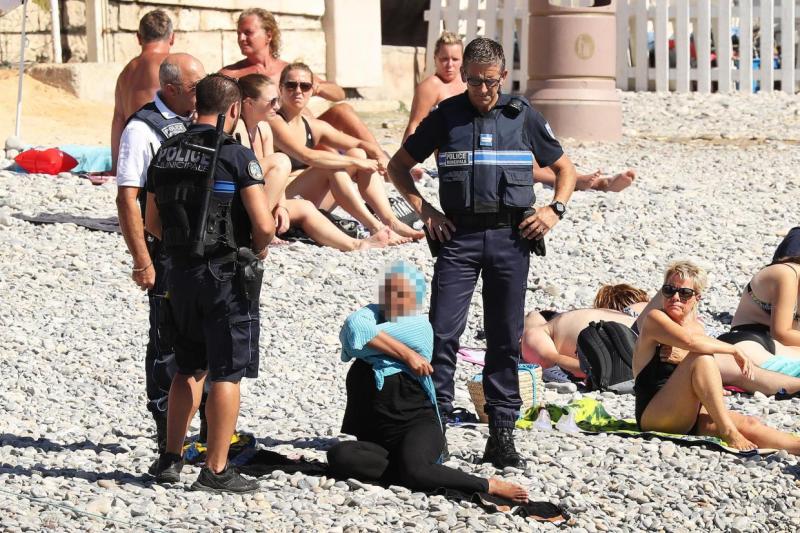
You will have seen the degrading images from Nice of armed gendarmes forcing a Muslim woman wearing a burkini to remove it at gunpoint on a public beach.
I am outraged at this action because it offends my love for human dignity and freedom, as well as my love for France.
PLEASE DO NOT THINK OF IT AS TYPICAL OF A EUROPEAN PREJUDICE AGAINST ISLAM OR AGAINST WOMEN.
IT IS HOWEVER TYPICAL OF THE MINDSET OF A BUNCH OF CHEESE – EATING, ATHEISTICAL, AUTHORITARIAN, GOOSE-STUFFING, SURRENDER MONKEYS WHOSE PROUDEST HISTORICAL MOVEMENT WAS CUTTING EACH OTHER’S HEADS OFF.
Stop!! Stop!!! You can’t say that in a public blog! (online editor)
WHY NOT?
It is hate speach and also untrue ( Online ed)
BUT I HATE WHAT THEY’VE DONE. ALSO TELL ME WHAT’S NOT TRUE.
They’re not all atheists. There are some Christians and some Muslims, as well as Buddhists….
THEIR STATE IS ATHEIST AND SECULAR, AND PROUD OF IT!?..AND THEY DO EAT CHEESE…
….and very few of them stuff geese….
BUT THEY PROTECT THE RIGHT OF PEOPLE TO FORCE -FEED GEESE AS WELL AS DE -BURKINING WOMEN …
…and you can’t blame all of them for surrendering to the Nazis…..
WHY NOT, WHEN THEY BLAME ALL MUSLIMS FOR THE ATTACKS ON PARIS AND NICE?
And it’s ridiculous to label a country dedicated to freedom as authoritarian!
NOT IF THEY ORDER WOMEN TO TAKE THEIR CLOTHES OFF! THEY’VE DITCHED THE LIBERTÉ AND REPLACED IT WITH AUTORITÉ
…. and there’s nothing wrong with eating cheese..
NOT IN SMALL QUANTITIES BUT THERE IS SOMETHING VERY WRONG IN EATING GROSS QUANTITIES OF IT, ESPECIALLY WHEN IT’S NOT HONEST CHEDDAR BUT STICKY STUFF THAT SMELLS LIKE CHICKENSHIT…
come on, are you trying to prove something here?
YES, I AM PROVING THAT IF YOU VIEW THE FRENCH WITH THE DEGREE OF PREJUDICE WITH WHICH THEY VIEW MUSLIMS, IT ‘S CLEAR THAT THEY ARE A RACE OF REPULSIVE RODENTS WITH REGRETTABLY REGRESSIVE HABITS…
are you finsihed your rant so that I can edit this?
NO, I WANT MUSLIM PEOPLE TO TRUST THAT THIS NOT TYPICAL OF US BUT THE ACTION OF PARANOID PROTOZOA FROM THE RIVIERA, WHO CANNOT UNDERSTAND THAT THESE IMAGES WILL BE SEEN WORLD-WIDE BY DECENT MUSLIMS AS EVIDENCE THAT ISLAMIC STATE MAY BE RIGHT AFTER ALL, SLIME-BUCKETS THOUGH THEY BE. I SHOULD TAKE TO THE CHAMPS ÉLYSÉES WITH THESE PICS CHANTING OWN GOAL, LES BLEUS! OWN GOAL, FROGGIES! OWN GOAL, OWN GOAL…
But this is disgraceful, you’re rubbishing a great nation….
YES, SO IN THE NAME OF VOLTAIRE, VICTOR HUGO AND SIMONE WEIL (you say her with a v also), WAKE UP FRANCE, RECONNENCT WITH YOUR ROOTS, REPEAL THESE STUPID LAWS AND APOLOGISE TO THE NICE LADY WHOM YOU HUMILIATED. NOW! BUT IF YOU WON’T I WANT TO APOLOGISE ON YOUR BEHALF TO HER AND ASK MUSLIM PEOPLE TO BELIEVE THAT WE’RE NOT ALL LIKE YOU…
…how can I possibly edit this stuff (online editor)
The house in my title turned out to be in Dornoch, which is only a hundred odd miles from Skye after all. Yes, I’ve been scouring the self catering companies for holiday accommodation and am again astounded by their mendacity. Lies about location are common, with well-known villages and towns substituted for ones more remote or poorly regarded. Location maps of surpassing vagueness are provided with a blob plonked in the midst of nothingness to mark the cottage in question. This tactic has been well used by Ryanair over the years as anyone who has arrived at VENICE (Treviso) or PARIS (Beauvais) can witness.
luxury seaside cottage
Another deceptive device is the photograph. A shot taken with the house in foreground shows the blue sea immediately behind it. Only local knowledge tells you that between the house and the sea lies the local sewage facility. An attractive frontage fills the photo. Only sad experience tells you that this blocks out the six very adjacent identical bungalows and the holiday park next door. The photo gives you an eyeful of fresh decor and unspoilt furniture. Only cynicism born of an overdose of this stuff tells you that probably the photo is as old as the last renovation in 1998.
The descriptions of houses are also instructive: “ingenious use of space” means a cat cannot be swung in the kitchen; while “a real home from home” means that the owners have left their kid’s toys and granny’s old sofa in situ.
In despair, I look for an advert which will give me the sort of information I actually need, without distortion or spin. just the facts, please. The daft thing is, that most of the houses are in fact very pleasant, but the culture of concealment and spin means that I cannot rely on anything I am told about them. “The facts are friendly!, I want to shout, “just give me the facts!”
Many attractive original features
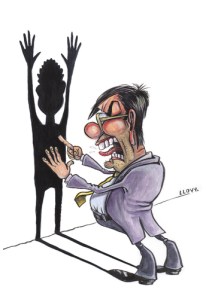
Perhaps even politics, whose practitioners are famous for their economies with truth, would benefit from a return to facts. Imagine if a Tory minister were to say,”Don’t be stupid, you’re not poor because of Polish plumbers, you’re poor because that’s what capitalism does. It takes jobs away from dearer labour and gives them to cheaper, stands to reason. so shut up or emigrate to Bangladesh, loser.” He might win votes for saying something that sounded like truth. Or if all left wing politicians were to say,”sorry, we can’t really do anything about poverty or public services because that would mean PUTTING UP TAXES, which is utterly unthinkable, even by Jeremy Corbyn.” Any utterance however offensive, that refers to facts rather than fairy tales, would help politicians as well as citizens because it would help the latter to understand the issues with which the former have to deal.
The same goes for religion. My church says that of course many churches are in terminal decline, when what it really means is that perfectly decent groups of believers can no longer afford vast stone buildings and a lot of seriously expensive clergy. It would help puzzled believers if the church were to declare publicly that the Bible was written by fallible human beings and that CCTV at Jesus’ tomb ( if he had one) would not have recorded any unusual activity 2 days after his death. The facts are friendly; God is in the facts.
Fully -equipped kitchen
That may sound a bit negative but if God is not in the facts then he/ she is no better than a story about a Skye cottage in Dornoch or the other more harmful one that says if England got rid of its East European immigrants it would suddenly revert to being merry olde England with rings on its fingers and bells on its toes. If God is not in the facts than God is merely part of a nice story that allows me to feel superior to unbelievers, gays and women who’ve had abortions. If God is not in the facts, believers have to ignore people who trust facts, like those who are desperately trying to pesuade reluctant citizens to look at the alarming facts of climate change.
I am not arguing against imagination, which often creates the hypotheses that can help to establish facts, and which takes sets of facts and tells the story of their meaning. Imagination is a partner of factual investigation, not its enemy. But I am arguing against deception, evasion, distortion and mystification, that block our access to the truth, of holiday cottages or of God.
Ellie Wiesel, Auschwitz survivor and author, who died recently, once shocked religious people everywhere when, at the 50th memorial of Auschwitz deaths, he prayed:
“God of forgiveness not not forgive those who created this place. God of mercy, show no mercy to those who here killed Jewish children…”
The shock was not that a holocaust survivor might not be able to forgive Nazi murderers, but rather he brought the perspective of the victims into his prayer and dared God to think of forgiving them, as if He could not quite trust God to do the right thing. And indeed even in this terrible utterance there is a dark Jewish humour, that comes from a long experience of worshipping One God in spite of their terrible historical disasters as God’s people, in spite of all violent attempts to erase them from history by persecution or assimilation, in spite of God being the exact reversal of a sound insurance policy. Wiesel was saying that in Auschwitz, human evil and God’s toleration of it had gone too far: an unforgivable evil had taken place, and any subsequent forgiveness by God, even if it involved only repentant Nazis, would mean that God had declared his own irrelevance.
Do not forgive
But should not I, as a Christian believer, make clear that Wiesel’s prayer is contrary to the Gospel of Jesus Christ? Surely the God of forgiveness, revealed in Jesus, is denied by Wiesel’s prayer?
The first reply to this is to understand the dark humour. Wiesel does not say that God will not forgive, but prays that God will not. He is not teaching a doctrine of God, but pleading on behalf of humanity that God will not in this instance be bound by a doctrine that defines him / her as a God of forgiveness and mercy. Wiesel is saying, “We have invented you in our tradition as a God of forgiveness, but events have shown us the inadequacy of our doctrine. Please show that you exist beyond our imaginations, by refusing to forgive these killers.”
The second reply is to remember that Jesus the crucified Messiah is part of the history of atrocious suffering amongst all races. He is brother to Elie Wiesel and to the millions of pitiful murdered people in Syria today. Sometimes Christian preachers and theologians have been careless in announcing the gospel of God’s forgiveness through the execution of Jesus, as if the real evil of those who contrived, ordered and carried out that atrocity, were excused by the forgiveness that is said to have arisen from it. Sometimes the Christian gospel seems to be saying that if what was done to Jesus can be forgiven, all other atrocities are also forgivable and therefore not quite as appalling as some may think.
Here it’s vital to insist that Jesus was a victim of human prejudice, hatred, state security and the willingness of soldiers to kill as required. And if it’s true that “God was in Messiah Jesus, reconciling the world..” (St. Paul), we are saying that God in Jesus “became” a victim, and shares the intelligence of the victim, who knows the mixture of pride, cowardice, intolerance, power, brutality and hate, that has made him suffer, and is not about to write it off as another occasion for divine forgiveness. The God of the Christian story is not first of all concerned with the perpetrators but with the victim whose suffering he/she has shared. God “remembers” the victim Jesus, holds him in love, gives him new life, and raises him from death, to be, in and through his followers, the one whom he had always been, the bringer of abundant life and forgiveness. God does not forgive; the victim forgives in God’s name, through his forgiven followers.
Auschwitz train sculpture
But this forgiveness of God in Jesus is surely offered to all? Well, yes, it is available to all but it can only be received by those who are turning away from their evil towards the goodness of God. The forgiveness is for the sake of the new person not the old. As far as the old person who has helped cause suffering is concerned, the crucifixion of Jesus is not forgiveness but an exposure of the utter evil of what has been done; and the resurrection of Jesus is not forgiveness but the exasperating victory of the victim you thought you’d destroyed. Luke’s gospel presents this clearly. On the cross Jesus prays for that his torturers may be forgiven, but only those who move away from their evil, like the “good” thief and the centurion, receive forgiveness as they turn towards goodness.
Forgiveness is not a divine attitude, but a human happening. Amongst other places, it happens where the community of the victim Jesus takes the side of all victims, exposes the evil that has been done to them, proclaims their ultimate victory along with Jesus, and offers in Jesus’ name forgiveness to those who have done the evil or failed to prevent it, who can only receive this forgiveness as they admit their evil and turn towards goodness.
But how can Jesus and his community dare to forgive evils which have been done to others? Don’t they realise the some victims may not be able to forgive? Who would be presumptuous enough to by-pass the reluctance of someone like Elie Wiesel?
Jesus would have known that some people will not be able to forgive until all their wounds have been healed, which may not happen until they are in God’s “kingdom”. But he was ready to offer an advance of this forgiveness to those who turned away from their evil, so that they could live the new life of God’s kingdom here and now, in this world. The forgiveness he offers is the same forgiveness that one day in God’s goodness, all victims will be able to offer. The community of Jesus should not be ashamed of offering the same forgiveness.
The images used here are of sculptures in the Yad Vashem memorial in Israel.
This old saying might have been invented to describe the US / Saudi coalition’s operation in Yemen. Initiated with the aim of restraining Houthi rebels from restoring an anti- western ex-president to power, and of course, to “bring peace” to the country, it has destroyed what was left of civilian society in Yemen; roads, schools, hospitals, food distribution, water installations have all been targeted and destroyed. Both sides have been complicit in this destruction, but the coalition, supported by the UK which has sold huge supplies of armements to the Saudis, has been much the more successful in reducing a very poor nation to rubble. The words the Roman historian Tacitus put in the mouth of a Scottish chieftain denouncing Roman imperialism, are just as apt in this instance, “They make a desert and they call it peace.”
The ruined hospital after the attack
Two days ago Saudi planes bombed a hospital supported by Medecins Sans Frontieres / Doctors Without Borders, killing 11 patients and at least one member of staff while wrecking the facility. This is the fourth MSF hospital to be targeted by the coalition in the last twelve months. MSF employs doctors, nurses and ancillary staff from all round the world, and tries to employ as many as possible from the countries in which it works. It provides medical services in conflict zones to all who need them regardless of political or military allegiance. It is a monument to human rationality, compassion and courage.
It is increasingly obvious that the coalition is engaged in terrorism, that is, it is attempting to achieve its political aims by the use of indiscriminate violence designed to cause fear and despair. The roots of this terrorism lie in the inbred autocratic brutality of the House of Saud on the one hand, and the imperial mentality of the U.K. and USA on the other, which consider extreme violence at a distance from their own populations to be a legitimate way of keeping lesser breeds in order, while denouncing it as Satanic if it is done to them. It’s time to face facts:
WE ARE THE TERRORISTS OUR GOVERNMENTS ARE CONDEMNING
It is particularly important for the Christian churches to name and denounce this terrorism, as it is easily identified by extreme Muslims as being Christian violence, in spite of the more than negligible contribution made by the Saudis who themselves support an extreme form of Islam. Christian believers are being persecuted in many Islamic nations and their safety is no way increased by the Terrorism of so-called Christian nations. There are many motives for Muslim persecution of Christians in, for example, Pakistan, some of which have nothing to do with international politics, but Christian protests to the Pakistani government are easily dismissed unless the same Churches are actively denouncing the use of terrorism by the coalition in Yemen.
I have written before that we need “boots on the ground for peace” in countries where civil society has almost completely been destroyed. MSF staff consistently put their boots where others fear to tread. If there is an organisation which equally represents human reason, the radical compassion of Jesus, and the bold justice of Mohammed, it is MSF. I urge all my fellow believers to raise this latest UK supported outrage against them with their MP’s; and to donate what they can to MSF.who have been the victims of a successful operation in which more than one patient died.
As I write the day is becoming cloudy, but earlier it was a bright, warm, late-summer day with sunshine, blue sky and scudding clouds. I grabbed my bike and rode by the River Tay, following a good asphalted track from Monifieth to Broughty Ferry and back, stopping frequently to look at things of interest, like the recently created wildflower meadow, with its splendid cornflowers, or the great gathering of swans at the outflow of the Dighty Burn. These birds are often to be found there, along with geese, duck and curlew, as well as numerous small waders.
The outflow of this burn which meanders through Dundee from West to East, must be polluted with a variety of a harmful substances, but it also carries of variety of green river plants and small animals to the waiting swans who feed methodically. Some varieties of Corvids, rooks, jackdaws and hoodies, have learned that a swan who has just picked up a tasty morsel, will if hassled by a couple of crows, drop the morsel to drive them off, whereat a third bird will catch the food. I wouldn’t argue with a swan in a bad temper, but the crows are unimpressed.
Today I was lucky to see one of my favourite sights, a swan in flight. They seem so heavy and short-winged that one imagines them as poor fliers but in fact they can travel huge distances. These are mute swans, the commonest species in the UK although I have seem immigrant whooper swans on this river. As I watched one of the swans fly off across the river, a woman standing near me said, “Ah, they’re so beautiful!”
“So they are,” I said, and we stood companionably watching until it was only a speck in the sunlight.
Why do I find it beautiful? I might reckon that someone who didn’t find the drawings of Rembrandt beautiful was entitled to his opinion, but someone who didn’t think swans beautiful I would regard as odd. I don’t think anyone taught me that swans are beautiful, or that there is any evolutionary advantage in swan appreciation, as there might be in my appreciation of a beautiful woman.
So what is it, my sense of beauty?
Some have interpreted it as merely a transmutation of sexual desire, a love of masculine and feminine shapes, which takes on a life of its own, and develops its own criteria of form. Like many reductive explanations this seems to me to magic a molehill of truth into a mountain.
Others suggest that it is an appreciation of complex wholes whose parts fit perfectly together, providing us with a sense that the events of our lives might be similarly ordered and meaningful. There may be something of that in my love of Bach fugues or Gothic cathedrals.
Others again speculate that our sense of beauty rests on our biophilia, our natural love of the natural world, a love which grows out of our evolution and is directed towards the world to which we are fitted. I am sympathetic to this notion, as my love for the natural world is a powerful motive in my life. Still, I think that if this theory were true, many more people would find spiders, lobsters and catfish beautiful, than seems to be the case.
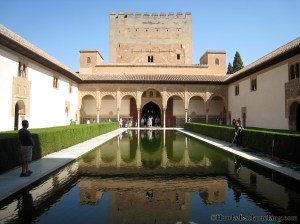
Plato’s theory was that we have kept a dim memory of the world of true form from which we have fallen to be encased in matter. We respond to beauty as it points towards the loveliness from which we are presently exiled. In effect, we could dispense with Plato’s story and say that he saw beauty as directing us towards a reality that transcends our material existence. It reminds us that we don’t wholly belong to this existence or love it with a whole heart, but are made for something better that we might glimpse in the courts of the Alhambra, or the skill of an Americam gymnast, or the flight of a swan.
The annihilating power of global capitalism not only rules the ecomomies of our world but wipes out all traditional identities of nation, religion, family and even personal character, leaving human beings with only the ghost identity of consumers: that’s what we are told we are: people who purchase commodities. And even that is still a step away from the horrifying truth that we are actually commodities who purchase commodities, for people too are packaged, sold, and bought.
Racism
There are many consequences of this bonfire of identities but the one on which I want to focus is resentment. Because many people have neither the inner strength not the social cohesion to resist the depersonalising power of capitalism, they are left feeling that they don’t matter, that their lives have no meaning, that they are replaceable by others, and that they cannot alter the societies which have made them insignificant. This is particularly true of poor people, who feel these things more keenly than the rich, who can be seduced enough by their possessions and apparent power into disregarding their loss of identity.
The resentment of people who no longer know who they are can lead to them adopting false identities created either by themselves or by other non-people, such as fundamentalist believers, holy killers, white, black, brown or yellow supremacists, football fanatics, Jedi warriors, drug-lovers, sex-addicts, or Mr and Mrs Ordinaries who just want a quiet life with no foreigners please. Smart operatives can make huge sums of money or gain great power by helping create and sustain these false identities. Think of the Porn Barons or the Press Barons who both provide a daily supply of doctored reality for the poor junkies who have come to need it.
I think that the rage against foreigners evident in the British Brexit campaign, arises from the fundamental powerlessness of people in the face of global capitalism, with the consequent loss of their identities, rather thanas has been suggested, their relative economic deprivation compared with other parts of the U.K. It is a rage that says to immigrants, “Whatever I am, I am not you; and I do not want you on my territory.”
I have just begun a reading of the Bible book of Ruth, (the first instalment of which can be found as bible blog 1968 at my other site, emmock.com) and I realise that the society in which it was written exhibited a resentment against foreigners similar to what we have seen in the UK, and perhaps for similar reasons. The small kingdom of ancient Judah, had been established, or as they would have said, re-established by Jews who had returned from communal exile in Babylon to rebuild the Temple in Jerusalem as part of constructing a new identity as “the people of God”. They felt the need to do so, because they had become the playthings of great powers, like Babylon, Persia and Egypt, the global powers of the time, in comparison with whom small nations and their populations did not count.
Helped by prophets who could speak out of the old religious traditions of the people, and law- givers like Nehemiah and Ezra, they edited their ancestral documents of faith to present an exclusive vision of what it meant to be God’s people, involving meticulous obedience to the Torah commandments and rigorous separation from other races of people and even from those Jews who worshiped differently. The defeats which had brought about exile were laid at the door of assimilation to the customs and beliefs of foreigners. That unfaithfulness had provoked their God, who himself clearly had identity problems, to punish them with near extinction. The drive by Ezra to force Jews who married foreign women to divorce them was one of the expressions of this divinely justified racism.
The Book of Ruth, a masterpiece of world literature, which tells the story of a foreign woman who shows loving faithfulness to her widowed Jewish mother-in-law after the death of her husband, who binds her life to the sorrowful life of another woman and journeys with her back to her homeland in Judah, is a subtle and utterly devastating riposte to both the racism and its cause, the loss of national and personal identity. The story begins with a narrative of lost identity, regarding a couple who flee from Judah to a neighbouring country, Moab, to avoid famine, settle and have sons who both marry foreign women. The father and then two sons die, leaving three women no identity other than that of their original families and nations. The expectation is that the widowed mother will go back to Judah and her daughters-in-law to their families in Moab, where they can live out of the established identities of others.
But then the story narrates a miracle. One of the daughters-in-law, Ruth refuses this racial identity and in passionate words creates a new and unforeseen identity built from human loyalty and love. She brings into being a new nation of two people, whose constitution is expressed in her declaration:
“Entreat me not to leave thee nor to return from from following after thee; for whither thou goest, I will go; and whither thou lodgest I will lodge; thy people will be my people, and thy God, my God; where thou diest I will die and there will I be buried; the Lord do so to me and more also, if anything but death part me and thee.”
This is the miracle: in a place of deprivation and no identity, a woman discovers her own irreducible humanity, pledges herself to the humanity of another woman, and defines forever a belonging before which all other identities are as nothing. All religious, national and racial exclusiveness have to bow before Ruth’s declaration of human rightness.
As the story proceeds the author shows how this seed of a new identity bears fruit in the community of Judah, whose agricultural economy and ancestral customs are drawn to express their true generosity; of which the final symbol is the sexual partnership of man and woman, Ruth and her new husband Boaz, in a fruitful land. Out of their marriage , the author tells us, will come the great King, David, who represents the flowering of Judah/ Israel as a people of God.
Of course the author of this remarkable story was a Jew who shared Jewish faith in God. There are many references throughout the story to God, the Lord, but the voice of the One who is beyond all worlds is only heard in one place in the book, namely in Ruth’s declaration quoted above. Yes, it is a human declaration, mentioning lodging, people, gods and death; it is an authentic expression of our passionate dust. And yet it also expresses for its author, the passionate and faithful love of God, promising a loyalty to the beloved that goes all the way to death. In its humanity, this is the word of God, the Beyond in the Midst.
The story confronts our modern lack of identity with the encouragement to resist all the resentments that diminish us, and to rediscover ourselves as people of flesh and blood and spirit who can define the only identity that matters, by our human loyalty , regardless of labels, to others who are made of same dust.
The morning mail brought me a pleasant surprise in the form of a book I had ordered from a used book supplier in the USA and then forgotten. But here it emerged from its packing, “TImes Alone, Selected Poems of Antonio Machado translated by Robert Bly.” Machado is one of my favourite writers, whom I can just about read in Spanish provided I have a translation nearby when I’m stuck. So this was a pleasure indeed! I have also to admit to a particular additional pleasure that the book is second hand. In this case there is no inscription to give me any glimpse of the original owner, nor any marks in the text to tell me which poems he or she especially enjoyed or was puzzled by. But I do know from the condition of the book that the unknown owner was careful of it and that he/she read it with clean hands. I like to think of this person in the USA somewhere, perhaps with a better knowledge of Spanish than I, reading Machado’s poems, looking through the volume for favourites, as I have already done, pleased at the fact that there are so many that are new. I can fantasise that this original reader, probably now dead -since surely they wouldn’t have given the book away – would have approved of it finding a new life with me. Like all great literature this book will change me as it also changed the life of of its first possessor.
Very seldom nowadays am I desperate as I used to be to get my hands on the latest stunning novel, or political diatribe, or scientific report. More often I am conscious of the masterpieces I’ve lost, given away or never read in the first place. “Abe Books” has become one of my favourite suppliers because it has a vast collection of used books in good condition of all kinds on all subjects. I can recommend it with a good conscience. Using their books reminds you that you are part of a great tradition of reading and of course, writing – for where would the writers be without their readers?- a tradition that values knowledge and the special pleasure of gaining it through a book.
This love of what is handed on to me applies even more definitely to the Christian tradition. There was a time when I didn’t like that expression, because it seemed to make my faith into a second hand commodity rather than a personal commitment. Now I am at ease with it. My faith is something handed on. As I read the bible or plan a service of worship, or visit parishioners, I happily sense my ancestors in faith doing the same in different times and places, some of them, like my maternal grandfather, Rev. Victor Caldwell, possessed of scholarly expertise beyond mine, because he studied the Greek classics; and others, like my paternal grandfather, Rev. Alexander Mair, possessed of commitment beyond mine as a missionary in China. Or I can think of the memorial stone built into the wall of the Kirk of Auchterhouse, (one of the churches I serve) recording the life of a woman who cleaned the church buildings, with the quotation from Jesus, “I am amongst ye as one that serves.” She and those who erected the memorial, sang the same psalms, followed the same Jesus, and lived in the same kind of unequal society as I do.
This happiness in tradition does not in any way diminish the contemporary personal commitment required for faith, for it is as a living commitment of particular people that the material of faith is handed on. Yes, there are scriptures, doctrines, sacraments, prayers and hymns, to which I have access in books and online, but they are only of value as the expression of individual and communal experience. It’s like the book I got this morning; it’s in my hands, blessed by the experience of its original reader. In that case I can only imagine that experience, whereas in the case of my ancestors in faith, I have been more directly blessed in knowing some of them, and in having specific knowledge of the experience of others whom I have not known. Recently I read the diaries of George Fox the Quaker leader with astonishment at their vivid representation of a revolutionary practice of faith. I was reminded only the other day of the record of the Desert Fathers and Mothers which communicates their sharp and sober wisdom.
I’ve chosen to spend much of my time these days working through the chunk of tradition we call The Bible, in the hope that I can pass on the practice of faithful, critical reading of the Bible to some of my descendants in faith. In an era when the fundamentalist distortion of Christian tradition appeals to those who want to be sure they are right, I want to set an example of how to receive the gift of Scripture as being, like its Lord, divine only in humanity, weakness, fallibility, and unbelievable liveliness. If I can hand on a little of that to a new generation, I’ll be happy.
In my last but one blog I argued that it was time for the Christian Church to talk to Daesh. There was a mistake there as Daesh is a dismissive name for the movement that calls itself Islamic State. If I want some one to talk with me I should show respect by addressing him politely. I have also spent some time trying to discover a way of approaching Islamic State, without much success, although my online searches may already have got me on the books of MI5. I did however find a very helpful website,The Clarion Project (clarionproject.org) which collects information about the group. There I was able to read the latest issue of IS magazine DABIQ (see image above) which is aimed at Christian believers.
It is an interesting and dismaying read. Most dismaying is an article entitled “Why we hate you” addressed to Christians which lays out the main reasons for the group’s hatred of them. The primary reason given is theological: Allah is One and Christians with their doctrine of the Trinity have given him “partners in divinity” which is a blasphemy against God punishable by death. Secondly, Christian societies permit detestable practices forbidden to Muslims, including homosexuality and lending money at interest. Thirdly, Christian societies are democratic, making a division between religion and state, whereas Allah desires to rule all of life. Fourthly Christian societies have cooperated in war on Muslims in many parts of the world. Throughout the writer reminds the Christian reader that they are hated principally for not being Muslims. Even if under some agreement IS stopped its violence towards Christians, the writer is quick to assure Christians that they will still be hated. So there’s no point in Christians trying to rein in their governments’ mistaken war policies, for DABIQ states quite clearly that its war on the Christian West would continue.
It is interesting to be faced with such an open message of hate. Mostly powers that mean you no good cloak their ill-will in specious justifications, like those who want to frack our land to “help our fuel needs”, rather than to line the pockets of the fracking company, because they imagine that if they admitted their total contempt for the local population it wouldn’t go down very well. IS is almost a parody of anti- Christian attitudes, “God is hate and those who live in hate live in God” or “We hate our enemies because God hated them first.” Although their capacity for killing is well established, there’s just a touch of the pantomime baddy about their utterances in DABIQ, ” Don’t imagine you can ever soften me up, ’cause I am a more serious kind of hater than you have ever met before; yes, I am!”
My own interpretation of this rhetoric is that it isn’t really meant for me or the average Christian, but for the families and friends of jihadis who may be wondering whether their relatives have simply joined a bunch of crazed killers. It tells them that hatred and bloodshed are commanded by Allah towards the kufr (infidel). It is also for public consumption: as those who oppose Donald Trump are finding, hate sells. Those who are slightly guilty about the anger they feel towards the system, either as possessors of wealth angry at paying taxes, or as poor people angry at being oppressed, they can be liberated by Trump to feel hate for the status quo and to trust Donald to smash it. Similarly Muslim men and women angry at the continuing racism in their societies are being told by IS that hate is OK and that their personal hate expressed in violence can be a tool in Allah’s hand.
Clearly their theology comes from a particular form of Islam, namely Wahhabism. But the view that all Christians are blasphemers is an authentic teaching of the Qur’an, in its characterisation of Chritian faith as “giving partners” to Allah, meaning the effective denial that there is only one God. Indeed it is possible historically to interpret Islam as the rejection of an increasingly complex doctrine of the Trinity and a Christian Church which had become secularised as part of the Roman Empire. The doctrine of the Trinity is precious to me, but I wonder how many Christian believers in Scotland today would be prepared to die for it. Most believers are vague about such matters. Jesus is all-important to them, and close to God, but divine? The Holy Spirit is also important, but isn’t it just another way of talking about God? On this issue as on the other “causes of hate”, many Christians may feel that it would be good to talk with Muslims, in the hope that they may gain a deeper understanding of both Islam and Christianity.
But that’s just the point. IS doesn’t want to talk; it wants to defeat the infidels and force them to bow before Allah. It says it will continue to hate infidels until we convert to Islam. So, one minute we, as human beings, are detestable creatures worthy only of brutality and death, and then, by the magic of submission to Allah, we become dear brothers and sisters. Who could believe this? On either side of conversion we are surely the same people. Even if we were to be born again into Islam, we would still be the same people, so how could we have been hated? How can we now be loved? There is an incoherence in this teaching. Christian evangelism reaches out to non-believers in love, not hate. The communication of Christian faith is an act of love. Again I would like to talk with IS members about this because it seems to me to be at the root of their project.
That project of course is what IS calls the khalifate, the right Islamic rule of a territory with the full implementation of shariah law. IS proclaims its hatred of the secular state. Allah is insulted if He does not rule the state as well as the lives of believers. But of course, in truth, Allah does not rule directly; he entrusts that task to his imams and ayatollahs, with their interpretation of his law. So the Khalifate is saying, “you will obey our interpretation of Islam.” The submission is not only to Allah but to individuals who may have chosen themselves for this honour. Here also there is surely matter for discussion with IS.
I guess IS might have harsh questions for me, but I would consider my time well used in answering them. The barrier to discussion between IS and Christians is the view of IS that there’s no point in talking to kufr who must simply be made to submit. But I have to ask if behind all this belligerence there is not fear that some IS doctrines may not stand rational scrutiny. The assertion that our human ideas are exempt from scrutiny is to confuse ourselves or our scriptures with God – and wouldn’t treating the Qur’an as God be giving God a partner? I am too used to challenging the authoritarianism of my own faith community to be over-sympathetic to its use in Islam or any other community. But I and many other Christian believers are completely open to a dialogue with brothers and sisters whom we love in spite of our hatred of some of their actions. Let’s talk!
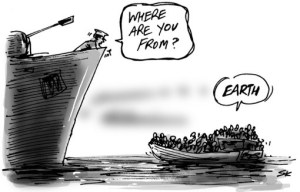
My heroine ( or should I now say hero?) of the week is Angela Merkel. In a courageous speech she refused to regret her policy of welcoming immigrants from Eastern Europe and the Middle East, even in face of a number of criminal actions and one terrorist attack by people of immigrant origin. She acknowledged that there had been criminal behaviour by immigrants while pointing out that it was what you might have expected given the huge numbers involved. Immigrants were in her view no more criminal than other German citizens. She stated that she still believed her policy of welcome was morally right, was for the benefit of the world, and could be made socially beneficial in a strong civil culture like Germany. She addressed the concerns of her citizens, and of her political opponents, without giving an inch, defending an unpopular policy by putting her own weight behind it. She was saying, you only get rid of this policy by getting rid of me.
How refreshing to hear a politician setting aside the howls of the press and the whispers of focus groups, to do the thing for which they were elected: to lead. Political pundits tend to be wary of genuine leadership. A politician who rides roughshod over the wishes of the people may be riding for a fall. And where does strong leadership stop and Erdoganism begin? Doubts like these together with the kind of monstering a strong leader will get from social media, weaken all but the most determined, and bring about the ludicrous politics of the U.K. where nobody who disagrees with the Sun and the Daily Mail is likely to win power. This means that any policy that might disadvantage the richest and most powerful interests is very unlikely to be implemented.
“Ah, but you have to listen to the people!”
People accuse the Labour Party of not listening to working peoples’concerns about immigration. That’s what lost the Brexit vote, they say. Well, the Brexit vote was won in Scotland without any pandering to prejudice. You can agree that that the English working people have been disgracefully treated by Government without agreeing that its woes are caused by immigrants. There are in any case large numbers of that class who were only rescued from their admiration of Mrs. Thatcher by Tony Blair and New Labour. Politicians who want to engage with working people and gain their support for policies that advance their interests, have to tell them that immigrants are not the problem. Only that sort of honesty will clear the way for genuine social justice.
That’s why Angela Merkel is an important role model for politicians. She based her immigration policy on a thorough understanding of how a vast refugee problem could be tackled. She believed that her chosen response was right. And her robust defence of what she has done, has pushed German citizens to be their best and to do a difficult thing well. She puts to shame all the mealy-mouthed good -time guys and gals masquerading as leaders elsewhere. The way to defeat the farageous Le Pens and all their tribe, is to show that justice works even if it demands some sacrifice.
Of course, Mrs Merkel grew up in the GDR where she saw that only principled action could withstand the pressure of the Stasi. As the daughter of a clergyman she also recognised how the faith and morality of the church could stand firm in the face of threats and contribute to the fall of the communist state. She is unlikely to abandon her convictions because they make her unpopular. She knows how to lead.
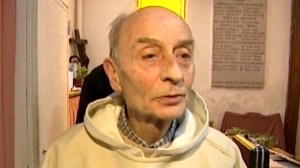
Yesterday Fr.Jacques Hamel was murdered by two thugs who claimed to be affiliated to Daesh, and to be acting for Allah. He was brutally killed in front of his congregation while celebrating mass.
Daesh has ordered the killing of Christian people before but this may be the first murder of a Christian priest, simply because he was a priest, carrying out his ordinary duties. It is a very dangerous precedent as it opens the way to people who do not understand Christianity taking revenge on Imams and other official representatives of Islam. All Christian communities who are grieved by Fr. Hamel’s death, should immediately make it clear that there must never be an act of revenge in the name of Jesus. The story of the death of Jesus is there to remind people of the difference between Mohammed, peace upon him, who talked about peace, and Jesus who made peace even with his killers.
I say there should be no revenge, but I do not mean there should be no action. It is time for representatives of the Christian Church to call out Daesh. It is easy to cut people’s throats, even easier to order the cutting of throats, but harder to justify your actions to honest enquirers. Can Daesh explain its killings to Christian believers? Can it uphold its policies only with a weapon or can it uphold them in rational argument? Doubtless this forum would have to take place in territory where the safety of all involved could be guaranteed, but that ought to be possible. Perhaps a Sunni cleric might organise it. I am not being either ironical or naive. I think Christian people should be talking to Daesh, and inviting it as a Muslim organisation to show how its actions flow from Islam. If Daesh is unwilling to engage in open discussion, then it will be reasonable to accuse it of cowardice. If something done in the name of God cannot be justified, it suggests that the God in question is only a sectarian idol and not the God of all peoples. I say it again, I believe Christian people should initiate talks with Daesh. I would be happy to participate.
As a Christian minister this morning however, I also want to affirm my solidarity with my brother Jacques, whose life was snuffed out so painfully, in front of those to whom he ministered. I hope his dying moments were eased by the presence of people he knew, and that the symbols of the presence of Jesus were real to him in his agony. I believe he is with God who wipes away all tears. He is a true witness ( Greek, martur), because he was killed just doing his duty as a priest, without any expectation of violence. Christian people will honour him by refusing hatred and violence, by continuing to worship God and to love their neighbours. Had the representatives of Daesh come asking his help instead of looking to harm him, he would have received them with courtesy and understanding.
We should demonstrate these qualities especially towards the Muslim believers in our own nations, almost all of whom are appalled by the way their God’s holy name is being being dishonoured by violent words and actions, recognising that in the opinion of many Muslims the name of Christ has been dishonoured by our imperialist wars in Iraq, Afghanistan, and. Libya. There is however a difference. Large numbers of Christian people, as well as official representatives of churches, actively opposed these wars, and have persistently criticised anti- Muslim individuals and organisations, whereas the hate crimes of Daesh are carried out by people who use the name Allah. Have I missed the fatwa which should long ago have been pronounced against them?
In the name of Jesus and in the name of Jacques Hamel, we must ask Daesh to talk with us. Doubtless it would better if this request came from the leaders of our churches, and if they show a desire to do so, I will happily stand back. But I am looking for Christian people who would like to do this in person; who hope that members of Daesh will give them the opportunity their brothers denied Fr Jacques, to talk about what divides us. I am hopeless at using social media, so if any readers agree with me, they might help to establish a campaign using the name talkwithdaesh. Jesus’ command to love our enemies does not mean giving up in the face of our enemy’s violence but rather recognising him as a fellow human being who is due the courtesy of our opposition.
Our political culture often encourages our passivity in the face of terror; we should leave it to those who know about such matters to act on our behalf. I very much doubt if the officers of our state have the slightest clue how to deal with Daesh, but I know some Christian people who’d be good at it. There’s a time for being bold; let’s talk with Daesh, soon!
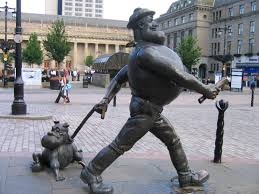







 As I write the day is becoming cloudy, but earlier it was a bright, warm, late-summer day with sunshine, blue sky and scudding clouds. I grabbed my bike and rode by the River Tay, following a good asphalted track from Monifieth to Broughty Ferry and back, stopping frequently to look at things of interest, like the recently created wildflower meadow, with its splendid cornflowers, or the great gathering of swans at the outflow of the Dighty Burn. These birds are often to be found there, along with geese, duck and curlew, as well as numerous small waders.
 Why do I find it beautiful? I might reckon that someone who didn’t find the drawings of Rembrandt beautiful was entitled to his opinion, but someone who didn’t think swans beautiful I would regard as odd. I don’t think anyone taught me that swans are beautiful, or that there is any evolutionary advantage in swan appreciation, as there might be in my appreciation of a beautiful woman.

 Of course the author of this remarkable story was a Jew who shared Jewish faith in God. There are many references throughout the story to God, the Lord, but the voice of the One who is beyond all worlds is only heard in one place in the book, namely in Ruth’s declaration quoted above. Yes, it is a human declaration, mentioning lodging, people, gods and death; it is an authentic expression of our passionate dust. And yet it also expresses for its author, the passionate and faithful love of God, promising a loyalty to the beloved that goes all the way to death. In its humanity, this is the word of God, the Beyond in the Midst.
 The morning mail brought me a pleasant surprise in the form of a book I had ordered from a used book supplier in the USA and then forgotten. But here it emerged from its packing, “TImes Alone, Selected Poems of Antonio Machado translated by Robert Bly.” Machado is one of my favourite writers, whom I can just about read in Spanish provided I have a translation nearby when I’m stuck. So this was a pleasure indeed! I have also to admit to a particular additional pleasure that the book is second hand. In this case there is no inscription to give me any glimpse of the original owner, nor any marks in the text to tell me which poems he or she especially enjoyed or was puzzled by. But I do know from the condition of the book that the unknown owner was careful of it and that he/she read it with clean hands. I like to think of this person in the USA somewhere, perhaps with a better knowledge of Spanish than I, reading Machado’s poems, looking through the volume for favourites, as I have already done, pleased at the fact that there are so many that are new. I can fantasise that this original reader, probably now dead -since surely they wouldn’t have given the book away – would have approved of it finding a new life with me. Like all great literature this book will change me as it also changed the life of of its first possessor.
 I’ve chosen to spend much of my time these days working through the chunk of tradition we call The Bible, in the hope that I can pass on the practice of faithful, critical reading of the Bible to some of my descendants in faith. In an era when the fundamentalist distortion of Christian tradition appeals to those who want to be sure they are right, I want to set an example of how to receive the gift of Scripture as being, like its Lord, divine only in humanity, weakness, fallibility, and unbelievable liveliness. If I can hand on a little of that to a new generation, I’ll be happy.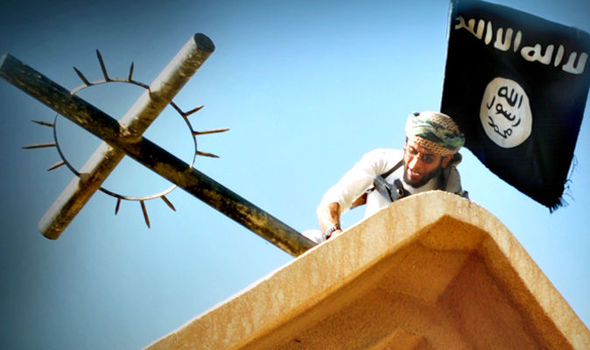


 Yesterday Fr.Jacques Hamel was murdered by two thugs who claimed to be affiliated to Daesh, and to be acting for Allah. He was brutally killed in front of his congregation while celebrating mass.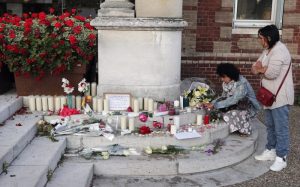
 Our political culture often encourages our passivity in the face of terror; we should leave it to those who know about such matters to act on our behalf. I very much doubt if the officers of our state have the slightest clue how to deal with Daesh, but I know some Christian people who’d be good at it. There’s a time for being bold; let’s talk with Daesh, soon!
 xtremejesus