Not long ago I posted a complete translation of Paul’s letter to the Romans on this site. Now I am adding the initial section of an investiagtion of its significance for politics in Scotland today. My brother Colin, who is much more exoert on political matters than I, is also investigating and I will inlude his contributions on this site.
Someone calling himself Paul is writing to people he doesn’t know who live in a city he’s never visited, probably around the year 50 CE. He claims that their shared allegiance to one Jesus Messiah will make his words of interest to them.
He is a Jewish man, named Shaul in his own language, and formerly eminent in the religious hierarchy of his people. We know from his other letters that initially he was a fierce opponent of this Messiah Jesus and violently persecuted his early followers. He can dictate fluently to his scribe in the common Greek of the Roman Empire, the language of trade, commerce, politics, popular religion, civil administration. Probably he has been bilingual in Greek and Aramaic from childhood. Doubtless a Greek could tell from his letters that he is not an educated man, but would nevertheless be impressed by his ability to carry through an argument, to use forms of Greek rhetoric when he wished, to find vivid words for his most important ideas – and all this from a Jew, the Greek might have said, holding the popular view that the Jewish homeland must be a cultural desert seeing so many of its citizens had found their way to the great cities of the Empire. As Paul reminds his Roman readers, he has traversed a large section of the Mediterranean Sea with his “joyful news of Jesus” at least as far west as Greece, bringing into existence and nurturing what he calls “Assemblies”, ekklesiai in Greek, meaning people summoned together, usually for a civic purpose. Now he is writing to the Assembly in Rome, the capital city of the Empire.
By this time he must have been picked up on the CCTV of the Imperial administration. Somebody, somewhere, in an official position or paid as a spy, had noticed a man who was establishing a group of people who met in each other’s houses. He might have noted with concern that the group included slaves as well as working people and even some leading citizens. Officials would have dealt with breaches of the peace due to the enmity between this man and some of the Jewish residents of their cities. In Ephesos certainly he had been imprisoned, possibly for some considerable time. At a local level, the great empire was aware of Paul.
There had been empires before but none like this one. Perhaps the Greek Empire under Alexander had at one time been greater in extent, but it had swiftly disintegrated. Rome extended its reach gradually, backing up its conquests with roads and systems of communication, establishing efficient administrations backed by its amazingly disciplined and well-equipped legions, yet leaving plenty spaces to be filled by indigenous people attracted by the opportunities of education, travel, trade and secure income. Its great boast was that it allowed the arts of peace to flourish. There were territories that Rome had gained by military conquest, others by political interference, others again by the decision of their own elites, who saw the benefits of Roman rule. Roman citizenship was eagerly sought, and the cult of the Goddess Roma and the Imperial Family was enthusiastically taken up by many city administrations.
The spread of new Roman technologies in agriculture, manufacture, land and sea travel, commerce, and administration throughout the empire, brought about huge changes in local economies, work, knowledge and culture. Its effect on traditional societies was revolutionary, sweeping away established customs and politics, and replacing them with the Roman way. As far as religions were concerned, Rome was pious, affirming traditional practices especially where they were open to the Imperial cult as well, but also permitting some that were hostile to other Gods, such as Judaism. An approved religion was designated as “permitted” maintaining Roman oversight while permitting the priestly castes of conquered nations to keep their privileges.
Many people experienced the Empire as liberating. Good communications meant easier and safer travel; the Roman Law was foreign but more rational than many local systems; the currencies of the Empire were reasonably stable, which encourage consumption and trade. The Empire’s need of local goods and services allowed local suppliers to flourish. The Roman rebuilding of ancient cities meant aqueducts and sewerage systems became more common. Many people, especially artisans, small traders, the educated classes and aristocrats of all nationalities adapted to this more prosperous way of life. Others, the poor, the nationalists, the religiously fervent, were often disadvantaged by the Empire and were opposed, sometimes violently, to its rule.
Slavery was an issue; not that it was a new institution, as slaves had been part of mediterranean societies for thousands of years, but rather that due to increased competition, and the power of large enterprises and estates, numbers of formerly free people found themselves enslaved as a result of debt. From their perspective, the Empire itself was an enslaving power, exploiting the wealth of many nations through its taxation and control of trade, and reinforcing this hegemony with exemplary brutality when there was any open opposition.
The Zealot rebellions in Judaea in 70 and 135 CE led by nationalistic Jihadists are good illustrations of what could happen, in this case the utter defeat of the rebel forces, the punishment of the Jewish nation, the dispersal of its population and the destruction of its symbolic centre.
Rome saw itself as a humanistic force in the world, but it was careful in its definitions of humanity. Roman citizens were truly human and had human rights. Non- citizens might be treated as if they were human, but had no rights; while slaves, as in all cultures, were non-persons, useful commodities who might be cherished or abused..
The man called Paulos is writing to a group of people in the capital city of this Empire, some of whom may be citizens but most of whom are probably non-citizens and slaves. What is he saying to them? Let’s eavesdrop as one of their leaders reads his letter to the group.
From Paul, a slave of Jesus Messiah, called as an Emissary and set apart as a preacher of the Joyful News that God had announced earlier through his prophets in the holy writings: about his Son. A flesh and blood descendant of King David, he was installed in power as Son of God by God’s spirit through his resurrection from the dead. He is Jesus Messiah, our Lord.
From him I have received kindness and the status of Emissary for his honour, to encourage trustful obedience amongst all peoples, amongst whom you are also called to belong to Jesus Messiah.
To all God’s loved ones in Rome, who are called to be holy, kindness to you and peace from God our father and the Lord Jesus Messiah!
The writer defines himself as a SLAVE, albeit of the MESSIAH who gives him the dignity of being an EMISSARY like the appointed ambassadors of the Empire. JESUS in whom they already trust is described as SON OF GOD and RESURRECTED which clearly places him above any Emperor, from which position he demands TRUSTFUL OBEDIENCE from all peoples.
In these opening words the writer sets out the authority of an alternative Empire of which the readers are already subjects. Then on behalf of GOD and his MESSIAH, the writer assures his readers of divine KINDNESS AND PEACE and tells them they are loved. As such they are summoned by God to Be HOLY, that is, to demonstrate by their goodness that they BELONG TO GOD. This greeting suggests that they are part of something greater than the Empire, because its PEACE, unlike that of the Empire, is matched by its KINDNESS.
Paulos then indicates the scope of his task a an EMISSARY; it has taken him to many parts of the Empire, to share the JOYFUL NEWS OF JESUS MESSIAH, which he defines as the RESCUING POWER of God. This is the language of KING JESUS and his KINGDOM encouraging his readers to recognise the new authority in their lives, in which they share a growing imperium with other assemblies around the Mediterranean. Doubtless there are in the Assembly some people of Jewish origin for whom the notion of a rescuing God goes back to the Exodus from Egypt.
This kingdom recognises the rule of God through his Messiah Jesus, but puts all human beings on the same level, although they have different gifts and functions. That’s why Paulos catches himself, when he has given the impression that the Roman Assembly must learn from him, and adds that he will also learn from them.
First, I thank my God through Jesus Messiah for you all, because news of your trust has gone out to all the world; for God is my witness, to whom I give my spiritual service in the Joyful News of his Son, that at all times I remember you in my prayers, asking that by God’s will I may now at last succeed in coming to you. For I long to see you, to give you some spiritual benefit that will strengthen you- I mean, that we may be mutually encouraged by each other’s faith, yours and mine. I want you to know, my brothers and sisters, that I have often intended to come to you -but have been prevented until now- so that I could work fruitfully amongst you, as I have done amongst other peoples. To Greeks and barbarians, wise and unwise, I am under equal obligation, so for my part I am eager to announce the Joyful News to you in Rome as well.
I am shameless about the Joyful News, since it is the rescuing power of God for everyone who trusts in him, for the Jew first and also for the Greek. For the saving justice of God is unveiled in it, from his trust to ours, as the scripture says, “The just person will live by trust.”
Although the Assemblies of Jesus may be scattered over the extent of the OIKUMENY, the inhabited world, they are united by the JOYFUL NEWS and by PRAYER. God and his Messiah also have their SECRET SERVICE, a means of communication which shares the concerns of all parts of the KINGDOM. This is all for the sake of the gift which the kingdom offers to all people: SAVING JUSTICE which neither ignores nor merely punishes wrongdoers, but lifts them up and makes them into just people.
Even in these opening remarks, Paulos clearly asks his readers to imagine themselves as citizens of a kingdom which is different from the Great Empire. They are not prisoners of the global power of Rome, but open to a transcendent justice which has been made available through Messiah Jesus, in whom they trust.
What I would call the “religious assumption” about Paulos, namely, that his concern is to access a God and hold on to his favour in this life and the next, has led to misinterpretation of what he means by the saving justice of God. His “joyful news” is that God has made himself available to all and his offered his favour unconditionally, so that there is no longer any need for religion. That’s what lies behind his attack on the Jewish Torah. If we cash out what Paulos means by God’s rescuing power and saving justice, we find it consists in living as a just person in a community that accepts an advance of trust and promotes a familial justice amongst its members. Yes, this advance of trust is said to come from God, indeed it almost defines God in Paulos’ thinking; yes, the offer is made through Messiah Jesus, killed on a Roman stake; yes, the other name for this shared justice is the Holy Spirit; we shall investigate these matters in due time. Here I want to emphasise Paulos’ announcement of a transcending justice in a political, ethical and cultural space that denies any other dimension than Imperial power. He has briefly indicated the nature of this justice by words such as peace, kindness, and above all, trust. Members of the Assemblies of Jesus trust in each other’s capacity for goodness and are mutually enabled to be good to each other and their neighbours. Their trust in a transcendent God is not first of all to do with realities beyond the material world and its history, but in a here and now justice that goes beyond what Rome provides, and which becomes real as they trust it and each other.
If I look today in Scotland for an all-encompassing power to equal that of the Roman Empire, one which has established networks of communication, technology, ideology, culture, trade, finance and effective political control throughout the world, I’d be wilfully blind if I did not see it in capitalism itself. As in the case of Rome, its global control has brought all manner of material benefits to some, while reducing others to the condition if not the status of slaves. It has been, as Marx noted, revolutionary in sweeping away traditional economies and ways of life, transforming the planet into a single market and its inhabitants into consumers. In Scotland, it provided the huge boost to the economy of the oil industry, while creating a political culture that makes it impossible for a popular government to tax its citizens enough to provide a decent health service. It openly interferes through its bankers and business people in the public affairs of the nation while entering, by means of pervasive advertising into the most private dreams and fantasies of even the poorest citizen. Its monuments and shrines rise high here as in every city in the world. A Great Empire indeed.
In Scotland, as in other nations, there was for many generations a countervailing power which drew on a critical analysis of capitalism, and worked consciously to control it politically and industrially. I grew up in the 1940’s and ‘50’s with socialism, expressed through its political parties and trades unions. In many places socialism reached further into the ordinary lives of individuals through cooperative societies, friendly societies, educational movements and so on. It stood for a transcendent justice that went beyond capitalism.
Today in Scotland that power still exists, although much attenuated, in the Labour Party and other smaller, more radical socialist parties; in Trades Unions; in a plethora of charities that tackle poverty and related ills; and in a Green Party which recognises capitalism as a conspiracy against nature as well as justice.
The Scottish Churches, while critical of many of the effects of capitalism, are not opposed to it as such. The governing party the SNP which relies on the votes of supporters as well as opponents of capitalism, rejects what it sees as ideological issues and opts for a mildly reformist pragmatism. There is also a majority of wealthy and powerful citizens, along with many of middling income, and even of those classified as poor, for whom capitalism is as natural as the polluted air we breathe, does what they think they want, and who simply do not want any alternative.
These are my observations and are presented without proof, because they are only intended to support my opinion that present day Scotland does not look like promising territory for a reform or effective control of capitalism and its practices.
In this situation I feel challenged by reading The Letter to Romans. Without doubt Paulos could have looked at the Empire as hugely unpromising territory for a message of transcendent justice, but clearly he saw opportunity where I might have seen No Chance Saloon. I put this down to the content of his convictions, rather than any difference of temperament. These are:
1. Human beings need rescued from “enslavement” by experiencing kindness and peace.(non-violence, safety, welfare)
2. Those experiences are aspects of a “rescuing justice” that is mediated by a community of men and women.
3. Those who are treated in this way become just people who are capable of mediating this rescuing justice to others.
4. Such communities exist everywhere in the world, and the primary allegiance of their members is to each other, rather than to their nation or race.
Of course there is much more to Paulos’ conviction than these. We shall see more of them as we read more of the letter, but these are evident in his introduction. Yes, I have removed his references to the ultimate source of rescuing justice, because while recognising the importance of the story of God told by Paulos, he himself insists that it is not only a story of rescue, but also a rescuing practice, exemplified historically by Jesus Messiah and contemporaneously by his Assemblies. The story of the Source is fundamental, and we shall return to it, but the points noted above can be a useful starting place.
Like socialists, Paulos insists that human beings are capable of justice. Like them also he knows that people must be liberated from their chains before they can liberate others. Unlike them however, he designates kindness and peace as the means of liberation. These qualities of course are a shorthand for the life of the Assembly which is structured by the life of Jesus, but they they indicate clearly what is transmitted by the assemblies and their tradition.
This is a different starting place from that of most contemporary political movements, who tend to bypass such concern as merely ethical, “because we’re not here to be a fucking church are we?” but announce that they must get down and dirty to deal with matters of oppression and exploitation, if they are left wing, or matters of economic opportunity and growth, if they are right wing. The innocence of most political people is stunning in that they assume their own liberation, and rarely ask if they are capable of bringing justice to themselves or others. This insistence that liberation is a practice and not an ideology is not a demand for an impossible purity in political activism, but a shrewd critique of those who want to change others without changing themselves.
Paulos’ assumption that Assemblies of Jesus will hold a primary allegiance to each other, across racial and national boundaries indicates a rejection of all racial, national and sectarian concerns; and his own role as an organiser and go-between across huge geographical and cultural distance is a useful model for political leaders in Scotland today. If we start with a concern only for the good of Scotland we shall remain captives of the ideology of the nation state which has not been a boon to humanity. Allegiance to other assemblies should also make us aware that the unit of justice is not necessarily Scotland, but rather communities of justice in Scotland.
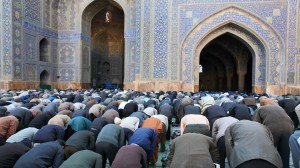
Would a Muslim assembly with clear views on social justice be the sort of community I would recognise? Yes, of course, if it met the four criteria noted above, including that its primary allegiance was “ecumenical”, that is, to similar communities of justice across religious barriers, rather than simply sectarian.
In these matters we only begin to explore the relevance of this text for Scottish politics today.
A BLAST FROM THE FREE CHURCH?
After the introductory remarks in his letter, Paulos embarks on a sharply worded diatribe against the immorality of Gentile societies. Torah-observant Jews did find the Graeco- Roman culture shocking, especially its plethora of deities and its sexual promiscuity. From the time of the Ten Commandments Israel had rejected idolatry, meaning the representation of deity in images of any kind. The Jewish prophets depicted idolatry as sexual promiscuity, “whoring after other Gods” and denounced the sexual elements of Canaanite religion. Paulos is part of this cultural tradition and uses it in his diatribe, which will be offensive to some readers.
But God’s anger is displayed from heaven towards all the impiety and injustice of human beings who by injustice suppress the truth. The facts about God are evident to them, because God has made them evident. For the unseen things of God, such as eternal power and divine nature, are made clear to the mind ever since the world’s creation, in the things that have been made. So they have no defence. In spite of knowing God, they neither honoured him nor gave him thanks, but became idolatrous in their reasoning and overshadowed in their hearts. Trying to be clever they became idiots, exchanging the glory of the undying God for the fabricated likenesses of mortal men and women, birds, animals and reptiles. For this reason God handed them over, in the desires of their hearts, to the impurity of dishonouring their bodies with each other. They exchanged the truth of God for a falsehood, by serving in worship the creature rather than the Creator, who is blessed forever. Amen! Yes, for this reason, God handed them over to shameful affections: their females exchanged natural sexual behaviour for what is contrary to nature; and in the same way the males, neglecting natural sex with females, burned with lust for one another -males did shameful things with males, and so received in their own persons the due reward for their wrong belief. Because they did not think God worth their attention, God handed them over to a worthless compulsion to do worthless things.
They were filled with all kinds of injustice, depravity, greed and malice; full of envy, murder, violence, deception and craftiness. They became whisperers, slanderers, haters of God, insolent, proud and boastful. Inventors of evil, they were disobedient to parents, irrational, faithless, heartless and ruthless. Although they know the just verdict of God, that people who do such things deserve to die, they do them and are pleased with those who also do them.
Whoever you are, you leave yourself with no defence as a judge, if you do the very same things for which you are condemning others. For we know that God’s judgement is shrewdly made on those who do such things. Do you imagine if you stand in judgement over people who do such and such while doing it yourself, that you’ll escape the judgement of God? Or are you presuming on the abundant goodness, forbearance and long-suffering of God, ignoring the fact that God’s goodness is meant to drive you to a change of mind? With your hard and unrepentant heart you are piling up anger for yourself on the Day of Anger when God’s just judgements will be openly displayed. For God will reward each one according to his actions.
Whoever seeks glory and honour by the discipline of good deeds will get eternal life; whoever serves injustice through strife and refusal of truth, will get fierce anger. There will be sharp pain and distress for every human soul that produces evil, Jews first and Greeks after; honour and peace for every one that labours for the good, Jews first and Greeks after, for God has no favourite faces.
People who sin outside the Jewish Law will be destroyed outside the Law; while people who sin within the Law will be condemned by the Law; for it is not those who hear the Law who are recognised as just before God, but those who do the Law who will be justified. When people who do not have the Law naturally do lawful actions, they are a Law for themselves, although they do not have the Law. They show that the actions of the Law are written on their hearts, as their conscience confirms; with their embattled thoughts either denouncing or defending them, on the day, when according to my Joyful News of Messiah Jesus, God will judge the secrets of men and women.
Yes, it’s a notorious text in which Paul views homosexual relationships as God’s punishment for idolatry. Should we not simply give this passage the body-swerve, because it expresses a religious judgementalism which we know only too well today, and which is still fuelled by this kind of biblical material? My conviction is that we can learn a lot by trying to understand cultural prejudices with which we disagree. Before I do so, I must state my own disagreement with what Paulos wrote in this passage; I do not consider homosexual relationships to be a punishment for idolatry. I think of them in exactly the same way as heterosexual relationships, some good, some bad, all human.
Paulos begins by setting out an argument for faith in a creator God which would be rejected by many people, including many believers today. He says God’s deity can be easily discerned in the cosmos. “The heavens tell the glory of God and the firmament shows forth his handiwork” says the Jewish psalmist. This constitutes not so much an argument from design as an immediate apprehension that the cosmos owes its existence to One who is beyond all worlds. The cosmos has not simply happened but is, in all its contingency, ordered by divine wisdom. God, the one source of the cosmos is for Paulos the only acceptable object of worship; and he regards failure to perceive this truth as culpable. All people, in his view are capable of recognising their creator.
Most readers will reject this supposition out of hand. Many of those who have studied the cosmos most carefully and understood its processes most precisely, do not apprehend it as created by any God, but as having evolved according to its own laws from a roughly datable singularity often called the Big Bang. Although this scientific knowledge is far from well-known, its dismissal of a creator has become a common possession of our culture.
I will return to the issue of the creator God but meantime move on to Paulos’ assertion that those who do not worship a creator God are open to all sorts of idolatry, offering worship to images that represent worldly powers of wealth, sex, success, knowledge, or empire. His view of this worship is subtle in that he considers these idols to be negligible in themselves but given power by human allegiance so that they become formidable forces in the life of individuals and cultures. The accusation of idolatry in contemporary societies is a common enough piece of pulpit rhetoric, but it may have a grain of truth for all that.
If it were possible for Paulos to look at our advertising images in electronic media, print and light displays, I think he would see them as offers of idolatry. With all their sophistication, wit, and artistic skill they are not merely seeking an act of purchase, but the continuing allegiance of the mind and heart. They mean to insert themselves into our dreams and obsessions, while promising a public persona which will give us success in a world of competing deities and their acolytes. Terms developed in anthropology and sociology to describe the operations of religions in society, turn out to be quite appropriate for describing the effects of advertising. I like to say that I am resistant to advertising and am describing its effects on others, but I’ve just replaced my car with a new one and taken a winter holiday in Spain. Resistant?
At a different level, as a Glaswegian I have experience of football idolatry as practiced by Rangers and Celtic FC’s, whereby the innocent colours blue and green take on divine or diabolic significance depending on who you support and team strips are sold like holy vestments to the faithful. This idolatry also involves periodic human sacrifice in the ecstatic killings of supporters of the opposing team.
Money itself is worshipped. Flamboyant forms of worship include betting and the lottery, while more frenzied devotion is seen in Stock Exchanges, and more solemn adoration in the quiet boardrooms of banks and multinational companies. As the Cash God begins to topple the more mobile God Credit is ready to take over. Of course my description of these activities is biased, but I do in fact think that a degree of idolatry is necessary to arouse the moral determination on the one hand and the compulsive hysteria on the other, that global capitalism needs to survive.
Idolatry is a form of addiction, controlling thought and action, in both individuals and collectives. The belief that unlimited growth is possible on a finite planet is the kind of delusion that often afflicts addicts: more is always better and possible. The careless disposal of waste, so common in capitalist societies, could be described as addictive guilt: we have consumed too much, but we have disposed of the evidence: my pockets are free of syringes, my room is free of bottles, my car is free of Kentucky Fried Chicken.
Because it is hard to resist all the kinds of idolatry on offer, there are aspects of our lives which are determined by it and our consequent addictions. For a surprisingly large proportion of people, the feeling that they are no longer in control of their own lives, is worryingly common. In chapter 7 of his letter Paul describes the enslavement of human beings to worldly powers, so we will return to this topic. At present it’s enough to note that his criticism of idolatry is not irrelevant. His remedy of course is that people should worship One invisible God who cannot be imaged, the Creator.
For him true worship expresses affection for our own nature as part of the nature of the cosmos. We do not make ourselves or the cosmos but receive them as a gift for which we should be grateful – to the Creator, Paulos says – but without faith, we can still practice the affection for what we are and the gratitude for what we have received. These are natural responses to our existence in nature. Paulos thinks that when we worship idols or imagine that we are self-made, we refuse this gratitude and deprive ourselves of natural affection. Our alienated affections can then be given to false Gods or to unnatural relationships, which he wrongly identifies as homosexual behaviour. We can see why he thought it unnatural, given his Jewish faith in creation and his experience of homosexual behaviour. There is no record from his time and place of what we might call faithful homosexual relationships, only casual or orgiastic sex of which he probably disproved anyway. But while we reject his specific application of the phrase “unnatural affections” we should look carefully to see if it can be applied to some of the compulsive behaviours I have described above.
There is moreover the sad evidence that our affection has been alienated from the natural world and its life. In Dallas the other day there was an auction of permits to kill animals including an African black rhino, for fun. The biophilia which is natural to us, and which would be a powerful aid to preserving our planet as a biosphere, has been taken away from some of us and given to our idols, including the God of Death. If we cannot worship the Creator, we can free ourselves from idolatry and addiction by cultivating gratitude for all we have received and affection for all that we are. Gratitude promotes humility while affection fosters kindliness and this ensemble of emotions is the basis on which we can construct our ideas of justice, goodness, peace and beauty.
Paul accepts that gentile unbelievers have fashioned their own forms of private and public justice, and should be recognised as a “Torah to themselves.” The Creator God, he says, will acknowledge their goodness and reward them for it. Paulos values the educated conscience of the non-believer which is their inner guide and judge.
I would sum up my analysis of this passage as follows:
1. Paul’s diatribe against idolatry is not irrelevant o our current social and moral concerns.
2. His analysis of idolatry as leading to destructive addictions is a persuasive description of some human behaviours under global capitalism.
3. His remedy for idolatry, that people turn to the one true God, the creator, cannot be pursued as a political goal; but the combination of gratitude and affection for life which he advocates can be nurtured by education and other communal institutions.
4. Gratitude and affection for life can free us from idolatrous culture and enable us to develop the humane personal and social moralities, which are, in spite of all deformations, natural to us.









 In our economy those to whom we entrust our frailest dear ones in their time of greatest need are poorly paid and poorly regarded as a profession.


 If Jesus saves, then he must save his followers from the sin of unjustifiable certainty. And the evidence of the Bible is that in life he hardly demanded adherence to any doctrine but asked people to follow his way, did not denounce his enemiies for theological errors, but argued for his own view; called some scriptural commandments, “sayings from the old times,” and modified them. He reserved his sharpest language for religious leaders who knew they were right. He loved the scriptures of his people but interpreted them in the light of God’s goodness. His argument against divorce is a classic instance: God in his goodness has made male and female of equal value and their sexual union is never trivial but always holds the promise of lasting faithfulness. He suggests that the Genesis story is more important than the Mosaic commandment.
 For my thoughts are not your thoughts, says the Lord,