Living words……
 Every now and again, something happens to wake me out the routine of religious duty in which by choice I live, to remind me that I have another life focused on words, on their meaning and beauty in the works of great writers of many languages, especially perhaps, in poetry. This is a life which I share with my wife who has an incomparable memory for such words, and with my late best friend, Bob Cummings, whose knowledge of the history of literature was the envy of other great scholars. To some of my readers this may seem a kind of life which is a bit precious and privileged, at some distance from the “real world.” But no, for me it has always helped my engagement with mundane reality that there is another dimension where words are neither banal nor ugly but come dancing with precision, rhythm, melody and meaning. If verbal langauge is one of the defining abilities of humanity, then surely its good use is one of our defining glories. Sometimes the great words may be profound like the opening of George Herbert’s poem:
“Love bade me welcome but my soul drew back
guilty of dust and sin”
or they may look quite ordinary. When Hugh McDiarmid was asked for his favourite line of poetry, he surprised the questioner by answering:
“ye arena Mary Morrison”
yet I agree that it memorably expresses the vexed particularity of romantic love.
Belonging to this world of words means that one’s everyday existence is accompanied and occasionally pierced through, with words from other times or places that make it harder to live superficially. I am not claiming some virtue here; I like superficiality as much as the next man or woman, but my heritage of great language is also intrusive.
These reflections are inspired by two experiences this week. One was pausing at the end of my almost daily run on the beach to look at the sea on a bright spring morning, only to have come into my head, Shakespeare’s lovely platitude,
“Like as the waves do make towards the pebbled shore
so do our minutes hasten to their end;”
Did I want reminded of that at my age? No, but the words stayed with me long enough to set me thinking about my dear dead ones, and more selfishly, about a bucket list of desired experiences before I snuff it.
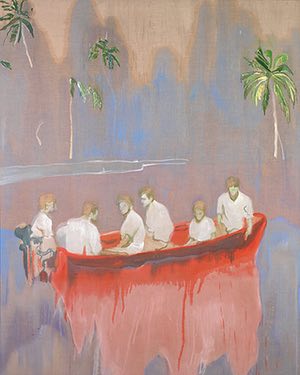
The other was reading an obituary of the poet Derek Walcott, whose work I have enjoyed over many years. Shortly afterwards I came across a review of his latest published book, “Morning, Paramin” a collection of poems written to accompany an equal number of paintings by Scottish- born artist, Peter Doig, which I ordered immediately and received yesterday. It is one of the most beautfiful books I have seen, with each painting answered by a short poem on the facing page. Peter Doig is a figurative painter who focuses on people and places. These paintings are mainly inages from Trinidad where he lives. Walcott is a renowned poet, who is capable of great simplicity, wit and melody, in the same poem, as in the one about his dead wife which begins:
“To me the waking day is Margaret:”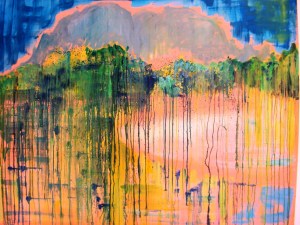
It is a privilege to possess such a book and to have the meanness of my own perceptions challenged by the colourful generosity of its authors’. I guess that’s the heart of my citizenship of this other world: through good words it allows me to particpate in lives that are more vibrant than my own; to enlarge my experience by entering into the deeper experiences of others. When Virgil wrote:
“Sunt lacrimae rerum et mentem mortalia tangunt”
literally, There are the tears of things and mortalities touch the mind,
he was not just expressing the sorrow of existence in great words, but also reacting to the great words of his predecessors.
In fact of course this human ability to enter, through words, into the lives of others, is also central to my religious life, since it is by that same ability that I can make contact with the life of Jesus of Nazareth. For how does that passionate, wise, humorous, courageous, loving first century Jew burst into my twenty first century existence if not through his astonishing words recorded in the gospels:
 You have heard that it was said by them of old times, ” You shall love your neigjbour and hate your enemy, but now I tell you: love your enemies and pray for those who persecute you, so that you may be children of your Father in heaven, for he causes his sun to rise on the bad as well as the good, and sends rain to fall on the just and the unjust alike.”
The words are such a refusal of all normal human consciousness and conduct, such an explosion of alien intelligence into our world, that it’s no wonder my tradition tells me I cannot enter into them without the help of the alien intelligence it calls the Holy Spirit. If nevertheless, I have entered into them, they give me access to what my tradition has called the humanity of God.
“Oh the Lion of Judah shall break every chain
and give us the victory again and again”
Bass drum and kettle drum and brass cornet
backed by the Salvation Army choir, black, few and scrawny
at Chisel Street corner seventy years ago. It breaks
my heart quietly every time I hear it.
( A Lion is in the streets. Morning, Paramin, Derek Walcott and Peter Doig, Faber &Faber)
Images by Peter Doig
 The suicide killer leaves his story to be told by others. In the case of the man who killed four people in London this week, and seriously injured many others, his story has already been appropriated by IS, with little justification, and will doubtless be pieced together by the British security agencies in time. We tend to think that acts of suicidal killing demand an explanatory story, as they are otherwise incomprehensible.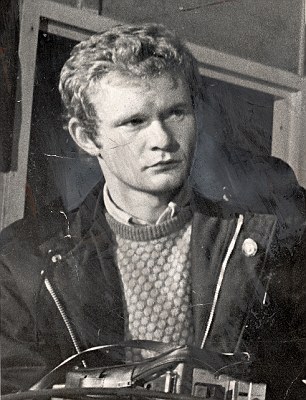
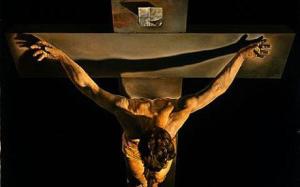 We may celebrate the conversion of a person from violence to such arts, as in the case of St Paul or the late Martin McGuinness, but we may guess that in both cases they were turned from violence as much by the quiet, enduring, courageous gentleness of some of their victims, as by the attractions of peace. The stories of such victims, along with that of Jesus, are the ones we need to tell, as publicly as possible. The human experiences which lead to violent impulses will always be present in people, but with the help of good stories rather than bad, they may sometimes be contained and used to fuel the struggle for justice and peace.
 One of the ways it’s not right is its racism, which is not at all peripheral to its message but central: God has chosen the Jewish people as his own, and therefore he treats other races as disposable. The promised land originally belonged to various other peoples, some semitic, some asian, some indo-european, who must have had their good points, but the Bible regards them as so much trash to be ethnically cleansed from Canaan so that God’s people can take it over. At times the Lord gets so annoyed at the continued survival of some of these tribes that he punishes his own people for not killing them off with sufficient thoroughness.
 This would be so blatant an instance of racism, that I translate it as “Judeans” instead, which gives the author the benefit of the doubt, that he may be referring to Jews of a particular sect, rather than the whole race. On the face of it however, we have, right in the heart of Christian scripture, a gross prejudice which has been used down the centuries as an excuse for persecuting Jewish people. In one of the tragic turns of history a race whose ideology set it above all other races, became a race that could be persecuted by Christendom for the crime of deicide, the murder of God. Paul’s multi- ethnic community which welcomed all-comers became, and remained for much of history, a church in whose scheme of salvation the hatred of Jews was well-embedded.
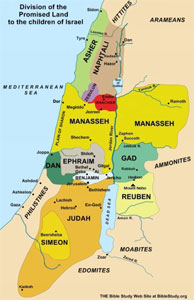 The contamination of the Bible by racism is evidence that there is a deep-seated human impulse to fear the stranger, which can be corrupted into arrogance, exclusivity and hatred. If followers of Jesus are to oppose racism in their own societies and beyond, they must begin by confessing the racism in their holy book. But more, they should study the evidence of inclusiveness, multiracialism and equality in the writing of St Paul and in the communities of Jesus Messiah which he established. By any standards the man who argued that in his Messiah there was neither Jew nor Gentile, neither male nor female, slave nor free, deserves attention at a time when varieties of populism succeed by blaming the woes caused by capitalism on people of other race or nationality. If Christian churches could translate Paul’s inclusiveness into contemporary words and actions, they could redeem their own traditions and help build a humane alternative to the aggressive ghettos of Wilders, Farage, Trump and their like.



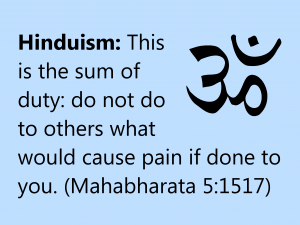 It was reading Confucius that made me think of it.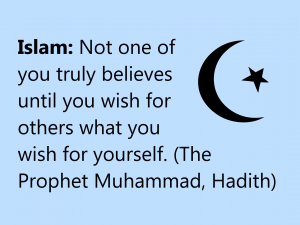
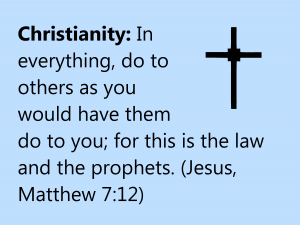 Confucius is one of my favourite philosphers, not least because he taught that the virtue of shu, reciprocity, should be very strictly practiced by younger people in their treatment of older people, like me.