Readers of this blog will not mind a reference to my Bible Blog on its special anniversar y. Yes, this is my two thousandth blog on my other site, emmock.com. With some gaps for holidays, family joys and sorrows and work commitments, it has continued at the rate of four or five blogs per week for some eight years. It has engaged my mind on good days and bad, acoompanied me through times of profound sorrow, travelled with me to Italy, Spain, Cumbria, Wales and Scotland, reminding me of my ignorance while demanding I use my knowledge to the full. It has introduced me to other bloggers and readers of blogs, whose warmth, faith, agreement and disagreement has become one of the happiest aspects of my journey. The blog has never had a huge readership but it is read over a huge area of the globe, from Scotland to Japan, from Russia to Australia, with the greatest number of readers always in the United States. The support and interest of regular readers in particular is an extraordinary privilege for which I record my thanks. Often their own blogs have become regular reading for me.img_0127
The writing of his blog has become my favourite daily discipline and pleasure, outstripping my run and my yoga, as it continually reveals to me the truth and relevance of the Bible. My readers will know that I have no time for the idea that the Bible is written by God and therefore is inerrant; it is written by erring human beings and only as such can it be the word of God. The spirit tells me as it told the grovelling Ezekiel, “Stand on your feet, and I will speak with you!” Nevertheless, the process of daily interpretation has only increased my love and respect for the Bible and its words in turn have nourished my life.

While I have been writing this blog terrible events have taken place in the life of the world and in my own life: so-called Islamic State is alive and my best friend is dead. For a large number of these blogs I noted the imporatant news of that day, as biblical interpretation can only rightly be done against the grain of world events.The news of the world and the joyful news of the Bible are mutual provocations.

Jonathan Swift, looking back at his early work, The Tale of The Tub, said that he could not believe “what a genius he had then.” I make no such claim for the blogs I have lately re-read, but some of them, for an averagely coarse and sinful fellow like me, are not bad stuff, although I say it myself, and may even be proof that the Holy Spirit works in unlikely pkaces. These are not scholarly interpretations, but the fruit of an intelligent wrestling with the material by someone who tries to remain open to 21st century events, science and arts. As such I hope they may continue to be of some use to others.img_0129

Blogs 1-1612 are based on one of the available Daily Lectionaries, because it was good to feel in tune with other readers across the world.

blogs 1612- 1717: are a simultaneous commentary on Genesis and Mark’s Gospel, using the Schocken Bible translation of Genesis, and the John Darby of Mark.

blogs 1718 – 1770: are a commentary on the two Letters to Corinthians

blogs 1772-1802: are a commentary on The Revelation

blogs 1803- 1843: are a fresh translation and a commentary on Psalms 1-43

blogs 1884- 1957: are a commentary on Luke’s Gospel

blogs 1958- 1966: are a commentary of The Fiirst Letter of John

blogs 1968- 1973: are a commentary on Ruth

blogs 1974- 1976: are a commentary on Jonah

blogs 1977- 1886: are a commentary on James

blogs 1887 forward: are a fresh translation and commentary on The Letter to Romans

IMG_0130.JPGThese are not scholarly commentaries. I have of course read many of those and benefitted enormously from them, but my blogs are simply evidence of how I read these writings “under the guidance of the Holy Spirit and within the fellowship of the Church” as my tradition urges me to do. They are closer to what used to be called “devotional reading”, a claim that will arouse derision amongst those who know my impious character.
The cynic philosopher Diogenes, who lived in a tub in the street, being reproached for his uncouth behaviour, replied, “if my naked arse brings honour to the truth, what then?”

I’m happy to adopt that saying as a motto for these blogs.

The bible blog website is:

emmock.com

Individual blogs can be accessed thus:

emmock.com bible blog x

This site is:

xtremejesus.co

IMG_0124.JPGWhen I’m tired, as I am for some reason this morning, I choose to read rather than write, and more often than not I read one of the Maigret novels by Simenon, which are being re-issued by Penguin. He is one of the masters of plain storytelling, combining speed of narration with an incomparable skill in inventing the right detail to engage the reader’s imagination. His sentences have an elegant logic, mapping the minutiae of events clearly for the reader to follow. Once he gets you hooked, you stay hooked.


Why is a good crime story so addictive?

Most people agree that it’s because of the denouement, which even if does not supply legal or moral justice, usually supplies a narrative justice, an explanation of the main events of the story. We may be patient with the detective/ police squad/ amateur investigator failing to nail the culprit, we may excuse the narrator who has hidden essential facts from the reader, but we will reject a story that fails to explain itself. We may agree that few things are explained in life as they are in most crime novels, but we do not read crime novels for a profound truthfulness to life, we want the special pleasure of being mystified and then enlightened.

That is why the events narrated in a good detective novel have such luminosity; we know that they are pieces of a jigsaw that as yet we cannot put together, but that they will be shown to fit into each other and to compose a recognisable picture. The very best writers will arrange that the pieces ultimately seem to fall together rather than being forced, and that perhaps there are a few pieces even at the end that are left over.  The events of the story shine not because we know the whole picture, but because we do not yet know it and trust that it will be revealed.

One of my brothers has been questioning the eschatological elements in the New Testament, especially in the letters of St. Paul. The term is derived from the Greek ‘eschaton’ meaning the end, and is used by scholars to refer to passages about the “end times” when God’s rule will established and Jesus will return. The first Christian believers, and perhaps Jesus himself, imagined that the arrival of the rule of God was imminent, within their own lifetimes. The later church abandoned belief in its imminence while holding to the conviction that it would arrive sometime. Only a few sects today still think that we should watch and pray in case it catches us sleeping.img_0125

I still hold the conviction that God will ultimately gather all the strings of universal history together and bring it an end which may also I guess be a new beginning. Indeed I could not trust in any God who did not do so. For I recognise the randomness of the events of energy as revealed by quantum physics, as well as the huge waste and pain of evolution. I find my knowledge of the present suffering of sentient beings very disturbing, and even more my knowldege of human evil, including my own. Any God who failed to make sense of all this would not be worthy of the name. Buddhism doesn’t imagine that any sense can be made of it, and therefore it has no God.

Readers may react by asking what right I have to invent the God I want. Well, that’s faith, isn’t it, inventing the God you want? Most of us do this along with a tradition which has invented and re- invented God over the centuries and is likely to be broader and deeper in its inventions than any one of us on our own. Trivial religion invents God or gods that answer trivial desires; profound religion answers more profound desires. But we should never forget that all our stories about God are our own invention, and that we  are responsible for them, if for example they cause suffering or injustice.

As it happens the  Christian tradition has invented a God who will take full responsibility for the universe, and will bring it to perfection. The tradition also identifies Jesus as the prime actor in that perfecting, in his historical life, in risen life now,  and in the end time. The book of The Revelation, much misunderstood by its readers, gives me the clue to the nature of the perfection by saying that Jesus the victim and sacrificial Lamb is at the heart of God’s rule, and promises me in the final image of God in our Bible, that, like a mother, he will wipe away all tears from the eyes of his children.

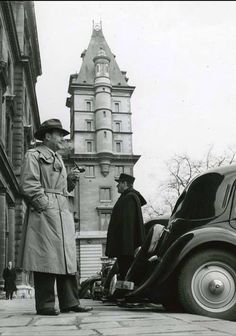
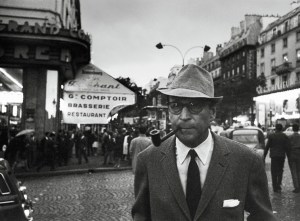
BELGIAN WRITER GEORGES SIMENON

That means for me that the events of my life and all the events of which I have knowledge are not mere happenstance, but elements in a story whose culmination I do not know, but which I trust will have a culmination. “Now we see puzzzling reflections in a mirror; then we shall see face to face” ( 1st Corinthians 13).  No event in the story is any longer complete in itself for it may be changed by the culmination. No event is banal – like the routine crucifixion of a Judaean prophet in CE 33 – for it may turn out to be crucial to the outcome of the plot. History is not just tragedy or farce, but shimmers with possibility, like the details of a Montmartre night club described by Simenon. If I was more daring than I am, I might suggest that it all added up to a divine comedy.

Paul Gascoigne Playing the fool of is that the flute while playi

Not since Gazza’s infamous imitation of a flute band has there been as big a kerfuffle at Rangers Football Club, as has been caused by Joey Barton’s self – opinionated public rubbishing of his fellow players at Ibrox. I had wondered if adding a notoriously hot-headed and somewhat ageing player to the Old Firm mix might turn tasty, but I’d expected that the hackles raised would be at Celtic, rather than his own club. The incident, albeit reported ad nauseam in the Scottish  press, remains unclear, but certainly involved Mr Barton speaking back to his manager. At present he has been sent to the naughty step for a period of time, possibly with the hope that he may return contrite.

There has been endless comment on this matter in the sports pages of the newspapers and online, and I had almost stopped paying any attention to it, when I came across a remarkable article by Barry Fergusson in today’s Daily Record. He is himself an ex-Rangers midfielder, who also played many times for Scotland. More relevantly however he was also involved in a footballing stramash entitled “Boozegate” which along with his public disrespect of critics, finished his football career at Rangers. In his piece today he refers to those incidents, and offers some advice to Joey Barton. Nothing new in that, you might think, but you’d be wrong.

Scotland versus iceland 2009
Barry Fergusson to his critics

Barry Fergusson is utterly honest about his own bad behaviour. He writes in some detail about the four days he spent at home, without distraction from newspapers or TV, looking steadily at himself, and as he says, not liking what he saw. He saw that there was no one to blame but himself, because he had chosen to do the things that had brought him disgrace. He goes further, by mentioning that he realised that these bad decisions were part of a pattern that he needed to break. He expresses gratitude to the manager who allowed him to remain until the season’s end and to the other manager who took the risk of signing him for his club. It is the most sensible and honest reflection I have read for some time.

Modern sporting gurus are forever telling sportsmen to “man up”, meaning that they should at least match the aggression of their opponents or counter their superior skill by force. The expression rests on a strange view of what it means to be a man, having little to do with courage and a great deal to do with testosterone. Barry Fergusson has proven his worth as a human being by his initial courage in looking steadily at his own character, and his greater courage in writing publicly about a painful episode in his life. I would be happy for a my grandchild to be influenced by this man.

img_0119
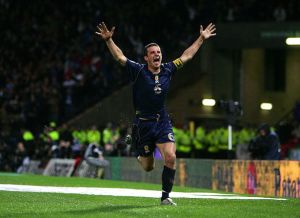
Fergusson scores for Scotland

As it happens, Jesus was a man. It is part of Christian teaching that he was without sin, yet when a prophet took to the wilderness and urged people to repent, he was able to  man up and join his fellow sinners at the River Jordan. The capacity to see and admit our faults and follies is is a prerequisite for goodness.


img_0115“The facts are friendly; God is in the facts….”


I’ve often used this phrase which is based on a working rule of Richard Rogers, the psychotherapist, who insisted that the facts were always preferable to any distortion or concealment.

But then I wonder why my own sermons are light on facts and heavy on ideas, feelings and beliefs. For example, I am utterly persuaded of the human contribution to what may become overwhelming climate change, yet I have never outlined the facts of this  development in any sermon. Doubtless I have mentioned it as a present danger, but I have avoided any serious recital of facts. This is not because I don’t know rhem, but because I know the congregation would prefer not to be faced with them, especially in church. In the context of Sunday morning, the facts seem unfriendly, divisive, challenging and impolite.

That’s because they are.

img_0113
The plastic sea, after Hokusai

I live near the sea, on the estuary of the river Tay, so daily I benefit from its loveliness, while daily also I can see its extensive pollution by human and animal excrement – in truth the water is not safe for swimming- and less visibly by tiny balls of plastic which havee become part of the marine food chain, affecting the lives of millions of creatures. Even before I look at the even more disturbing facts of the effects of the melting of the arctic ice cap, I have encountered facts which lead me to question my way of life, our assumptions about waste disposal, our industrial carelessness – and our irrelevant politics, which even at their best are about the division of the cake, at a time when the cake, and probably the table, may disappear altogether.

So yes, the facts are unsettling, and mentioning them is unlikely to increase church attendance.

But there are even more unfriendly facts. It appears from surveys that although more than 50% of Scots accept that humanly generated global warming is happening and dangerous less than 5%  allow this issue to affect their political choices. This may be evidence of a people sleepwalking to disaster. In comparison with the projections of what may happen as global warming continues at its present rate, the facts of the human assualt on nature are kind indeed, because if people can  accept them and act upon them, they will change in a benign rather than catastrophic direction.  img_0114

Pope Francis has spoken of the filth with which human beings have besmirched God’s creation; he has described capitalism as the devil’s dung. This plain speaking has not won him many friends, but it has emboldened many priests worldwide to speak out in turn. That will surely contribute to a political climate where people might just vote in favour of their grandchildren’s safety.

The witness of the Bible is that God will not intervene to save this planet from his human children: God will only act in partnership with them, just as he/she works in partnership with all life and all energy. God is present to humanity in the facts offering the hard choices that lead to life. The ministers of the church, like me for example, ought to direct people clearly to the friendly facts.


There’s a courtesy in giving credit to people’s assertions of faith, particularly if we know them and consider them to be honest. We assume that what they suggest about their faith in Buddha, Allah, God, can be cashed out into words we can understand, if amd when we need them to do so. But because religious commitment is a minority pursuit in Scotland today, believers are given continued credit and rarely asked to pay cash. In a society filled with the lies of an aggressive capitalism – indeed a society where most mass media are engaged in persistent lying to dissuade people from seeking the truth – the truths of faith traditions may be helpful; and believers should be ready to state them in plain langauge.

So what have I got to say about Jesus?

1. The Christian tradition presents Jesus as a living person, who shares the life of God and the lives of human beings. He was a historical person who lived in Palestine, probably from 4BCE to 32CE when he was put to death by crucifixion. The tradition asserts that he was raised from death, and can be encountered in the human self, in the community of believers and in the “least important” of society. The tradition itself is a mixture of fact, faith, imagination and legend, and to accept it, as I do, involves appreciation of all of these.

2. Jesus’ teaching and public actions as recounted in the tradition, are focused on a God whom he calls dear father, and specifically on the creative actions of this God in the world. These creative actions are done through human beings such as Jesus, who discovered that the sick, the poor, the shamed and the rejected, were more open to God’s goodness than the rich and powerful. God wants all human beings to participate in his/her compassionate justice.

3. Jesus is my teacher from whom I learn how ro live. I encounter him in myself when I make an effort to follow his teaching. A great saint was able to say that his identity was longer as an ‘I”, but as one in whom Jesus lived. I can’t say that, but I’ve had glimpses of it, when my capacity for ordinary goodness apperas as a gift rather than an achievement. I act as if I were a child of God. Another way of describing this is that sometimes I act in the same spirit as Jesus acted, namely, in the creative spirit of God.

4. This spirit is intepreted by Jesus in his commandments to love the neighbour and the enemy, that is, to work for communal health and inter- communal peace; in his call to free oneself from the power and possession of wealth; and in his practice of healing and restoring people to full life. He also called this activity, the “rule of God” which he presented as joyful news that demanded a change of direction from everyone. The creative spirit is gentle to those who cooperate with it, ruthless to those who oppose it, but always kind.

5. Jesus directs me to God as the source of all goodness. God, he teaches, is not very interested in my sins. He forgives, gets them out of the way, so that I have no excuse for not living as a child of God. He forgives the “old” me for the sake of the “new” me. Jesus knew that his God could not be objectified and made into a another being in the universe. He/ she is beyond all worlds yet makes the sun shine and attends to the fall of a sparrow. He can only be spoken of in poetry and parable, in everyday poetry and bold parable, so that the God who cannot be defined can be part of the common language of his human children.

6. So the mystery of God is not that we cannot say anything about him, but rather that we name God as the source of life, love and goodness, who is passionately committed to the perfecting of all his creatures. The mystery, the beyond, is precisely this One who is also among us, acting and suffering in his creatures.Jesus models this presence for us in his readiness to act and to suffer for God’s goodness.

7. His resurrection is not a conjuring trick with a corpse, but the announcement of his aliveness and continuing ministry through his trusting communities in the world.

Maybe that’s enough cash for one day. I hope none of it is counterfeit.


This blog has been neglected somewhat in favour of my bible blog, emmock.com where I’ve been struggling with the task of translating St. Paul. Mind you, I was also on holiday, for five days, with my wife and daughter, in Ullapool. Over many years we’ve visted this town, stayed in a variety of holidau cottages, and loved the town, both for its 18th century gentility poised amidst such splendid hills and water, and for its easy access to those waters and those hills. Those who have never seen the hills of Coigach and Assynt will find it impossible to envisgage these extraordinary, individual, separate rock sculptures, strange cliffs and filigrees of sandstone perched on top of the oldest rock in the world, gneiss.image

I’ve climbed most of them, some of them many times, by myself or with my daughter,   relishing the particular architecture of each, the flora and fauna they share and the different human response drawn by each of them from me. The person who trudges up Cul Mor is not the same as the one capering on the pinnacles of Stac Pollaidh.

Stac Pollaidh….yes, when its improbable shape was first glimpsed by us this time, my daughter asked, “D’ you think it looks a bit smaller?” I thought maybe it did, while reflecting that whatever we think, it is getting smaller under the persistent erosion of   frost, snow, wind, rain, sunshine, as well as of the movement of creatures large and small, and the battering of human boots. One day in this world, it will be geological history, worn down to the level of the land. I’m glad I won’t be there.

imageLater I remembered that the first time I climbed it, I was a student, not yet working, unmarried, carelessly strong. I envy that young man the spring in his footsteps, his easy energy. I still share his sense of walking into miracles on every trek. Yet how much arrogant nonsense was in his head that required the erosion of years and experience to reduce to common sense! That recognition of loss of energy and a small gain in wisdom, makes me long to go back, to relive past splendours and excise past follies and crimes, to hear once more that music, to silence that idiot boasting, to be there for the one in need rather than avoiding them.

I realised that not only the mountain changes but also the person looking at it; and that just as surely as the mountain, this person will crumble to nothingness. In the great spaces, with their capacity to clear our minds, time becomes real, the impermanence of the world is evident. Thich Nhat Hanh, the Buddhist teacher, reminds us that impermanence is life; nothing can be born, grow and flourish without impermanence. He counsels us to get used to it and enjoy it. That doesn’t sound very Scottish to me; why not get used to it and girn about it? image

One of Scotland’s great poets was born in Assynt and kept coming back to it. Norman McCaig wrote many poems about the hills of Assynt and their creatures including homo sapiens. Here he is, saying succinctly what I’ve been blethering about:

Everything’s different now from what

everything was. Good.

But I like it too when I look

at a thing I’ve known for years

like a landscape, and you, and think

they’re just the same,

they haven’t changed a bit.

I know that’s nonsense.

Do you hear my voice faltering?

Do you see the moistness in my eyes?

Time loves one child – difference,

and kills another – sameness,

and torments us all

who love both.

………………………………

Yes, how does he get the words to march so well together?

imageBut maybe he asssumed that we all love sameness, because change is ultimately destructive. But when I think precisely about my own feelings, I want to say that I am attracted to sameness, but I love change. My Christian tradition tells me that God is the spirit of change, because God is the spirit of life, that in its grace and ruthlessness, continues,  in this world and beyond, the process of God’s evolving creation,  the erosion and rebuilding of all things. That too is something I need to get used to, and girn about.


I have another blog at http://www.emmock.com

For many years now I have used it to provide an almost daily comment on some book of the Bible, and have just this week embarked on a reading of St. Paul’s Letter to the Romans.  Written perhaps around 60 CE, it is Paul’s most deliberate exposition of his message about the one he called Jesus Messiah.

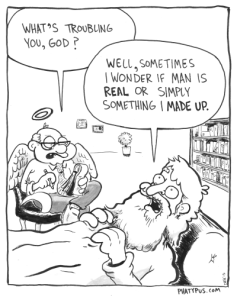
How's My Omnipotence? 1-800-CREATOR

I guess most people, maybe even most Christian believers, will wonder why on earth I spend my time browsing over such an ancient text.  They would doubtless admit its historical importance, bur would not imagine it to have much contemporary relevance. Of course I would defend my habit by asserting that Paul is one of the greatest and certainly one of the most influential thinkers in history, without whom we cannot understand the transformation of Jesus- Judaism from a small sect into a world religion. But in fact I find that Paul’s method of thinking about God and his insights into what is good for human beings are challenging to me here and now.

I could for example take his view of the followers of Jesus not as a new religion but as a new form of humanity, able to live peacefully in multi-racial, multi-national communities, even while being persecuted by a great world empire. But rather than that, I want to pluck a tiny phrase from the first section of his letter to the Romans.

“I am shameless about the Joyful News, since it is the rescuing power of God for everyone who trusts in him, for the Jew first and also for the Greek. For the saving justice of God is unveiled in it, from his trust to ours, as the scripture says, “The just will live by trust.” (Translated M Mair 2016)

Paul is writing about the justice of God, which he understands as the principles by which God desires to order the world. This kind of justice, he says, is unveiled in the Joyful News, that is, the Christian story of Jesus – and he adds, lietrally, from trust to trust. He can only mean, I think, from God’s trust in humanity to humanity’s trust in God. Now I am accustomed to thinking of humqn faith or trust in God as the basis of many religions, but the notion of God’s trust in us is more radical, and as far as I know, a specific invention of  Judaism.

imageThe Jewish bible begins with the story of a creator God who makes a universe and creates life in it, including that of creatures made in his/ her own likeness, who will look after it all on his behalf. Instead these human creatures decide to grasp the knowledge of everything and to rule the world on their terms rather than the creator’s, who is left scarmbling to catch up with his rebellious creatures without wiping life out altogether. After repeatd failures, God realises that he cannot command human cooperation in his wish to bless his creation, and that he must therefore ask for it, by starting with just ine family, that of Abraham. In the end of the day this God has to trust human beings to help him bring his creatives project to perfection, meaning that God has more faith in humanity than I do.


This is such an appalling theology that hardly any Church has openly adopted it. It’s doesn’t sound much like what people want from a God. Any respectable God will have a CV full of mighty acts and irresistable projects; he/she will certainly be omnipotent if not omnicompetent; and anyone who refuses obedience better guard their ass when God’s Big Day arrives. That’s what a proper deity does.

The classic texts of Christianity do have some elements of that kind of God, in particular of the notion that one day God will actually exercise his power, but the great  stories of the Bible present an impossible God, who hobnobs with human beings, requires their company and cooperation, and cannot even turn the sending of his Son into a worldly success. This undignified God lurks behind the other more acceptable Gods of the Bible, the sender of the flood, the destroyer of Sodom, the killer of Canaanites, the smiter of Assyrians, the beater of Babylon the Great Whore.

This is the strange God of Genesis and Jesus’ parable of the Lost Son, who is so crazy for love of his/ her disobedient creature that he/she perseveres in the face of all the evidence, that he/she puts the divine repuation in jeopardy to keep faith with humanity. This understanding of God is made explicit by Jesus, who lived and died in the responsive trust that human beings may give to this God.

God will not do the bizz on his/ her own. God refuses to be that sort of God but is determined to perfect creation with the help of his creatures. I guess that still leaves it open that human beings may make the big refusal and disappear into the evolutionary dustbin, but if so, my belief is that God will ultimately find a suitable partner.

"Omnipotent?! I thought you said impotent. And you're out of wished, too."

Meanwhile Paul reminds me of God’s trust in me. The only theologian I know who has made much of this theme is Bishop Desmond Tutu. In his book “God has a Dream” he states that “God believes in us” emphasising the dignity and responsibility this gives. He has certainly shown in all his life the confidence that God will not do it on his own and that believers must themselves receive and exercise his/ her justice.  As against all the main iterpretations of it, I think this is what Paul meant by the Biblical phrase, “the just will live by trust.”

So, yes, I find that the understanding of little phrases like Paul’s “from God’s trust to our trust,” easily justifies time spent on bible study.


I listened this morning to the minister for Education, Ms. Greening, defending the Government’s plans to permit a new generation of selective schools in England and Wales. She emphasised that unlike the grammar schools of old these would not be exclusive upper middle class enclaves but would serve bright kids from all classes, thus giving all parents greater choice over the education of their children. For example, if parents wanted to protect their kids from having to mix with poor trash kids, they would no longer have to pay for the privilege, or even pretend to be Christian to get them into Faith Schools, but could choose to enjoy educational apartheid at public expense. image

Well no, Ms Greening did not say that, but she meant it. In education, as in many areas of public policy, GREATER CHOICE is code for favouring the few at the expense of the many, and private purchase over communal provision. The Thatcherite destruction of Council Housing is a case in point. It gave people the choice of owning their former council house, thus putting public assets in private hands, and depriving future generations of working people of decent affordable housing. The privatisation of transport services such as bus and rail was sold to the public as a way of giving them  greater choice, for example the  choice between paying exhorbitant fares for a poor train service or walking to work. Soon I predict, the Government will be encouraging the growth of private hospitals so that patients who are having to wait for rationed NHS treatments will have the choice of paying to skip the queue, while those who can’t afford it will have the choice of dying. We’ve heard of “spoilt for choice” but such measures give “choice for the spoilt.”

Some will point out that the postwar grammar schools did include some working class kids who then did well, but that was against the background of the greatest social equality that Britian has ever enjoyed, whereas now, after Mrs Thatcher got rid of all that equality and its institutions, a neo- thatcherite government is liberating the rich to forget the poor and concentrate on so-called wealth creation. In such a climate new grammar schools will simply become a way of asserting that the poor are thick as well as lazy.

CHOICE is of course a capitalist strategy. If you want people to buy more than they need, you have to offer choice, like the multifarious choices you have to make to keep up with fashion, or the 23 varieties of tomato on sale at your local supermarket. Even if we always buy basic tomatoes, the display tells us that we live in a world economy where exotic choices have become possible for the ordinary person, due to our capitalist market – economy.

All this choosing keeps us buying, which of course supports the economy, but even more imporatntly it keeps us from looking too hard at our masters, like the bread and circuses of ancient Rome. We are given thousands of trivial choices while being deprived of any real choice in how we live and how we are ruled. The rich get richer and the powerful get more powerful than the governments of many small countries.image

If we want some influence over the human response to global warming, we better reject the notion that grammar schools are a worthwhile choice. If our great-grandchildren are suffering the consequences of global warming, survival rather than education may be their first priority. The bible has always pointed out that practical wisdom is worth more than rubies, and that God’s teaching is better than fine gold. Jesus made it clear that human beings have one fundamental choice: to serve either God or Wealth, for they cannot serve both. Only this choice matters, for if we make the wrong decision, no fruitful choices are left.

I find myself at the present time unexpectedly pushed back into regular ministry to three congregations, with all the joys and stresses that entails. One of the latter is a mistaken reaction from people outside the church to my conduct of public ceremonies like funerals or weddings. They mistake my blunt humour for entertainment, and tell me untruthfully that if their minister was like me they’d come to church. I know they are lying even according to their notions of what  coming to church might mean, but my greater concern is with those notions, which imagine Christian faith as a kind of spiritual top-dressing for the lush lawn of their lives. Jesus was brutal towards people who liked his style and insincerely promised to follow him; and doubtless with them in mind, he told his disciples not to “give holy things to dogs or throw pearls to pigs.”image

In many decent people these words evoke a sharp intake of breath. Because they are abusive, judgmental and divisive, some might even say, self-righteous, altogether the opposite of what we might expect from Jesus. For that reason, amongst others, I think they are genuinely the words of Jesus and not of his followers. There is a prejudiced edge to them which chimes with Jesus’ initial insult to a Canaanite woman who came asking help for her sick daughter. ( “It would be wrong to take the childrens’ bread and give it to the dogs”) In that case Jesus learned from the woman to reject prejudice. In this case, I think Jesus may just be using a piece of popular wisdom about giving people gifts that they are not capable of appreciating. The great and terrible truths of faith are not for people made unclean by their own relentless superficiality or selfishness. Or rather, they are for them, but they are not ready to receive them to their benefit. They might even seize upon them without changing their lives while claiming to believe them. That is to say, the evangelical announcement of God’s goodness and the call to turn towards it, are always relevant; but the inner realities of worship, prayer, and scripture are only for those who know how precious they are.

The difficult words also go with Jesus’ command to make no public display of piety, in prayer, or in good deeds. These are only for the eyes of the “Father who sees what is done in secret.” Dietrich Bonhoeffer, the German theologian killed for his opposition to Hitler, spoke of the need for believers to have a secret discipline, communal and personal routines of relating to God, which, like sex, would be private and not for public consumption. The public expression of their faith, he said, should be simply right action.image

In these recommendations of Bonhoeffer the tradition of Christian monks and hermits is recovered and renewed. He admired their disciplines of prayer, scripture, poverty and obedience, but not their complete withdrawal from the world. The whole point of the discipline for Bonhoeffer was to equip the believer for faithful action in the world and for the world.

But keen eyes will see I have wandered away from the accusation that Jesus was guilty of abusive lanaguage when he labelled people as dogs or pigs. I concede that the words are pretty robust and might not be approved by a modern bishop or church assembly. But Jesus’ language is often marked by vividness, exaggeration and humour. He wants his followers to see the danger of people who are no better equipped to know the value of holy truths than dogs to appreciate sacrificial leftovers or pigs, pearls.

Many are called, he said, but few are chosen. This saying of Jesus relates to an old Jewish story that God offered his Torah to all nations but only the Jews took it up. In the same way Jesus’ mission invited all to receive God’s goodness, but only a few wanted it. Most people have only scorn for  what believers consider as holy or as pearls of wisdom. True religion of any kind is a minority sport.

Mind you, pigs and dogs are my favourite animals.


At primary school I learned a song that went, “Trees are green, Trees are brown/ autumn leaves come tumbling down,” but because a girl called Theresa Green lived across the street, I sang the words as printed above, imagining that they paid tribute to the variety of Glasgow Theresas – of which there were many amongst the Roman Catholic population, most of them called after St Theresa of Lisieux, a smaller number if any, after St Teresa of Avila.

And now there’s to be another St. Theresa, the Albanian nun whom all the world knows as Mother Theresa of Calcutta/ Kolkata.

I like saints but I’ve never been able to muster much enthusiasm for Theresa of Lisieux, with her visions of the Virgin, which seem to me to be the worst form of Catholic hysteria. Teresa of Avila is an altogether more interesting person, who established the more rigorous branch of Carmelite nuns, the “shoeless” order, in 16th century Spain, and recorded her spiritual adventures, exploring their meaning in a number of books. She became notorious through her description of an angel thrusting a spear into her heart and arousing in her an agony of pain and pleasure. The depiction of this by Bernini in a famous work called the “Ecstasy of St Teresa” which can only be called orgasmic, established this image of her, rather than of her identity as one of the few female doctors of the Catholic Church. She was part of a movement in European Christianity, which emphasised real experience of God, and suggested disciplines which might lead to such experience. The Ignatian Spritual Exercises, which may have been known by Teresa, are another example of this movement, as indeed in a very different way, is the Lutheran Reformation.

image.jpeg
Bernini, St Teresa

I think that Mother Theresa would have found the experience of her great namesake puzzling, as she was honest enough to acknowledge that when she prayed she experienced nothing but silence: God did not communicate with her. Indeed I think that her experience of the loneliness of prayer led to her closer identification with the Jesus of Gethsemane and the cross, who prayed to be spared suffering, got no reply, and was abandoned in his dying. She believed that in this world human beings experienced God in suffering more truly than in prayer and worship. She was a tough cookie who believed in a tough God who gave his human children a tough time. That’s why people could criticise her for being more concerned with tending the suffering of the poor, than with how it might be prevented. She believed that their suffering was holy.

Although I totally disagree with the practical policy she deduced from her religious experience, I can identify with her honesty about the absence of God. When I pray God does not answer me in any mystical way. I experience nothing analogous to a reply, except the silence, which I imagine says to me, “No, I am not here; and no I can’t arrange the universe to match your prayer for that sick child, except through people, some of whom may be acting out of real goodness and others out of a desire to further their career. Get off your knees and at least make sure you’ve still got a national health service.”

Mère Teresa
tough cookie.

In other words, in my faith, God not only does not become part of human experience, he/she does not act in the world either – which means that those who believe in the God of Jesus have to get on, as he did, with doing what good we can, here and now. Mother Theresa certainly acted as if God were not avaialble, persuading churches and bullying millionaires to support her mission. We cannot step outside of our story about God to meet God, because the story tells us that the One God is beyond our experience and beyond the universe. Because God is not here, our experience of God is not some specially cultivated unworldly reality, but the whole of our experience in the world which tells us that God is not here. Therefore we must be open to the Holy Spirit, namely the courage to change what can be changed, the serenity to endure what  cannot be changed and the wisdom to know the difference, along with our fellow beings, as Mother Theresa did, as Jesus did.