The world has been delighted with the story of Ms. Rohan Beyts who this week sued the management of the Donald Trump golf course near Aberdeen for taking photographs of her URINATING in the long grass as she crossed the course towards the sea. Ceratinly she had protested publicly against building this golf-course but she stated that her action was only related to a CALL OF NATURE and was not in any way a protest by different means. Her fellow Scots believe her because they consider that the owner of the course and his management are not worth even a millelitre of Scottish URINE.

Evidence showed that at least two male security operative sprang into surveillance mode when they saw the petite figure of the dangerous agitator making for the sand dunes.

“Uh-uh, buddy, guess we got a problem here….”

“Yeah, looks like this dame’s gonna PEE-PEE…..you think we should intervene..?

“No, she’s movin’ too fast, it’s too late to stop this atrocity…..

“She’s gonna SPRINKLE HER TINKLE all over the sacred surface on which the Great Leader has trod…. we gotta…

“We gotta act with supreme courage….. and video this crime….

“Good thinking buddy, yeah, just switching on now, and wow, we get this horrendous crime by a member of ideologically- motivated elite having a JIMMY RIDDLE where honest good golfers might land a ball….”

“Sure could be sabotage as well as public insult…like uh once she’s gone, some unsuspecting golfer lands a ball where she’s been DRAINING THE RADIATOR….

“And then maybe he picks up the infected ball and you never know what disgusting disease he gets – we gotta think of attempted homicide here….”

“Just keep the camera on this dame. she’s got no respect, no rescpect at all, shamelessly TAKING A WHIZZ in front of these cameras..”

“Sure is one long TROGGLE, soon be dinner time…”

“Boss man´s not gonna like seeing this video, what with it being a dame HOSING THE LAWN, uh, like the boss knows how to deal with dames, uh, like he said…..”

” Look Buddy, she´s movin´on now she´s MADE HER BLADDER GLADDER, we gonna confront her with the evidence?”

“No way, bro’, uh-uh, boss doesn’t pay enough for us to risk our lives with a terrorist like her, like a woman who could do this to a golf-course, just think what she could do to a human being-”

“So I need to go to the cops with evidence of this jihadi “POWDERING HER NOSE” while you phone the White House to update the boss…”

(Later)

” So what’s the word from the boss, bro’?”

“Uh, well, uh, he asked if we were ……..TAKING THE PISS!”

“Strange, buddy, that’s the exact same expression the Police Sergeant used….”

Ms Beyts, now celebrated in Scots legend as THE URINATOR (to match the man who fought the Glasgow Airport terrorists, John Smeaton THE SMEATONATOR), falied to win her case but celebrated nevertheless and said ( honest!) that she was RELIEVED it was all over.


IMG_0380Every now and again, something happens to wake me out the routine of religious duty in which by choice I live, to remind me that I have another life focused on words, on their meaning and beauty in the works of great writers of many languages, especially perhaps, in poetry. This is a life which I share with my wife who has an incomparable memory for such words, and with my late best friend, Bob Cummings, whose knowledge of the history of literature was the envy of other great scholars. To some of my readers this may seem a kind of life which is a bit precious and privileged, at some distance from the “real world.” But no, for me it has always helped my engagement with mundane reality that there is another dimension where words are neither banal nor ugly but come dancing with precision, rhythm, melody and meaning. If verbal langauge is one of the defining abilities of humanity, then surely its good use is one of our defining glories. Sometimes the great words may be profound like the opening of George Herbert’s poem:

“Love bade me welcome but my soul drew back

guilty of dust and sin”

or they may look quite ordinary. When Hugh McDiarmid was asked for his favourite line of poetry, he surprised the questioner by answering:

“ye arena  Mary Morrison”

yet I agree that it memorably expresses the vexed particularity of romantic love.

Belonging to this world of words means that one’s everyday existence is accompanied and occasionally pierced through, with words from other times or places that make it harder to live superficially. I am not claiming some virtue here; I like superficiality as much as the next man or woman, but my heritage of great language is also intrusive.

These reflections are inspired by two experiences this week. One was pausing at the end of my almost daily run on the beach to look at the sea on a bright spring morning, only to have come into my head, Shakespeare’s lovely platitude,

“Like as the waves do make towards the pebbled shore

so do our minutes hasten to their end;”

Did I want reminded of that at my age? No, but the words stayed with me long enough to set me thinking about my dear dead ones, and more selfishly, about a bucket list of desired experiences before I snuff it.

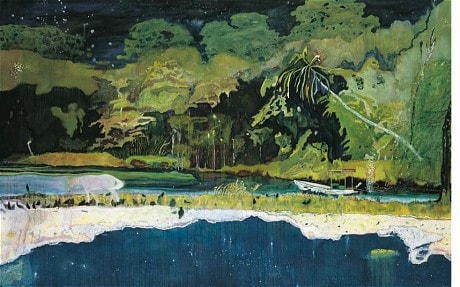
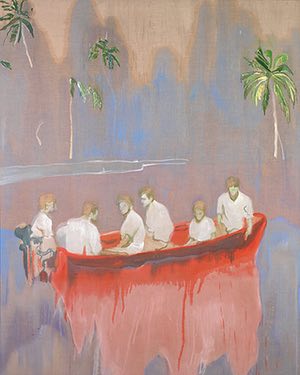
The other was reading an obituary of the poet Derek Walcott, whose work I have enjoyed over many years. Shortly afterwards I came across a review of his latest published book, “Morning, Paramin” a collection of poems written to accompany an equal number of paintings by Scottish- born artist, Peter Doig, which I ordered immediately and received yesterday. It is one of the most beautfiful books I have seen, with each painting answered by a short poem on the facing page. Peter Doig is a figurative painter who focuses on people and places. These paintings are mainly inages from Trinidad where he lives. Walcott is a renowned poet, who is capable of great simplicity, wit and melody, in the same poem, as in the one about his dead wife which begins:

“To me the waking day is Margaret:”IMG_0381

It is a privilege to possess such a book and to have the meanness of my own perceptions challenged by the colourful generosity of its authors’. I guess that’s the heart of my citizenship of this other world: through good words it allows me to particpate in lives that are more vibrant than my own; to enlarge my experience by entering into the deeper experiences of others. When Virgil wrote:

“Sunt lacrimae rerum et mentem mortalia tangunt”

literally, There are the tears of things and mortalities touch the mind,

he was not just expressing the sorrow of existence in great words, but also reacting to the great words of his predecessors.

In fact of course this human ability to enter, through words, into the lives of others, is also central to my religious life, since it is by that same ability that I can make contact with the life of Jesus of Nazareth. For how does that passionate, wise, humorous, courageous, loving first century Jew burst into my twenty first century existence if not through his astonishing words recorded in the gospels:

IMG_0383You have heard that it was said by them of old times, ” You shall love your neigjbour and hate your enemy, but now I tell you: love your enemies and pray for those who persecute you, so that you may be children of your Father in heaven, for he causes his sun to rise on the bad as well as the good, and sends rain to fall on the just and the unjust alike.”

The words are such a refusal of all normal human consciousness and conduct, such an explosion of alien intelligence into our world, that it’s no wonder my tradition tells me I cannot enter into them without the help of the alien intelligence it calls the Holy Spirit. If nevertheless, I have entered into them, they give me access to what my tradition has called the humanity of God.

“Oh the Lion of Judah shall break every chain

and give us the victory again and again”

Bass drum and kettle drum and brass cornet

backed by the Salvation Army choir, black, few and scrawny

at Chisel Street corner seventy years ago. It breaks

my heart quietly every time I hear it.

( A Lion is in the streets. Morning, Paramin, Derek Walcott and Peter Doig, Faber &Faber)

Images by Peter Doig

IMG_0377The suicide killer leaves his story to be told by others. In the case of the man who killed four people in London this week, and seriously injured many others, his story has already been appropriated by IS, with little justification, and will doubtless be pieced together by the British security agencies in time. We tend to think that acts of suicidal killing demand an explanatory story, as they are otherwise incomprehensible.
Before I speculate on the possible back story of the London killer, it’s good to put this killing in context. More people will have been killed this week in Britain by bad driving, than by him; and more will be killed next week. This week also has seen at least a hundred civilians killed in Mosul by the coalition of which we and the USA are part. Probably most British citzens along with the British Press will be far more aware of the London killings, than the others mentioned here. They have nevertheless their own stories of which it is worth reminding ourselves.

We sell motor vehicles by telling a story about power and speed. Yes, comfort, efficiency and reliability have also a place, but the dominant car story is the promise of greater power and speed than someone else. Given this aggressive story it’s not surprising that many people drive aggressively, and in some cases without much concern for the lives of others. This story also governs the reaction of our society to the usual killings on the road: we accept it as a normal aspect of our life-style, and are only seriuously condemnatory when the killing is especially blameworthy through drink or drugs or rage. These are our kind of killers.

The same is true of the “accidental” killing of civilians in war. We dismiss some as inevitable accompaniments of war, others as the kind of mistake which is all too easily made by people under great pressure. We understand that at times, our armed forces will break the Geneva Convention, because they are themselves traumatised by persistent violence, as in the case of a the successful appeal of a British soldier last week against his conviction for murder. We tell a story about our duty to intervene in troubled parts of the world to bring peace and good government, and view the service men and women we send into these places as heroic police rather than as killers. Thus the killing of a wounded enemy with the words, “shuffle off this mortal coil you cunt” was seen as proof of trauma rather than brutality. All such killings are part of the British story of moral intervention in an evil world, rather than a more truthful story of protecting what we regard as our national interest by violence in distant places. These too are our kind of killers.

Suicidal killers, especially if they are apparently Muslim, are not our kind of killer, because we see them as “radicalised” by a story told by fundamentalist groups of how Britain has been part of a long-term war on Islamic peoples, against which the only protection is jihad which offers its martyrs the immediate reward of heaven. Certainly the theology of IS includes this story.

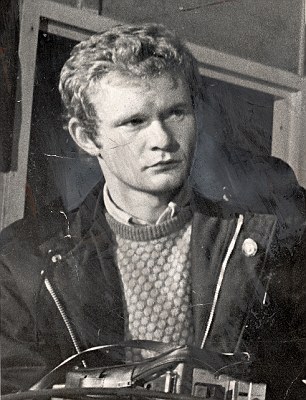
Martin McGuinness in June 1972 when he was leader of the Provis
The young McGuinness

In all these cases however we can see that a persuasive story intersects with individual character in a way which leads to, if it does not always justify, violence. The army commander who wants to minimise casualties to his own troops while furthering his career, may with the help of a story of our heroic intervention for the sake of humanity, decide that totally destructive bombardment of premises which probably shelter civilians, is justified.  The young driver may already feel annoyed to be overtaken, but the macho motor car story that tells him he is a wimp if he doesn’t respond may make carnage more likely. The black man who feels the pain of racial prejudice in Britain, may be emboldened by the narrative of Islamic jihad, to enjoy brutal violence to his fellow citizens, and even to relish his own death.

Notice that the effect of the story is to persuade the actor that violence towards another human being is not only not wrong but in fact positively virtuous. The violent competetiveness of the driver, the callousness of the soldier, the the bitter resentment of someone who has been the object of prejudice, these exist anyway; they are not called into being by the story. Rather, the story directs and justifies their expression. The specific mood of the stories is entitlement: the actor is assured that he is entitled to be violent. Something that might have been a bad but containable impulse, becomes a course of action that can be defended.

I make no apology for contrasting people who use violence to others, with the gentle people, the “meek” blessed by Jesus as those who will inherit the holy land rather than the Jewish jihadists of Jesus’ day. They are also given a story; in this case one which encourages them to trust God and to walk softly. It is a story about a fatherly God who makes his sun rise on the just and the unjust and sends his rain on the good and the bad alike. To be a true child of such a God involves treating other people as his children too and rejecting the persuasive narratives of hatred or indifference. Indeed the Gospel story of the leader who endures brutality without hatred, is a powerful encouragement to the decent, small, gentle people who are the salt of the earth. They are not wimps but have learned to channel their aggression into the arts of peace.

IMG_0379We may celebrate the conversion of a person from violence to such arts, as in the case of St Paul or the late Martin McGuinness, but we may guess that in both cases they were turned from  violence as much by the quiet, enduring, courageous gentleness of some of their victims, as by the attractions of peace. The stories of such victims, along with that of Jesus, are the ones we need to tell, as publicly as possible. The human experiences which lead to violent impulses will always be present in people, but with the help of good stories rather than bad, they may sometimes be contained and used to fuel the struggle for justice and peace.



I love the bible more than most people,  because I love it as it really is, with all its faults, rather than the magically purified version some believers read. Or perhaps in fact they don’t read it, they just read little text boxes from it; for in truth only a large degree of ignorance of its contents, can convince people that the bible is holy. It is a magnificent mixture of myth, legend, history, theology, morality, folk tales, liturgy, law, poetry, philosophy and propaganda; it laughs and weeps and howls with rage; it has a terrible beauty, but holy it is not, nor inerrant, nor always even right.

IMG_0371One of the ways it’s not right is its racism, which is not at all peripheral to its message  but central: God has chosen the Jewish people as his own, and therefore he treats other races as disposable. The promised land originally belonged to various other peoples, some semitic, some asian, some indo-european, who must have had their good points, but the Bible regards them as so much trash to be ethnically cleansed from Canaan so that God’s people can take it over. At times the Lord gets so annoyed at the continued survival of some of these tribes that he punishes his own people for not killing them off with sufficient thoroughness.

Now scholars tell us that it didn’t happen that way, that the Jewish settlement of  Cannaan was gradual and mainly peaceful, but that’s not the point: the Bible tells a story of brutal conquest and ethnic cleansing, and tells it with approval, attributing a greater degree of racism to God than to his humans. Fact. Certainly within the Hebrew Bible there are counterblasts to this racism, such as the many laws commanding care of the stranger and the foreigner, as well as the books of Ruth and Jonah which tackle racism head on; but it is nevertheless integral to the main story of that  Bible, which is of God’s unconditional love for Israel, and his relative unconcern for other peoples.

The New Testament presents a very different picture. The earliest writings which are the letters of Paul, show a mission devoted to the inclusion of Gentiles along with Jews in the Assemblies of Jesus, and a theology which regards the rejection of Messiah Jesus by his own people as God’s way of opening up his sphere of favour to the Gentiles. Paul spends a lot of time teasing out the issues which arise in the life of a multi- ethnic community, and he is adamant that Jewish Torah rules should have no place in the life of God’s new people.

By the time when John’s Gospel was written, say 100 CE, a further change has taken place, in that there is real animosity between followers of Jesus and Torah -observant Jews, so much so that it repeatedly refers to the opposition to Jesus, as “The Jews” using rhe usual Greek word for Jews, “Iudaioi”.

IMG_0372This would be so blatant an instance of racism, that I translate it as “Judeans” instead, which gives the author the benefit of the doubt, that he may be referring to Jews of a particular sect, rather than the whole race. On the face of it however, we have, right in the heart of Christian scripture, a gross prejudice which has been used down the centuries as an excuse for persecuting Jewish people. In one of the tragic turns of history a race whose ideology set it above all other races, became a race that could be persecuted by Christendom for the crime of deicide, the murder of God. Paul’s multi- ethnic community which welcomed all-comers became, and remained for much of history, a church in whose scheme of salvation the hatred of Jews was well-embedded.

The Mayor of London, Sadiq Khan,  visited Scotland last week, to give a speech at the Scottish Labour Party conference, in which he likened the national movement Scotland to racism, because both create separation between human beings on the grounds of their origin. The was a monumnetal stupidity even for a conference in which stupidies abounded. For a start the National party, the SNP includes people of all ethnic origins, including many English who live in Scotland. Its policy explicitly promotes a multicultural society and welcomes immigration and the free movement of labour within the EU.

But Khan’s error is also stupid in his view of nationalism as always exclusive, and likely to drift towards persecution on the  grounds of race. Yes, the Nazis were racist as well as nationalist. Yes, the Serbian nationalists who massacred Bosnians were also racist. But there is no good reason for imagining that all nationalisms are contamninated with arrogant exclusivity. The generous nationalisms of 19th century Greece and Italy were fired by a desire to create open and democratic societies.

IMG_0373The contamination of the Bible by racism is evidence that there is a deep-seated human impulse to fear the stranger, which can be corrupted into arrogance, exclusivity and hatred. If followers of Jesus are to oppose racism in their own societies and beyond, they must begin by confessing the racism in their holy book. But more, they should study the evidence of inclusiveness, multiracialism and equality in the writing of St Paul and in the communities of Jesus Messiah which he established. By any standards the man who argued that in his Messiah there was neither Jew nor Gentile, neither male nor female, slave nor free, deserves attention at a time when varieties of populism succeed by blaming the woes caused by capitalism on people of other race or nationality. If Christian churches could translate Paul’s inclusiveness into contemporary words and actions, they could redeem their own traditions and help build a humane alternative to the aggressive ghettos of Wilders, Farage, Trump and their like.




IMG_0369
From El Pais

Even the tabloid press had the pictures of the star system with  no less than seven earth -sized, earth-type planets all within the optimal distance of their star for habitability. For reasons unknown to me, the system, which is 40 light years from earth, has been christiened “Trappist 1.” If this is on the assumption that it maintains silence, it may turn out to be seriously mistaken. With hundreds of exoplanets now known to exist, and our capacity to spot them increasing all the time, there is perhaps a chance that I’ll live to see the first contact between life on earth and life on another planet, whether that contact is in the form of confirmation that some sort of life exists elsewhere, or of a message from another civilisation, or much less likely, the arrival in the earth of beings from space. IMG_0368

The distances are against personal visits, except by people who have solved the problem of travelling at the speed of light, or have discovered short-cuts in the fabric of spacetime. On the other hand a message from Tappist 1 would take only 40 years to get here, and it may have been sent some time ago.

For the purposes of this blog, let’s  assume that the Trappists have sent us an unmistakable message with extensive information and video about their planet and their very advanced civilisation, and that all the efforts of govenments to hide this information have  been unsuccessful. What difference would this make to our lives?

My guess is that it would lead in some quarters to a loss of confidence: not only are we not unique, we are not the most advanced form of life in the universe. Doubtless we might hope to learn from the Trappists, but if they are as wise as they are advanced, would they be willing to tell us any of their secrets? Quite a range of human thinking and acting has been based on the assumption that we are the the most intelligent creature known to us. If, as we think, knowldege is power, does the contact from the Trappists not also mean that we are less powerful than we imagined?   I think that although we have often enough envisaged such contact in our fictions, its actuality would be a profound shock to every aspect of our sciences, philosophies cultures….and religions.

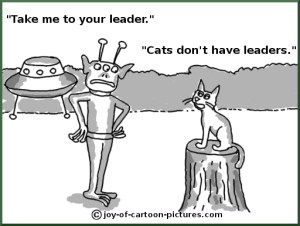
Unlike our sciences, most of our religions and their sacred texts come from a pre-scientific age, and contain statements and assumptions that are already contested by our own best knowledge. The Abrahamic faiths of Judaism, Christianity and Islam, in particular, have assumed that God is mainly concerned with earthlings, even if he is also the god of the universe. In particukar, God has communicated his absolute truth to earthlings, via selected or uniquely engendered male messengers. How will these powerful traditions cope with being revealed as local rather than universal, time-bound, rather than eternal? How would biblical and Qur’anic fundamentalists cope with with evidnce that their sacred texts have not revealed the whole truth?'We are from the planet Condescendia. Take us to your cute little leader.'

Doubtless we would want to hear from the Trappists whether they have any equivalent  of our religions or whether their responses to the mystery of the universe and the purpose of life, are solely scientific, aesthetic or  ethical. As a follower of Jesus I would not expect to hear that they believed in a human son of God. Given that they are more like our bacteria than any other earth creatures and identify themselves as networks of billions of single cell organisms, their notion of a perfect creature is likely to be very different from ours. They have told us that their mode of learning, like that of bacteria, is based on the exchange and mutation of cells rather than the electrical coding of information accomplished by the human brain. They have ahown us images of creatures on their planet that are a little like human beings with muscled bodies, eyes, and the ability to stand upright, but these are  used by the Trappists as mobile homes for networks of their own species.

They congratulate us that our sciences are universal in scope, and suggest, to the annoyance of our scientists that they must have learned this crucial truth from our religions. They commend the universal scope of both our sciences and our religions as crucial growth points for our civilisation.

I would want to tell them the story of Jesus, but perhaps because as networks of replaceable cells they never die, they may have no stories of their own. Stories, having a beginning, middle and end, may only be produced by intelligent creatures who die.  They might not be able to understand the death of Jesus.  Where might I begin a dialogue that touched their fundamental concerns as well as mine?

1. Because they are aware of the universe, we could share our understanding and appreciation of its processes.

2. Because they are self-concious intelligent living beings, they will appreciate the intricacy and value of all life, SO

a) I can communicate my dislike of everything which degrades or destroys life and

b) my love of everything that nurtures life and enables it to flourish"Let's just skip to the next planet, this one's not showing any signs of intelligent life."

I can hope that even if they do not completely share these feelings, that they will understand them and have equivalents in their own souls and culture. If so, we will be able to have a dialogue which is based nothing more than our common existence as intelligent life in the same universe.  We will moreover be talking about the fundamental issues with which our religions deal. In learning about how they protect life from destructive forces and how they nurture their own life and the living beings of their planet, I would be ready to hear of nurturing events which happen amongst them but are said to come also from beyond them, that is, theor experience of a “beyond” in the midst of life, which is for me the experience of God.

I think that although our sciences and cultures might be so far apart that no equal  exchange could take place but only their instruction of us, our appreciation of the same universe, of good and evil and of God, could be a true conversation of equal partners: of life forms committed to the common miracle of life.


IMG_0362It was reading Confucius that made me think of it.

I wrote that sentence mostly for fun recognising its name-dropping, pseudo- casual air of intellectual competence. It is, after all what most of us do with those odd moments when we’re not working on our next novel: we read Confucius.

Sadly, however, I do read him, indeed I’ve re-read him a number of times, always getting something more than I got the last time. On this occasion I was struck afresh by his version of the golden rule: “Do not impose on others what you would not wish to be imposed on yourself.”

There it is, written or maybe, spoken, around 500 BCE. It is probably earlier than the finished version of  Leviticus in the Hebrew Bible, where it takes the form of the commandment: “You shall love your neighbour as yourself; I am the Lord,” which may have been formulated well before the book in which it appears. The earliest evidence for the rule may be in an Egyptian novel of the 13th century BCE, The Eloquent Peasant, who advocated treating others decently so that they would return the favour; but the rule appears in one form and another in Buddhist, Hindu, Zoroastrian and Islamic texts, as well as Greek and Roman philosophies. Jainism is notable for extending the reciprocity to all creatures. The version attributed to Jesus by Matthew and Luke is notable because it is positive: “Do to others as you would have them do to you.” Scots is notable for having one of the shortest forms: “Dae as ye wad be done tae.”

Confucius uses his version of the rule to illustrate the fundamental principle of morality and justice, which he designates as “shu” meaning reciprocity, the recognition that others are as open to harm or help as yourself. The Jewish tradition emphasises that we are all Adam, one humanity, and that the other is always part of ourself. Jesus astonishingly refused to admit any exception to the rule, by including even enemies within it. Mahayana Buddhism argues that when the false dualities of ego and other are shown to be unreal we can live interdependently with all sentient beings.

It is evident that the worst inhumanities have been committed by persons and societies who refused to recognise this reciprocity for reasons of power, wealth, race,  sex, politics or religion. Colonial extermination of native people, the slave trade,  the mass killings by Stalin, Hitler, Pol Poy, Mao, Daesh, as well as the persistent privilege of men over women, all began with an assumption of superiority or an assertion of inferiority so obvious to the possessor of power that they did not even require argument.

One of my heroes, the American agronomist Wendell Berry has argued for many years that the econmomic and cultural environment in which we live should promote a recognition of reciprocity amongst human beings and between humans and other living creatures. This fundamental relationship, which is absent in global capitalism, is,he believes, essential for the welfare, and probably the survival of humanity. Many people would want to disagree with Berry’s insistence that only an economy based on snall-scale farming can provide this nurture, but the direction of his argument seems fruitful to me. If we agree with best wisdom of humanity, expressed across cultural, racial and geographical difference, in the golden rule, then we should commit ourselves to forms of nurture which help people to practice it.IMG_0361

Global capitalism expresses its fundamental brutality in many ways including its treatment of old people as surplus to economic requirements, and therefore better brought tidily to death in residential homes. It denies any significant reciprocity between them and their children. The brothers Grimm have a tale which applies the golden rule to this problem:

Once upon a time there lived a farmer Hans and his wife Eva. They had a small son, Martin, and Eva’s old father Magnus, who lived with them, in the farmhouse. In his old age, Magnus had become a problem to them, because at table, he dribbled food out of his mouth, scattered crumbs everywhere and often dropped their pretty earthenware plates on to stone floor where they were smashed. 

Disgusted by his ineptitude and worried about the bad example given to Martin, they solved the problem by constructing a wooden tub, fixed to the wall at which the old man was placed, to eat his food at a distance from the family table. At first he used to weep but after a while he ate in silence. Hans and Eva felt the move was a success.

One day they found Hans playing in the yard with a large block of wood, and a blunt chisel which had been left there. They were pleased to see him so industrious.

“Ach, good boy,” Eva called, “What are you making?”

“i am making a big wooden tub,” the child replied,”where you and father can eat, when you are old.”

IMG_0363Confucius is one of my favourite philosphers, not least because he taught that the virtue of shu, reciprocity, should be very strictly practiced by younger people in their treatment of older people, like me.



img_0358
Gemmell no. 3

When Tommy Gemmell died this week it was as if he had come back to life. He’d been ill for some time and out of the news, but suddenly here he was again, his death reminding all Scottish football supporters of a certain age of the moment when we all knew that a Scottish club, Celtic was going to win the European Cup. They were playing the great Italian side Internationale, who were expert at a smothering kind of defence and sudden counter attack, while Celtic were an attacking team, finding it hard to create scoring chances. Now they made another attack- Murdoch to Craig on the right of the penaly box, Craig delaying and delaying then rolling the ball diagonally back to Gemmell who was legging it towards goal, an Italian defender moving to block his shot, viewing the size and speed of his opponent turned his back, while Gemmell smacked a rising shot high into the net with the goalkeeper stationary. At that moment half the population of Scotland was on its feet in front of the telly, delirious with conviction. Now we would win, and we did. Or rather eleven Celtic players did, and entered the pantheon of Scottish victors along with….eh….along with Robert the Bruce and …er….well that’s it really.img_0359

It was easy for me to identify with these heroes because they were men of my generation, born during the war, now adult and making their mark on the world. Of all of the Celtic team I especially loved Gemmell because there was something very Scottish about his gallus loping style on the pitch and his calm aggession. On another famous occasion playing for Scotland against Germany, Gemmell in full flow was fouled by the German Helmut Haller. The referee was already giving the foul when Gemmell, exasperated at his run being spoiled, faced up to the German, who scuttled away from him, only for Gemmell to chase after him and boot him in the arse. It’s not a piece of film you’d use for training yound footballers, but it recorded fhe instinctive reaction of every footballer whose piece of skill has been nullified by a deliberate foul.

It was 1967, the year of my wedding, my theology degree, my licensing and first job as  a minister. It was also well into the swinging sixties, a year before the student revolt in France, a time of change, uncertainty and great hope that perhaps the old era of scarcity and violence was turning towards a new era of plenty and peace. Tommy Gemmell is forever part of my memory of that time in all its glorious and utterly mistaken optimism.

Looking from our present era of scarcity and violence half a century back to that time of promise, I have to ask where we went wrong. How did it happen that a generation who believed it would make society happier and more just, finds itself in old age amidst the wreckage of Brexit, in a society of ever- increasing injustice, in a world menaced by uncontrolled global warming and uncontrolled tyrannical liars as rulers of its most powerful nations? I can only answer for myself. I did not use my political and social opportunities as fully as I should. I didn’t think hard enough about political and social choice, nor did I work hard enough in support of good policies and fruitful social movements. At some level, I believed in magic, like the magic of the Tommy Gemmell goal, as if it had come out of nowhere,  rather than out of years of training, out of fitness sustained in the face of a cigarette habit, out of disciplined teamwork  and tactical education. It was magic for spectators but hard work  for the players. I failed the promise of 1967 because unlike my parents I was not prepared for the blood, sweat and tears. img_0360

I cannnot say if this has also been true of my contemporaries,  many of whom worked harder than me, but I can urge that it must not be true of my children’s and grandchildren’s generation. I can remind any who may listen to me, that the world is a fragile and dangerous place and homo sapiens a violent and reckless creature. The worst predictions for the future may be averted, but not without sustained and creative commitment.

Great goals are the fruit of intelligent effort.


I’ve tried for most of my working life to avoid pious claptrap,however beautiful, in the context of worship, and to use a langauge that respects the facts of life. So, for example, because I reckon that God will not intervene to stop the bloody war in Syria, I do not pray that s/he should do so, but rather that s/he should inspire people of goodwill to work for peace.img_0355

But what am I saying? Do I think that the God who chooses not to intervene by instantly destroying all armaments will intervene by some kind of spiritual force to inspire people who might oherwise not worked for peace? Indeed when I find the courage to do my duty, do I feel some power beyond myself, enabling my action? The answer to these questions is “no.” Nothing supernatural happens in this world; if we think it does, that is because we have an impoverished view of what is natural. Of course, I believe that if people of goodwill turn consciously towards what they consider the source of goodness, they will be clearer in their minds and stronger in their wills. I know that the story of Jesus and my image of him have often inspired my better attempts at living well. And yes, I also believe that through such means God gives me guidance, but s/he does so by worldly means which involve no dislocation of cause and effect. The mystery of God is not found in doubtful miracles, or at the boundary edges of human understanding, but rather in the ordinary and extraordinary facts of worldly life.

But how can this resolute refusal of mumbo-jumbo be expressed in hymns and prayers and sermons? Well, it’s relatively easy in sermons where the preacher has considerable freedom to use her own langauge, though even here the temptation to be  pious is not absent. But the other elements of worship are more difficult because they are more attached to the tradition of the church, which includes its traditional language. How can we pray without telling lies? Indeed, why pray at all, if we no longer think that God will intervene?  Jesus touched on this issue when he told his disciples that the father knew what they needed before they asked for it. But he also told them that if they asked they would receive.  In these words he taught that the desire for something good is an essential prerequisite of it happening, so that what is beyond us can take place amongst us.img_0357

Perhaps Jesus’ own prayer speaks the language of reality.

He begins with his name for God which expresses intimacy and respect, “father”, and asks that it should be held as holy by human beings.  This is not a a petition which  expects miraculous intervention; it is a longing and an intention to do what we can to  make it happen, as is the next petition, that God should rule the earth. This also expresses longing and commitment, but there is in addition the trust that is ready to accept what God’s ongoing creation brings. The prayer for daily bread recognises that livelihood is a gift to be shared rather than a achievement to be possessed, but it includes our willingness to work. The prayer for forgiveness sees the generous justice of God  announced by Jesus as the climate in which we want to live. The final petition to be spared harsh testing and to be rescued from the evil one, expresses our human frailty, and our trust that even if we fail the test, God will not leave us in the clutches of Evil. This last phrase along with the prayer that Gid should rule rhe earth, takes us beyond the present world, beyond our knowledge, expressing our trust that there is a reality beyond the facts, for which we can hope.

There is nothing in the whole prayer which authorises pious exaggeration,  sloppy emotionalism, liturgical pomposity, or spurious assurance ( “we just want to thank you Lord and praise your precious name for saving us from our sins and making us a shining fellowship of your saints”). If Jesus gave it as a model for his disciples’ prayer, or even if, as some scholars suggest, the prayer itself comes from the early communities of disciples, maybe we ought to attend to its language and its theology, and allow them to inform our own practice of prayer.img_0356

This does not mean we should not be direct. If we can pray for God’s rule on earth, we can surely pray that Jean should be healed from her cancer. When we do so we are not asking for something beyond medical care and the possibilities of her own body, but rather that the medical cate she is receiving may enable her own body to overcome the cancer. Rather than pray for “peace in places of war” we can pray that those who kill by suicide bombs or by sophisticated drones from thousands of miles away, should be defeated and punished for their atrocities. Given that the father knows what we need, there’s no point in saying “powerful people with prejudices” if we mean Donald Trump.

The language of prayer should be sober, modest, clear, specific, kindly and hopeful, and should express our trust in the goodness of God. Many of the old prayers do this very well, such as the one I use most days:

“Lord for thy tender mercies’ sake, lay not our sin to our charge; but forgive what is past and give us grace to amend our sinful lives; to decline from sin, and incline to virtue, that we may walk with a perfect heart, before thee now and evermore.”


For the last fortnight I hve been privileged to watch a woman dying.  She was my cousin’s partner but I barely knew her, having just once shared a meal with her. i had an impression of a lively, outgoing sort of person, but no idea that she was the great spirit who revealed herself to all who came to see her in these last days. She ruled the room with grace and humour, setting the tone of conversations which were affectionate and life-affirming. img_0349

She was able to do so because she was in Roxburghe House, Dundee, an NHS hospice, which offers palliative care to patients for whom no further curative interventions are possible. Prior to her admission she had been in distress due to pain and weariness, but once there, with efficient pain control and skillled nursing, she was set free to be herself, until the final few days of her life when she was mainly unconscious. Because she was fully herself, her family and friends were able to respond in kind, offering her the distinctive inventiveness of their own love.

Because I was an occasional intruder into these gatherings,  and because I have a professional interest, I was reminded again of what an extraordinary combination of good things is provided by the staff: rigorously scientific care, meticulously delivered; tender nurses; companionable ward cleaners; cheerful auxilaries; decent facilities for visitors; robust humour, quiet attentiveness, affectionate cuddles; above all a compassionate realism about dying. Not only does the unit have a good philosophy, it puts it into practice effectively and with such a rich humanity, that those who have received it express astonishment as well as gratitude.

All of us will die. Here is a way of doing it that enhances rather than diminshes our humanity; and it’s a team effort in which everyone, including the dying person, plays their part. I believe that this quality of terminal care should be available to everybody. If it were, many of the issues which lead people to demand the “right to die” would arise less frequently. It would not of course deal with the issues of people who have to suffer long-term incapacity and indignity, nor of those who are in so-called vegetative states. But it would, I think, meet the requirements of those who want a “good death.” img_0351

There is behind some of the impatience with our present laws, a notion that as soon as  it is impossible for a person to be active, meaning to work, play and consume, they should be able to die, because they no longer have any “quality of life.” The assumption is that auffering, because it is passive, has no value. It seems clear to me fhat with the kind of care offered at Roxburghe House, patients can at times be active, their courage and endurance can be expressed, their dying can be filled with  their characteristic life.

There are indeed legal issues about dying with which I hope our society will grapple, but I consider that the philosophy and practice of hospice care, if extended throughout  society, could set the bench mark of an experience of dying that is comfortable, peaceful, heroic if you dare , angry if you want, funny if you will, and distinctively human, all with the help of a therapeutic community that reminds us mortal creatures, that we can sometimes be glorious.

We all have to walk that lonesome valley, but we do not have to walk it by ourselves.


The Church of England is again debating sexual morality today with special attention to homo/ bi/ transsexual people who want to be married in church. A report recommends that they should not be permitted to do so, as Church doctrine defines marriage as  a relationship between one man and one woman.

The practical issue should be easily enough resolved. There is an issue of equality here which goes beyond the issue of historical or present doctrine. People who are not heterosexual are being discriminated against – yes, they are, whatever moth-eaten excuses are offered- as indeed they are in my own  Church of Scotland,  and that is sinful behaviour,  from which all churches should turn in repentance.  Complete equality should come before nonsense from the book of Leviticus, or semantic arguments about the meaning of marriage.img_0348

Of course, I can see the problems which have pushed churches into unseemly compromises. If the C of E grants complete sexual equality, it will probably lose a number of its own energetic evangelicals, as well as the greater part of the Anglican Communion in Africa. My own church would probably also be split between those who hold to inerrant Scripture and those who hold to social justice. I am for justice and equality and would happily wave goodbye to those who can reject it for the sake of maintaining the authority of Scripture. Serious faith cannot afford magic books.

But I retain a good deal of affection for what might be described as the “heterosexual narrative” and am not altogether convinced by arguments that gender is solely a social construct, which can be altered at will. I guess the heterosexual story that we find in claasic texts like the Hebrew BIble, the Mahabharata, Homer, the Chinese Odes, is now viewed as a one-sided choice made by these societies, and transmitted to subsequent generations.

We can think of these societies of the first millennium BCE as archaic and traditional compared with ours; but of course these very societies were not only rhe inheritors of the history of unrecorded human experience on this earth but also were themselves revolutionary in their arts, technologies and politics. The time between them and us is negligible compared with the vast reach of human time before them. As well as changing much of what they received from the past, they carried forward from the past what they believed to be of permanent value, including the heterosexual story. I do not mean the patriarchal story, which they may indeed have invented and imposed on past traditions. I want to separate the priority they gave to the heterosexual story, from the dominant role they gave fo males.

Why is this story so powerful? Answer: because it seems natural. Sexual reproduction is not the only natural strategy for reproduction: even so-called primitive societies knew how fungi and rice reproduced. But sexual reproduction was evident and appeared natural to most observers of humanity. The process of sexual reproduction in human beings was not scientifically understood; in some times and places, the role of the male was seen as very limited and subordinate to the fecundity of the female. But given the anatomy of the human body, heterosexual intercourse looked natural.

Even if you can’t follow rhe directions on the flatpack wardrobe, an experienced eye can tell that the holes on the door and the frontpiece are intended for screws that will fix the hinges. It seemed to observers in those early civilizations, that nature had designed human beings for heterosexual intercourse, and with the desire for it. This basic observation was of course expressed in very different customs and convictions, some of which made a place for same-sex activity while maintaining heterosexuality as a norm. I am not arguing that we must do so because they did; they may have been no wiser than we are. Rather I am pointing to the apparent naturalness of heterosexuality, in its appreciation of the male and female bodies. img_0347

This means that heterosexual story we have inherited from many varied cultures has in spite of their different constructions of masculinity and femininity  a common element in the human body, male and female, as desired by the opposite sex. Images of male and female bodies and their sexual organs are diffused through all the arts of our society, and are so pervasive that often we have ceased to notice them. Why are all these erect church spires thrusting upwards?

The fundamental sexual story has of course given rise to a multitude of other stories, from Helen of Troy to Romeo and Juliet to Beyonce and her pregnancy; and to millions of poems and songs, as well as the tat of  Valentine’s Day. Many of these are our greatest narratives and songs, just as heterosexual art includes many of our greatest paintings, sculptures and buildings. This culture formed my personal experience of boy meets girl from the outset, conferring on it graces and expectations which were not of my invention, although leaving room for personal  creativity. It told me a little about who I was, and a little about who she was.

There is a delicacy and magic to this tradition as well as a robust earthiness, which I would be reluctant to see lost to future generations because liberal societies must not prioritise in advance the gender choices and sexual preferences of their children. I agree that in a society which rightly grants equality to all forms of loving, the heterosexual story cannot have the unique place it had in former cultures, but I am convinced it has value for all children, and provides an intimate education for the heterosexual majority of them.

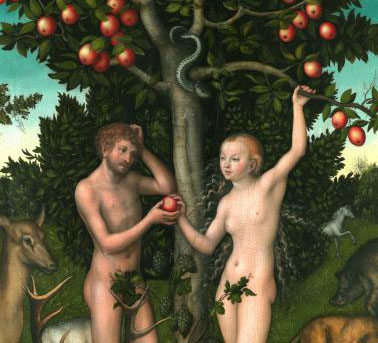
This is not a major issue compared with the fight for equality for people of all sexual predispositions, but that does not mean it is unimportant. In fact a greater public appreciation of the heterosexual story might help people who are reluctant to give equality to other sexual stories. The biblical creation story in Genesis 2, 3, in which what was originally one flesh but are now two, are always wanting to become one flesh again, sets out well the humour, loneliness and blind desire of the human animal; of which it is written, “male and female he created them.”