
A great poem from the Book of Proverbs, chapter 3:
Happy is the man who finds Wisdom, who gets understanding;
For trade in it is better than trade in silver and the profits greater than fine gold.
She is more precious than rubies, and all the things you can desire are not to be compared to her.
Length of days is in her right hand; in her left hand, riches and honour.
Her ways are ways of pleasantness and all her paths are peace.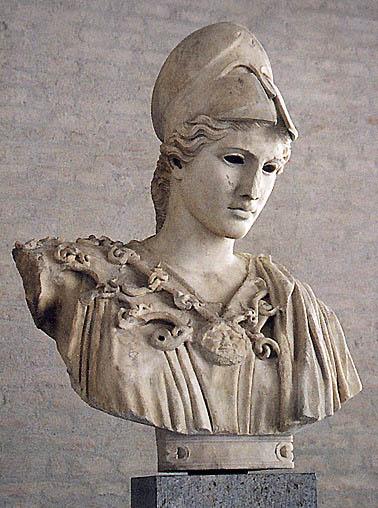
There is not much that has been said by human beings that means more to me than these words, for although I have many passions in my life, nature, art, politics, literature, my greatest passion is for understanding, that is, the comprehension of the universe and its life, by means of any discipline open to me. My adventures of understanding have included astronomy, physics, biology, geography, philosophy, ecology, systems theory, marxism, psychology, history, politics, and theology, along with Latin Greek, French, Spanish and a tiny bit of Welsh. Obviously I have only a very sketchy knowledge of some of these, although my study has never been trivial or second hand, as I’ve always tried to read the original masterpieces in these disciplines rather than secondary sources. Sometimes that has been a journey into complete bafflement, as for example my grappling with Einstein’s General Theory of Relativity, but I have gained at least a direct exposure to genius.
Even yet I refuse to allow myself the excuse that I’m getting elderly, and have recently been reading about parallel universes on the one hand, and the history of modern economic disaster on the other. A marvellous book by Yanis Varoufakis on contemporary economics is on my desk as I write. I hope I can rely on my readers to see this information as a simple statement of my peculiar addiction, rather than as any sort of boast. Nothing gives me more pleasure thnt the adventures of understanding, which I hope will lead to wisdom rather than the mere accumulation of knowledge.

My late best friend, Bob Cummings, of Glasgow University, was a man who loved to know things just because they were so, and accumulated knowledge as naturally as a sponge soaks up water some would say, but I would say, as naturally as a buzzard kills: there was a savagery about it. My brother Colin, head of the Scottish Government’s Improvement Service, is another such, in whom the desire to understand is a passion, rather than a means to an end. I also have to admit that there is a competitive edge to my love of wisdom: I don’t like anyone to be wiser than me, which is of course, a sin against the very wisdom I seek, as it requires humility and cooperation.
For example I have just read a theological book entitled, “Jesus the Forgiving Victim” by James Allison, which is full of such well-informed and persuasive interpretations of Bible passages, that I am left a) wiser than before and b) resentful that this Allison fellow knows so much more than me, and can express his knowledge so eloquently. Mind you, it also spurs me on to know as much about these texts as he does. Well, more than him preferably.
 I have no clear idea of how the specific knowledge that I will gain, can become useful to me, but I do know that I will find the sources of information used by the book and familiarise myself with them. The discerning reader will realise that this kind of search for equal expertise is doomed, as no sooner have I caught up with one source of information than I will be presented with another. Yet this sad comedy is the continuing story of my intellectual adventure.
In and through all of these daft attempts to know everything, Lady Wisdom, that creative companion of God, asks me if I have learned anything about how to live well in this world; and when I confess that I’m not sure if I have, she encourages me to keep travelling, for “all her ways are pleasantness, and all her paths are peace.”



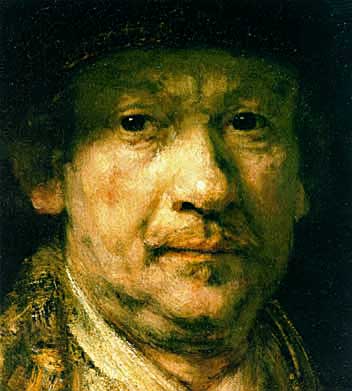 St. Paul wanted his Corinthians to know that their bodies were temples of the Holy Spirit. He taught that their bodies were mortal and therefore subject to decay, but open to an ultimate transformation into the splendour of spiritual bodies, through the power of God’s spirit. But even now, in the midst of their struggles, that Spirit would, if allowed, take up residence in their mortal bodies. “Therefore,” he urged, “honour God with your bodies.” A glimpse of ultimate splendour could be seen in the lives of ordinary people who were learning to love each other as children of God.




 The prayer of Jesus is relevant:

 This “dustiness” does not negate the revelation that I am made in the image of God, for God is the life which humbly shares itself with all creation; nor does it exempt me from the duty of representing God’s rule, which persuades all creation towards the perfection of shared goodnesss. Me and my microbes are called to cooperate.
 For myself, I considered the Syrian attack proportionate and perhaps effective as a deterrent, and the big bomb in Afghanistan as no more than a strategic initiative. The aggressors of this world require restraint, and their victims need support; the case for international police action is obvious in such situations. But that’s just the point: if actions like these are to be seen as just, that they must actually be international, that is, of the United Nations preferably, and if that is not possible, of a as large a coalition as can be obtained. The USA made only a token effort to get UN action against Assad, and none at all in the case of the Afghan attack, where they relied on a small existing coalition. In fact, in both instances, the USA seemed to pride itself on acting alone.
 xtremejesus