An old story tells that Sandy, a young farmer was pestered by his mother to go and hear the famous preacher Dr. Spurgeon. At last, to save himself further annoyance, he went. On his return, she said, eagerly, “Well, Sandy, what was the theme of Dr. Spurgeon’s sermon?”
Sandy answered briefly, “He spoke about sin.”
”Indeed,” the mother noted, “But what had he to say about it?”
”Well,” said Sandy, “He was agin (against) it.”
Sometimes it may be important to define your viewpoint by saying what you’re against.
 Over my last few blogs I’ve been trying to define the meaning of “God’s House” in my theology, while introducing three disciplines derived from the idea of a house (Greek: oikos): ecumenism, economy and ecology. God’s house welcomes the whole oik-umene, the inhabited world and all its people; it has its own distinctive oiko-nomy, its household management which uses the gifts amd meets the needs of all; and it promotes an oiko-logical ( the universe as God’s household of life) understanding and practice. I’ve written about how this way of thinking about God can enhance human life.
But now I want to state clearly what it’s against.
Because it is ecumenical, it is opposed to both sectarianism and cynicism.
Our world is awash with information through the variety of available media which carry the images, messages and opinions of millions of people. It is almost impossible to distinguish fact from fiction, art from advertising, news from fake news. One response to this confusion is to magnify our own certainties, especially our group certainties, and refuse to pay attention to anyone and anything that seems to challenge them. The terrorist group Islamic State has done this with considerable success, as did neo-liberal economists, at least until the banking crisis; Christian fundamentalists continue to do it in many parts of the world. In the face of contradictory evidence and the vast rubbish tip of global opinion they assert their utter assurance that only what they believe is true. Not all sectarian groups are terrorists but few have much concern for people they regard as enemies. Clearly this strategy regards “God’s House” as exclusive rather than inclusive, consisting only of people like us. ( “I used to think, sister Agnes, that thee and me were the only saved souls in this village, but now I’m not so sure about thee”)
Even people who are aware of the dangers of sectarian thought can fall into its trap. Richard Dawkins is eloquent in praise of the scientific testing of all evidence, yet betrays a woeful igorance of the religious beliefs he often denounces. He represents a kind of scientism which insists that only its kind of thinking can be true. I deprecate the aggressive certainty that leads to denunciatory demonstrations outside abortion clinics, but also the thoughtless certainty of those who think that a “woman’s right over her own body” justifies the horrifying numbers of abortions. Both groups suffer from sectarian thinking.
Sectarian thinking includes many forms of prejudice: I don’t need to give this person the time of day, s/he’s not one of us, he’s catholic, or black, or Muslim, or gay, or old, or a woman, bitch, slut or frigid. The globalisation which means my exposure to the whole world and its people, so that my personal and local identity is questioned, can intensify my sectarianism as I retreat into the bolthole where I’m still comfortable.
The film Dr. Strangelove hilariously depicted the sectarian thought processes of people who brought about nuclear war. We have seen the evils of Daesh and the Lord’s Resistance Army. We know the capacity of our social media to transmit the warped certainties of any group throughout the world. Against all such sects, the image of the world as the one house of God, where people will accept their fellow beings as family, listen to their brothers and sisters while making up their own minds, respect opinions while valuing facts, use persuasion while sometimes being persuaded, desire truth while knowing it is never separate from love, has a quiet appeal.
Globalisation and its media can trigger a very different response: I can meet all the others in the world, their customs, beliefs and actions, with a suspicion which denies any serious validity to what they are, think and do- not because I’m sure I’m right, but because in a world of competing idiots and idiocies the only wise person is the one who can see through their pretensions to the futility of existence.
This cynicism has a more noble history than sectarianism. As expressed by Diogenes the Greek or Ecclesiastes the Jew it can bite into all forms of thoughtless commitment- “Vanity of vanities, all is vanity!” ( Ecclesisates 1). They have a passionate suspicion of all high-flown people and thinking, a peasant wisdom insisting that there is nothing new under the sun except perhaps the kinds of human folly invented to disguise that reality.
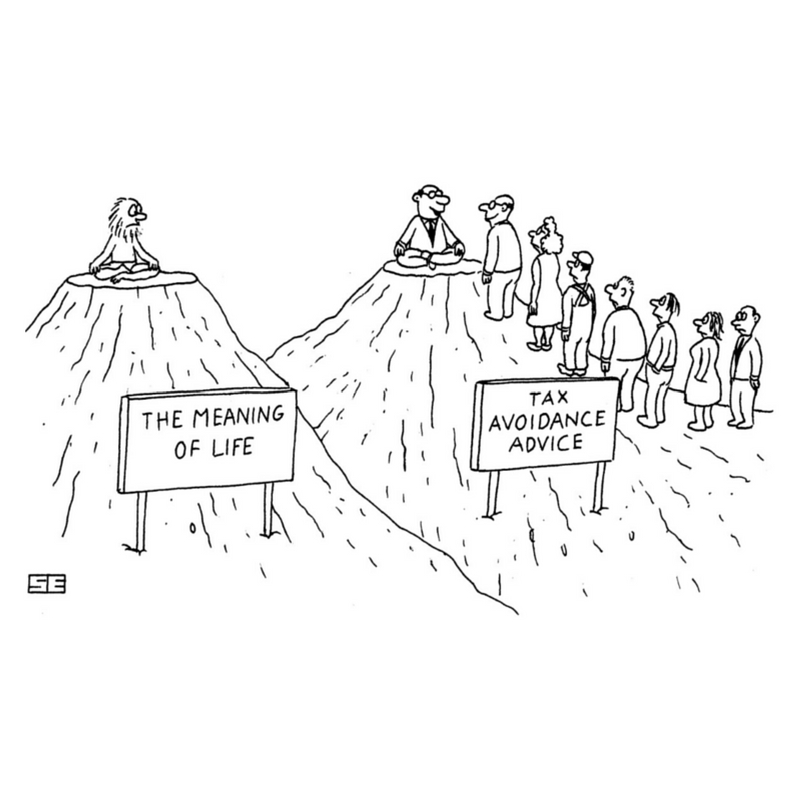
The pervasive cynicsm of modern globalised culture is less noble, more a retreat from all passionate engagement into a fashionable acceptance that life is probably meaningless but money makes it fun. It is an attitude that perches, dances, slouches or snoozes on the surface of life. The difference between serious and superficial cynicism was sharply characterised in a cunning passage by Jonathan Swift:
“In the proportion that credulity is a more peaceful possession of the mind than curiosity, so far preferable is that wisdom which converses about the surface to that pretended philosophy which enters into the depths of things and then comes gravely back with informations and discoveries, that in the inside they are good for nothing. The two senses to which all objects first address themselves are the sight and the touch; these never examine farther than the colour, the shape, the size, and whatever other qualities dwell or are drawn by art upon the outward of bodies; and then comes reason officiously, with tools for cutting, and opening, and mangling, and piercing, offering to demonstrate that they are not of the same consistence quite through. Now I take all this to be the last degree of perverting Nature, one of whose eternal laws it is to put her best furniture forward. And therefore, in order to save the charges of all such expensive anatomy for the time to come, I do here think fit to inform the reader that in such conclusions as these reason is certainly in the right; and that in most corporeal beings which have fallen under my cognisance, the outside hath been infinitely preferable to the in, whereof I have been further convinced from some late experiments. Last week I saw a woman flayed, and you will hardly believe how much it altered her person for the worse. Yesterday I ordered the carcass of a beau to be stripped in my presence, when we were all amazed to find so many unsuspected faults under one suit of clothes. Then I laid open his brain, his heart, and his spleen, but I plainly perceived at every operation that the farther we proceeded, we found the defects increase upon us, in number and bulk; from all which I justly formed this conclusion to myself, that whatever philosopher or projector can find out an art to sodder and patch up the flaws and imperfections of Nature, will deserve much better of mankind and teach us a more useful science than that so much in present esteem, of widening and exposing them (like him who held anatomy to be the ultimate end of physic). And he whose fortunes and dispositions have placed him in a convenient station to enjoy the fruits of this noble art, he that can with Epicurus content his ideas with the films and images that fly off upon his senses from the superfices of things, such a man, truly wise, creams off Nature, leaving the sour and the dregs for philosophy and reason to lap up. This is the sublime and refined point of felicity called the possession of being well-deceived, the serene peaceful state of being a fool among knaves.”
Notice how Swift emphasises the cruelty of genuine cynicism to push his readers towards approving a pleasant fashionable scepticism which he then cruelly redefines as the “possession of being well-deceived, the serene peaceful state of being a fool among knaves.” Yes, that’s a bullseye hit, Jonathan! For the person who resists moral commitment lives in a world where many people are very committed to greed, injustice, lies, cruelty and violence, which may alter his/her life for the worse. You may think life is without meaning, but you want it to be comfortable. It’s a philosophy that has suited the liberal bureaucracy which has governed much of the US and Europe for 30, 40 years. Decent people, we say; fools among knaves, says Jonathan Swift.
The appeal of Donald Trump is that he rejects this fashionable scepticism, and admits the savage nature of reality. Yes, baby this is how it is! Men grab women by the pussy, most whites hate blacks, most straights are scornful of queers, most of us don’t care about our grandchildren, give us a cheap energy now no matter what it does to the climate, most of us think our country should be great and screw the rest.
To people who’ve become used to a diet of superficial blandness which denies the value of passionate commitment to any cause or truth, Trump offers the tasty option of prejudice, dollops of it, and makes it sound like true blood and guts. No wonder liberally minded people despair, seeing that the worse he speaks and acts, the more popular he becomes. People who are struggling to get an adequate life want something better than liberal niceties, and respond to something that seems to match the savagery of their own feelings. As many have noted, the Brexit campaign in the UK had Trump-like qualities and appealed to the same need.
As opposed to prejudice, ecumenical truth is broad; as opposed to cynicism, it is deep.
If a truth is to be understood across the oikumene, it must be capable of translation into the languages of all peoples. For this reason it cannot include elements that have meaning only in one place or time or culture. This is not a superficial broadening of the truth: even cherished local elements have to be left behind. St Paul knew how painful it would be for Jewish Christains to leave behind the Torah which had been the centre of their lives; but he demanded they let it go because it could only be a burden on the lives of gentile followers of Jesus; and because it had condemned Jesus to death. The ecumenical imperative went hand in hand with a revelation of the sectarian nature of his Jewish tradition; like all sectarian faiths it was a killer, and had to be left behind.
But if a truth is worth communicating across the inhabited world, it must also be deep in the sense of dealing with matters fundamental to humanity. Of course there may be messages about manners, customs, beliefs, world views, but an ecumenical message is about matters of life and death. Only a message of such importance can demand a hearing across cultures and natiional interests. When the Christian gospel was preached to the Saxon King Edwin, he asked his counsellor how to respond. According to Bede the counsellor replied:
The present life of man, O king, seems to me, in comparison of that time which is unknown to us, like to the swift flight of a sparrow through the room wherein you sit at supper in winter, with your commanders and ministers, and a good fire in the midst, whilst the storms of rain and snow prevail abroad; the sparrow, I say, flying in at one door, and immediately out at another, whilst he is within, is safe from the wintry storm; but after a short space of fair weather, he immediately vanishes out of your sight, into the dark winter from which he had emerged. So this life of man appears for a short space, but of what went before, or what is to follow, we are utterly ignorant. If, therefore, this new doctrine contains something more certain, it seems justly to deserve to be followed.
The counsellor recognised an ecumenical truth because of its depth: it spoke of matters fundamental to humanity. As opposed to all cynicism the discourse of the house of God dares to address fundamental issues of truth and falsehood, right and wrong, life and death. It makes no apology for disrupting a comfortable scepticism about such matters but insists that there are real choices for persons and societies to make. Above all it refuses to confine all reality within the one dimension of socio-economic powers, but insists on a transcendent dimension of morality and truth which is just as much part of our humanity as navel fluff.