
My spanish language science feed, which I use to improve my Spanish rather than my science, gave me this week the intriguing headline, “DNA Sequencing contradicts God.” When I investigated, I found that archeologists who had managed to sequence the full genome of Canaanite bodies from Sidon around 1500 BCE, showed that they were the direct ancestors of the present day population of Lebanon. Which makes good sense, except the bible tells us that Joshua, acting on the explicit instructions of God, exterminated the “Canaanites” completely around maybe 1400BCE.
Now good Biblical scholars had already noted their suspicion that the Joshua story is a load of unhistorical mince provided by much later writers for propaganda reasons. On the other hand Richard Dawkins -whom God preserve- had quite correctly seen the story as evidence that the God of this part of the bible, was a prejudiced thug and ethnic cleanser, no better than Hitler or Ratco Mladic.
The reaction of church authorities to the new discovery is instructive. Catholic commentators have noted that it confirms the suspicions of their scholars, proving that the holy scriptures are best left in the hands of experts. Orthodox commentators have said nothing since their support of Orthodox Serbians makes ethnic cleansing a tricky topic; while fundamentalist sources in the USA have hailed the discovery as proof that atheist accusations from such as Dawkins are now disproved and the reputation of God restored. Of course, they don’t deny that God issued the instruction to smite the evil Canaanites, but he was using the language of vivid exaggeration characteristic of the semitic people, which Joshua naturally understood, so he was pretty relaxed about leaving the odd pregant woman or child alive, as he brought shock and awe to Canaan.
It’s hard not to feel that the scientific community comes out of this a lot better than the defenders of the faith. They have come up with useful evidence, while church representatives have responded with flapdoodle and bunkum, which only adds to the prevailing conviction in many countries that faith rots your brains and is harmful to your children even if they escape some of the nastier predilections of the clergy.
The issue is not trivial: the books of Joshua and Deuteronomy announce a divine sentence of death on a whole population. Can anyone who supports the doctrine that this same bible is the word of God, be accepted as a decent citizen of any modern society? Should anyone who believes such things ever be employed in positions of responsibility for others? Or should they rather, be offered to the kind of aversion therapy which they have in the past offered to LGBTTrans persons?
The issue of the accepting the Hebrew Bible as Holy Scripture goes back to the early church, which naturally enough wanted to maintain continuity with its Jewish origins, more particularly with its origin in Jesus of Nazareth, whose life, death and resurrection they saw prophesied in these same scriptures. In the third century, one Marcion described the God of the Hebrew Bible as an inferior deity to the God of Jesus and recommended getting rid of it and any other writings that didn’t match his view of true spirituality. The church, spotting Marcion’s dislike for all things material, rejected his teaching, but as time went on emphasised to the faithful the doctrines of the church rather than the contents of the Bible.
When Martin Luther, however wanted to challenge the certainty of the church’s teaching, he did so in the name of a superior certainty, the written word of the scripture, which could now, with translations into vernacular languages and the new invention of printing, be made available to all believers. The believer’s assuarnce of salvation, formerly offered by the authority of the church could now be found in the preaching of the true gospel authenticated by scripture.
Except of course that in a short time it became evident that different preachers offered a different gospel because they interpreted the scriptures in different ways. That dilemma has remained for mainstream reformed churches ever since, who have tended to say, “Scripture is completely authoritative, but the church tells you how to interpret it.” This also, in effect, the modern position of the Roman Catholic Church. On the one hand fundamentalists have objected to this by holding every word of scripture ( in English!) to be spoken by God, and on the other, radicals and Quakers have rejected the whole idea of scripture as fettering the free movement of the divine spirit.
For myself, I treat the Bible as a unique source for understanding the life, ministry, teaching, death and resurrection of Jesus, subordinating the Old Testament to the New, so that the former is only interpreted in the light of the latter. It is a human book with human authors and human all too human faults and errors, but when it is read in the community of believers with the inspiration of God’s spirit, it can provide genuine illumination. So with regard to the ethnic cleansing in Joshua and Deuteronomy I am happy to say, in Christ, “This is mince; it is wrong and evil.”
But if the scriptures contain evil, and are often defended by flapdoodle and bunkum, would it not be better to follow then Quakers and reject Scripture altogether. For if the Scripture does not give certainty, what use is it? My answer is that we have to abandon the demand for certainty: no certainty is available to human beings, only greater of lesser degrees of probability, established by looking at all the evidence. My own daily encounters with Scripture, many of which are recorded in my blog http://emmock.com express my sense of how I can understand and be true to the Christian tradition of divine love, revealed by Jesus, but I know that my understanding and practice are both provisional. They await challenge and correction. Nevertheless, I have benefitted hugely from my reading of Scripture; my life would be the poorer without it. The nourishment I have received from them is better than certainty.
By banishing these two imposters, Messrs Flapdoodle and Bunkum and all their disabling certainties, I can welcome the DNA analysis of the Canaanite genome as a contribution to the understanding of Scripture.
* mince, noun, Scottish vernacular; nonsense, possibly related to the insult, “thick as mince,” = lacking in intellectual acuity
 I have been reading a very remarkable book “Fall down seven times and get up eight,” by Naoki Higashida translated by David Mitchell and his wife K. A. Yoshida. Naoki is what we have called “autistic” or what he calls “neuro-atypical.” In this book, which was serialised last week on BBC Radio 4, he gives glimpses of what this difference means. For example, here is his outline of his thought process when his mother hears rain and rushes out to save her washing which is on the line:



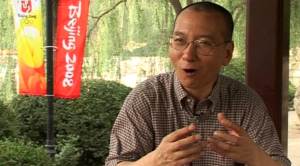
 These words show a loving heart that will arouse affection for their speaker in all who read them over the years, and scorn for the regime which has silenecd him.
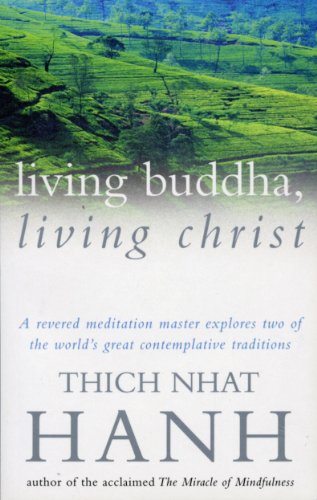 Buddhism is a profound revelation of wisdom, but it has become the ideal religion for busy capitalists, who benefit from its mindfulness training and meditation while neglecting its teachings on compassion. Its denial of a “real self” fits well with capitalism’s denial of meaningful life to both its devotees and its victims. Thich Nhat Hanh has throughout his pilgrimage shown his own commitment to the fruitful life of all creatures, including the victims of war and oppression. I think there is an issue to do with the intersection of fact and faith, history and mystery, which demands his further consideration.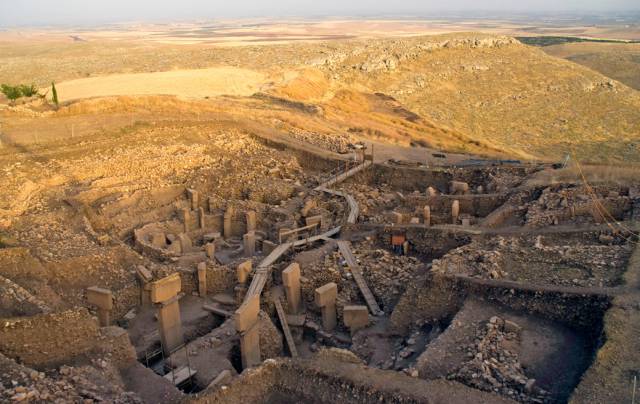

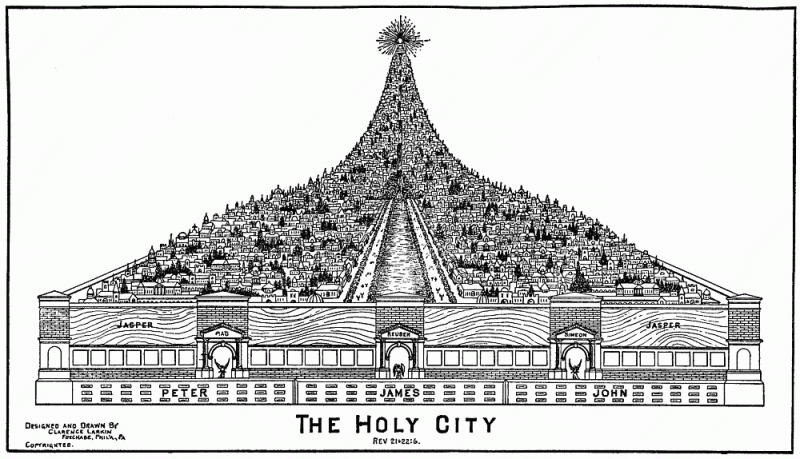 Is this still the case today or should we admit that there has never been a city whose benefits outweighed its appalling injustice and that there never will be; that even God cannot bring together hundreds of thousands or millions of human beings without also bringing injustice and squalor. Should we admit that the human dream expressed in the creation of cities is a busted flush, an idol that has presided over oppression and bloodshed for 10,000 years, which cannot be cleansed even by the blood of the Lamb?
 Psalm 139World English Bible (WEB)
 “I am fearfully and wonderfully made…..”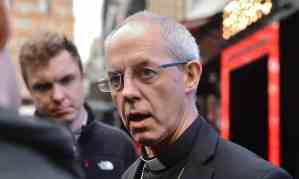




 I’ve been reading. Yanis Varoufakis, eapecially his recent books, “And the weak suffer what they must?” and “Adults in the Room” with pleasure, and some amazement at his ability to make complex economic matters clear to this ageing brain. These are books which challenge to the prevailing ethos that we are here to consume and must struggle to get a decent share of scarce commodities. Of course everyone would like to consume lots, but because our banks went mad, we all have to be very restrained and put up with austerity, all of us that is, except the bankers and other rich people who contributed to the madness. Varoufakis thinks that the planet is very rich and that if its resources are used intelligently there’s more than enough for everybody. What’s more, the true richness of life does not consist in consumption, but in sociability, adventure, knowledge, healing and creativity. The sense of scarcity and the insistence on consumption, he says, benefit those who already hold wealth and power but still want to consume more. He does not think that the purveyors of austerity are wicked, but that their love of power and its rewards has blinded them to any fact that might disturb their illusion.
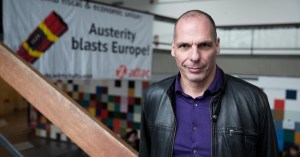 I am grateful to Varoufakis for his searching analysis of European economic problems, and even more, for his vision of plenty, which, he might be surprised to find, has deep roots in the biblical tradition.
 xtremejesus