During the 2nd World War, citizens were convinced that the Russians were coming to our aid, indeed they’d seen Rusiian troops arrive on London. They could tell they were Russians by the snow on their boots….
Theresa May’s evidence that the Russians have carried out an attempted murder by nerve chemical in Salisbury, is about as good as the foregoing. The chemical is known to have been produced by Soviet Russia, the victim had been a Russian spy turned double agent for the UK, and everyone knows the Russians are evil, so it must have been them. Indeed she has already decreed their punishment: a diplomatic rap on the knuckles, which will doubtless be reciprocated; and all this in an atmosphere of hysterical patriotism in Parliament, where Jeremy Corbyn foolishly tried to talk sense.
My own guess is that it probably was a Russian crime against a man who had betrayed his country, and probably caused the deaths of some of his country’s spies. Doubtless his daughter, who has also been struck down, is blameless, but Mr Skripal himself is not. Whoever carried out this attempted killing is a savage criminal and those who commanded it are worse, especially if they are officials of the Russian state. But contrast the British response to this dubious murder, with our response to the Russian murder of thousands of innocent Syrian citizens, about which we have made almost no noise at all.
Well, after all they were Syrians, which means it is their own fault that they are ruled by a vicious tyrant, their fault that people rebelled against him, their fault that IS got involved, and well, basically their fault that a great power whose land is distant from Syria decided to support their tyrant in killing a fair slice of the population. So it would be childish for any nation to denounce what the Russians have done in Syria. After all, it’s what we did in Libya.
On the other hand, if the same power dares to eliminate a British citizen, we can make hysterical shrieks of horror and stamp our wee feet and tell those big bullies they better not do it again or …. or….. terrible things will happen (we’ll burst into tears).
”Why do the nations so furiously rage against the Lord and his anointed?” asks the old psalm, imagining that the Lord and his anointed stand for wisdom and justice. The answer is that in playing the game of power politics a nation has to roar like a lion even if it’s a mouse, because otherwise it might have to admit its weakness. The Lord and his anointed on the other hand, refuse to play this game but take shelter in the truth that all killings are evil, and that we should start by admitting our own complicity in thousands of them.
Jesus reckoned with the power of lying tyrants. When told that King Heod was seeking his arrest, he referred to him as an old fox and indicated that he would be available for his arrest in his own good time. Jesus was peaceful but not respectful of the posturing of a powerful politician. The churches of the UK should show their patriotism of God’s kingdom, by mocking the pretensions of the government, while criticising all acts of murder. This persistent, unpopular duty unites present day believers with their Lord, while separating them from the folly of their politicians.
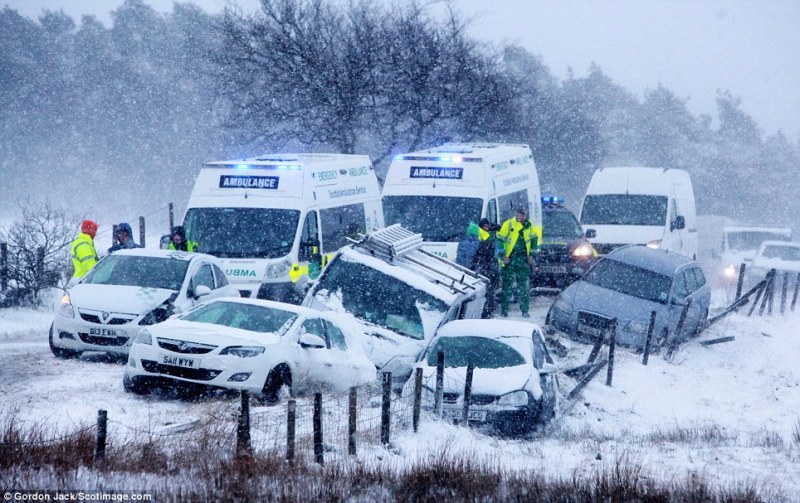
I heard a contributor on Thought for the Day (BBC Radio 4) this morning compare the recent severe weather to the experience of being subject to the majesty of God. This kind of rhetoric seems to me to fall into the error which Dietrich Bonhoeffer defined as “The God of the Gaps” by which we locate experience of God at the margins of human ability, in weakness, ignorance and sin, risking the discovery that God is irrelevant when humanity succeeds in dealing with these problems by its own means. God, said Bonhoeffer, has come to dwell with us in the midst of life we don’t need to go looking for him/her at its edges
Severe weather that disrupts our normal existence is not an experience of our weakness before God but of our personal and societal weakness before nature. Our common attitude towards nature is that while it may provide glimpses of beauty, grandeur or solitude, it is basically there to be controlled for our use and benefit. When therefore it steps out of line to cause difficulties for us, we are aggrieved, expressing our feelings by names like, “The Beast from the East.”
In fact we are part of the system we call nature, obliged, as the poet Ezra Pound once wrote, to “learn of the green world how take our place in scaled invention and true artistry.” We cannot rule nature but can learn how to cooperate with it in ways that are beneficial to us and life on this planet. But we must allow nature to teach us: a snow storm reminds us that our road system is congested, dangerous and unloved; and that we could develop an integrated travel system that respects ecological norms as well as economic convenience. Such an approach involves treating nature as neither slave nor God, but as our partner in fostering life, if indeed we want, as a species, to foster life, rather than to dream of domination. We are after all the “beast” which has unleashed the global warming whereby this week the Arctic was unsustainably warm, while we shivered in the snow.
Another effect of the severe weather has been to remind people that their lives are frail and shared with other people, other creatures. Decent citizens have invaded the inhuman space of gridlocked motorways bringing food, drink and other comforts to stranded drivers. Concerned people have made efforts to persuade rough sleepers into shelters. In Shakespeare’s King Lear, a terrible storm forces the King to see himself as a “poor, bare, forked creature”, and to feel compassion for the homeless people also caught in the storm. “I have ta’en too little care of this,” he admits.
Ecological intelligence allows us to see ourselves as part of an evolving creation working with, rather than against, nature; while recognising that we need to protect ourselves, as all creatures try to do, against nature’s indifference to our welfare. If we are people of goodwill we will want to extend this protection to our neighbour, so that this indifference, already balanced by the instinctive protection by animals of their own kind, is countered also by us.
When we act to help others we call it kindness, which means choosing to extend to anyone in need the care we naturally give to our own family/ children (German kind = child). This is a truly human contribution to nature because it is a decision of free will rather than a natural instinct; and is the best way of asserting our humanity in the face of nature’s indifference. There are natural processes, events and creatures which have no apparent relation to our concerns. The book of Job instances the lives of Ostriches, Wild Asses, and Hippopotami as aspects of God’s creation which are nothing to do with human welfare, revealing that human happiness is not God’s only responsibility; and that therefore there will always be events that resist human understanding. In such a universe, kindness is our legitimate human protest against the apparent indifference of the universal ecosystem. I say apparent, because we too are the product of that ecosystem, and our kindness may be a crucial contribution to its life.
This week as all weeks the City Mission in Glasgow opened its doors and its caring programmes to more that a hundred homeless people every day. It is devoted to the gospel of God’s love and expresses it by its practical, skilled, kindness to people in desperate need. Human knowledge of kindness led to us attributing that kindness to God. This was not revealed to us from on high but rather in human interactions such as the distribution of food to stranded drivers. Jesus characterised God’s kindness in the words, “Not one sparrow falls to the ground without the Father.”
In the light of Jesus, Christians have come to believe that the astonishing process of unversal evolution, even including its winds and snowstorms, is an expression of the kindness of God.
This winter dawn lifts from the firth a huge red ball;
I’m small
So how come the old myth equates me with the sun,
The old one
That must be hunted down and killed and raised aloft,
My soft
Feathers shared as trophies? And how can I with this short wing
Span be King
Of All Birds, as the song says? In contests of power, size
Matters, wise
People say, but the last is often, said somebody wiser,
A quick riser.
Of course you know that, if you’ve watched me hunting-
The one thing
I have is speed; flitting from branch to trunk to root
Puts my foot
On an unsuspecting spider or tasty woodlouse.
“Like a mouse”
Some books describe me, but it’s inexcusably lazy
To place me
Alongside such an earthbound creature. More like an eagle
Regal
When I take my stand on a top twig and let my song bubble
With double
Volume over wood or garden to the shy potential mates
I’ll impregnate
To lay our eggs in the several nests I have already fashioned.
Nothing’s rationed
In my domain. Big head, you think? Big heart, I
Would reply,
As I take on feeding responsibilities for the lot,
Not
Asking if any of my wives has cheated. I’m still royal
If they’re not loyal
And treat the chicks with equal lavish, mine or no.
But here’s the sto-
-ry Aesop knew about me, attested by Aristotle
“Bottle
Over Breeding” is its theme. Once upon a set
Time the birds met
To choose a king, agreeing unanimously
Thusly:
The bird that flew the highest would be their Chosen
One, a notion
Pleasing to the eagle, who soared beyond the lark and swallow
To wallow
In the blue beyond the hawk and vulture, and floated
While they voted
“Eagle is our rightful….” When from its coverts where I was hiding
I came sliding
And fluttered yards above the eagle who could get no
Higher. “Oho,”
I shouted, “Birdies, small is beautiful,
I’ll be dutiful
As your king, ready to tell in every dangerous hour
The truth to power.”
“Yes rule” they said, “Troglodytes, from your quiet den
Rule us, King Wren!”
Zhaozhou asked if he had been there before, and the monk said he had.
Zhaozhou said, “Have a cup of tea.”
Another monk arrived and Zhaozhou asked the same question but this monk said he had not been before.
Zhaozhou said, “Have a cup of tea.”
The monastery director asked Zhaozhou, “Never mind the monk who has been here before, why did you tell the second monk to have a cup of tea?”
Zhaozhou said, “Director!”
”Yes, master?” the director anwered.
Zhaozhou said, “Have a cup of tea.”
This Zen story of the great master Zhaozhou is what practioners call a Koan, that is, a public case, through which disciples can learn the meaning of Buddhism. They are often brief and a bit mysterious, like this one.
The story is set in the context of Buddhist monasticism, in which disciples might be greeted with monastic rules and books of doctrine designed to help them move from the world into the sacred sphere of the monastery.
The greeting offered by Zhaozhou dramatises his conviction that true enlightenment is an experience rather than words. No amount of doctrine however profound is a substitute for the life-changing experience of enlightenment. So these new disciples are immediately plunged into the shared life of the monks.
But there is more to it than that. Buddhism emphasises that the separate people and things that make up our world are wonderful but ultimately without independent existence, and only arise in partnership with each other. When these things and people are experienced as “empty and marvellous” there are no longer any holy things or people, nor any worldly things or people, so drinking tea can be as holy as any religious ceremony. The director who wants a doctrinal explanation is reminded of the experience of shared life with Zhaozhou ( he hears his call and answers it, without thinking) and with a cup of tea shared with his brothers.
The great contemporary Buddhist teacher Thich Nhat Hanh of Plum Village Community in France calls this “interbeing”: enlightened people cease to regard themselves as individual existences, and find fullfilment in a communal life which includes the natural world and its creatures as well as other human beings. He has suggested links between this enlightement and the teaching of Jesus. Certainly the teaching contained in chapters 14 and 15 of John’s gospel, which emphasises the mutual indwelling of Father, Son, Spirit and believers, sets out a Christian version of interbeing, which can only be real when it is experience rather than words.
But Zhaozhou’s command to have tea reminds me also of Jesus’ prayer for daily bread and his practice of eating not only with his disciples, but also with wrongdoers and outcasts. The interbeing advocated by Jesus does not rest on the illusory nature of independent existence, but rather on the transformative nature of life shared with God and one’s neighbour, the interbeing that is characterised by Jesus’ blessings of the poor, the gentle, the grieved, the hungry for justice, the merciful, the pure in heart, the peacemakers, the persecuted for the cause of justice. Broken bread and poured out wine are made by Jesus to stand as a repeated acted parable of the truth of his interbeing with his followers.
Zhaozhou would have expected his disciples to find that when their illusory separate selves were broken down in the experience of shared identity with everyone and everything in the universe, they would experience the “great compassion” which flows from knowing that others are parts of us, and we of them. He was tireless in finding ever new ways of cutting through the religious cackle of Buddhism to insist on the experience of enlightenment, just as Jesus cut through the careful requirements of Pharisaism, to insist on the immediate presence of God’s kingdom. The difficult riddling nature of Zen stories and practice prompts me to recognise similar elements in the life and teaching of Jesus.
But of course this blog is all words, perhaps too many. I can already hear old Zhaozhou saying, “Michael!”
If you asked me the cause of my addiction to football – evident in my readiness to watch a game anywhere from the local school pitches to the most obscure website for Bulgarian League matches – I would have to answer, “Because I played it.” This statement requires qualification: I played it as a child, teenager and young adult only; I played it badly; I played it with a heavy leather ball on gravel pitches which meant that a fall on the ground could remove the skin from exposed bodily surfaces; and I had to rely on referees whose commitment to sturdy bodily contact permitted violent assaults on the most tender of organs. I don’t think my testicles dared to descend into the war zone until I was 19 and a half.
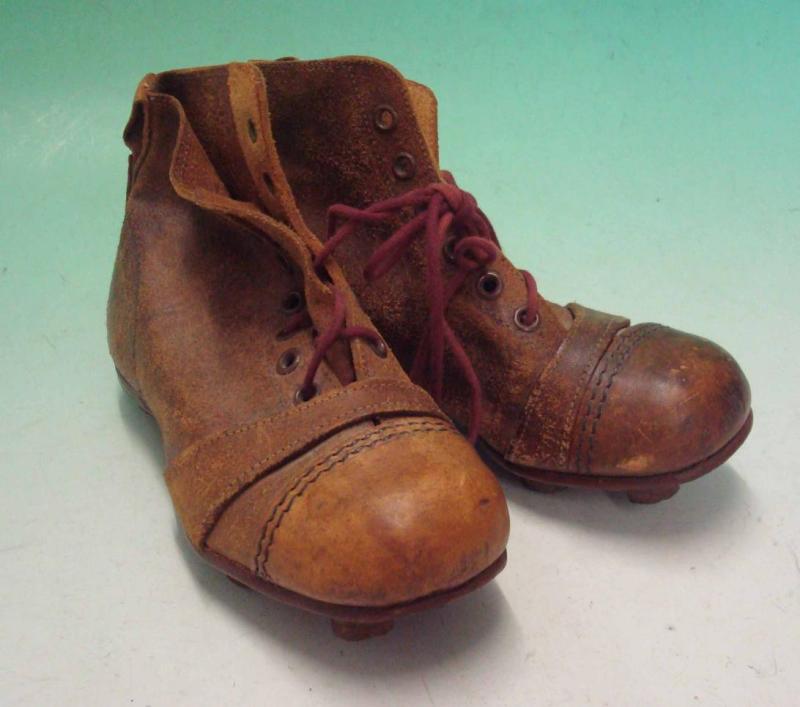
Above all however, I played it in the football boots of the 1950’s. These were masterpieces of heavy leather with huge reinforced toecaps, designed to control opposing players rather than the ball. It was like playing the violin gloves on. No matter how much I admired Stanley Matthews, Gordon Smith or Willie Bauld, as long as I was wearing these boots, I was doomed to imitate Willie Woodburn, suspended sine die by the SFA in 1954 for “indiscipline”. Don’t whistle at me, I told the referee, whistle at the boots.
(On one occasion Woodburn came off the pitch and said to his manager, “Boss, I think I’ve got a broken leg.”
“Dearie me,” said the manager, “And whose is it?”)
But that makes me sound tougher than I was. Because I went to a rugby- playing school, my first experience of team football, apart from the street, was with the Life Boys, the junior branch of the Boys Brigade, from which I graduated age 12 to the Brigade. At that time the BB football league in Glasgow operated on the principle that the total age of a team should not exceed 158 years, which meant that if you wanted to include a 17 year old you had also to include a 12 year old. Nothing wrong with that you may say, but it meant that my 12 year old self had to face huge and sometimes skilful young adults bearing down on me with extreme prejudice.
I owed my immediate promotion into the team not to my skill but to my perfect qualifications for the unpopular left back position:
a) I could kick with my left foot
b) I had no attributes that would make me useful in any other position.
It’s reasonable to describe my performance in my first two games as execrable, and what’s more I knew it. Spotting my difficulties and my shame, the coach asked me what my problem was. “They’re bigger than me,” I told him, “And better.” He listened, went silent and then spoke, “Never mind son,” he said, “They’re playin’ wi’ the same baw!”
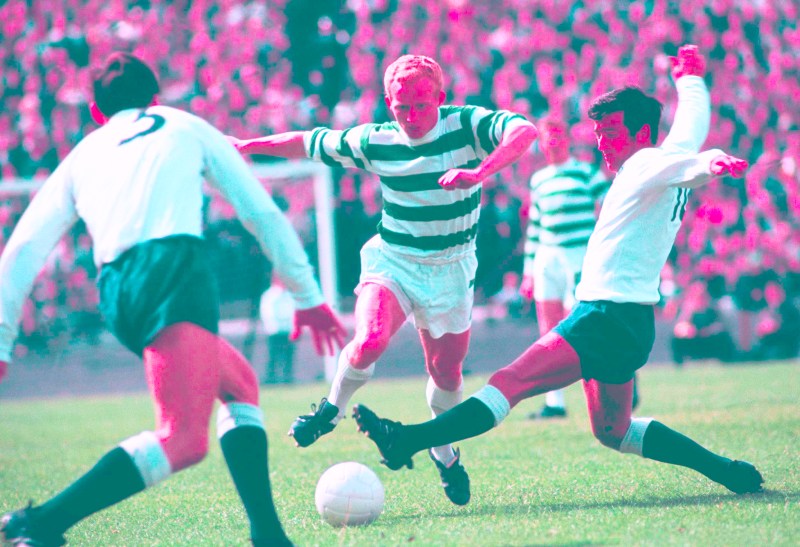
Jimmy Johnstone
This hit me with the force of a revelation. The same baw! Forget their size and skill, and focus on the ball. Forget their height and strength, just look at that ball and aim for it. I became a relentless tackler, and won it often enough to realise that when I got it I’d no idea what to do with it. Still, all those kids who could dribble and pass were playing with the same baw. I could learn how to do the same. And slowly, I did.
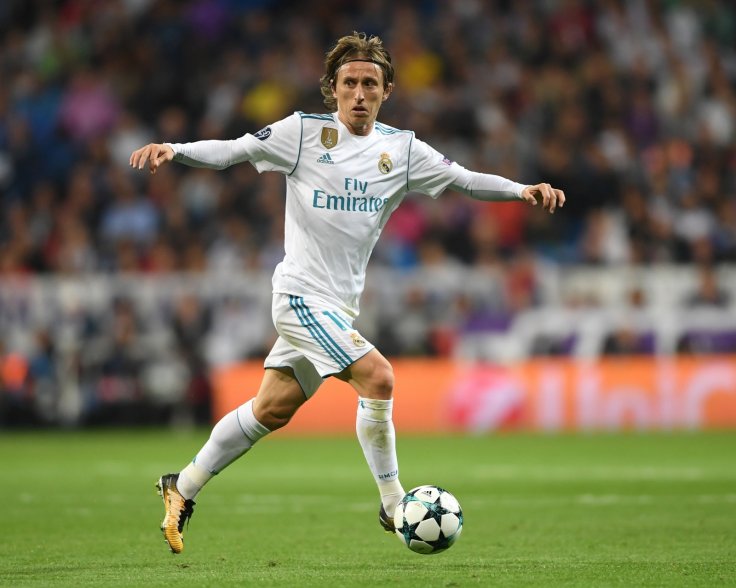
Perhaps that’s the reason why, although I’m built big, my favourite footballers are small, from Jimmy Johnstone to Luka Modric, because their focus on the ball has more than compensated for their size. It may also explain why I refused to support either of the Glasgow biggies and gave my heart to the late lamented Third Lanark.
Of course, the coach’s words were not only a revelation about football, but also about faith. My Christianity is based on love of Jesus and the challenge of becoming like him. Salvation, sanctification, justification, are just so much mystification as far as I’m concerned. For me what matters is the historical life, death and resurrection of Jesus and the gospel call to be like him. Meaning to be like him in his love of God, his championing of the poor, the sinner, the outcast, while offering affectionate honesty to the rich, the righteous and the establishment; his astonishing openness to whomsoever encountered him; his readiness to pour out his life, generously, joyfully, completely.
But, “to be like him” – isn’t that a destination too far for a grubby, selfish, greedy, lying git like me? How can I have the impertinence to demean the character of the son of God, by saying I want to be like him? It’s a bit like me at the age of nine announcing I wanted to be like Ferenc Puskas because I’d seen him play at Hampden.
But the coach’s wisdom applies here also. “Never mind son,”he would say, “Jesus was playing wi’ the same baw.” And that’s true, because in spite of the repeated mess the Christian Church has made of his nature, Jesus was a human being. Like me. Like you. Like Lionel Messi. He was playing with the same baw, namely, his human self, and on the same pitch, namely, this world. If he could do it, I can do it, my neighbour can do it, even Donald Trump can do it. And if, however hard I try, I don’t get there, I don’t need to worry about displeasing God, since Jesus taught that God is delighted with his children, regardless.
Luka Modric
As Third Lanark supporters always knew, it isn’t winning that counts, it’s the faith that you might. As they used to ask,
”Why are Third Lanark players planting potatoes round the edge of the pitch?”
”So that they have something to lift at the end of the season!”
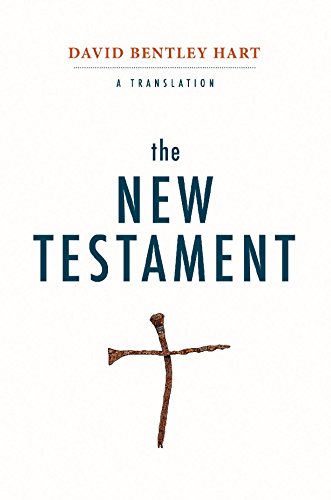
This morning I came across the newly published New Testament, translated by David Bentley Hart, Yale University Press. It has some features which the author claims to be unique:
1. It has no theological bias
2. It translates the Greek as it is, bad Greek into bad English, good into good, without correction or improvement.
3.It therefore recognises the various styles of different books.
4. It tries to give its readers an impression of a Greek text of the 1st or 2nd century, rather than of a revered holy book.
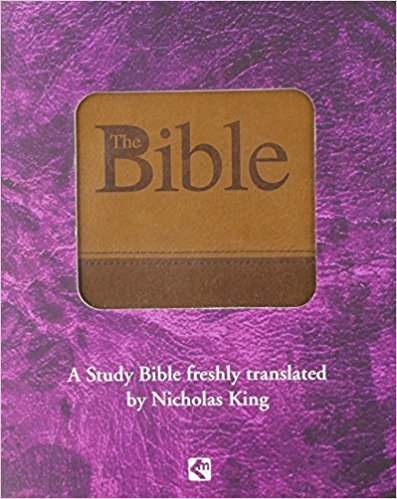
These are interesting features which the author faithfully provides, although I suspect that the first is a little less honest than the others, even if his bias is more interesting than that of some popular versions. I think he’s less alone in his method than he thinks. Certainly Nicholas King has attempted the same kind of thing in his vivid version of the New Testament, ( Mayhew) and Sarah Ruden has been posting on her blog fascinating glimpses of her work on the Gospels. Both of these are, I think, better equipped as translators than Hart, whose work is nevertheless revelatory and challenging. He shows for example that Paul says that God will judge us by our actions, and that he never says anything about predestination. He represents Paul’s maddening disregard of sentence structure and his occasional coarseness. By refusing to translate the Greek logos (word) in John chapter 1 he draws the readers’ attention to the fact that this is a concept which has no equivalent in English. He avoids translating the Greek Christos as Christ or Messiah and gives its literal sense as “anointed (one)”.
Readers who want something nearer the original than the versions used in church will learn a great deal from this new translation although they should look carefully at every sentence that describes God’s punishment of the wicked. Hart is convinced that none of these speak of ‘eternal” or “everlasting” punishment; I’m not so sure. Like Hart I want to reject the theology of eternal punishment, but I’ve always felt I was contradicting scripture. Perhaps in this instance his own theological bias is evident.
The main virtue of Hart’s translation is that it exposes the prevailing dishonesty of the most prestigious translations, which tidy up poor syntax, cover up gaps or confusions in the manuscripts, protect key church doctrines by their choice of words, and generally present the “Word of God” rather than a batch of early Christian writings, most of which are undated and anonymous, some of which are attributed to people who were not their authors, and many of which are written in barely literate Greek. The Greek New Testament is as the author suggests, a wild and offensive book.
It is also the book I love the best, because it provides early evidence of the historical impact of the life of Jesus of Nazareth on Jews and Gentiles. The theological bias of my church (Calvinist) led to biased translation (KJV) and a skewed interpretation which failed to do justice to the mystery and majesty of Jesus, as described in the original. No, we cannot be sure that every story about Jesus is historically accurate, or every description of him justified. But we can take the whole book as an accurate image of the memory of Jesus cherished in early church assemblies, and as a witness of his meaning for them. This does not justify my trust in Jesus as the definitive revelation of God, but it enables it, tests it and feeds it.
The assemblies of Jesus,amongst whom the writings were produced and circulated, were both extravagant and down to earth in their devotion to Jesus: extravagant in that they thought him the key to the meaning of the cosmos and were happy to risk their lives for his sake; down to earth in their readiness to make their wealth communal, so that the poor could enjoy the blessing promised by Jesus. Their pictures of him continue to be revelatory to me. How on earth did he manage to be ready for so many different people and their needs? His very occasional unreadiness, as in the story of the Canaanite woman he called a dog, shows how seldom he faltered, how frequently he met the need. And why can’t I be like that?
Any new translation of the New Testament is an addition to biblical scholarship, but it is also a stimulus to informed discipleship of Jesus. Blessings on David Bentley Hart!








 But once, when I was a boy, I inched
 In spite of human enmity you have the nerve

 xtremejesus