A Scottish Elijah?
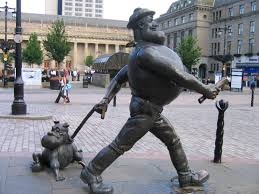
If there’s a minister in Scotland who is forever applying for the role of Old Testament prophet it’s the Rev. David (Elijah) Robertson of the Dundee Free Church of Scotland, and there are few areas of Scottish life untouched by his vigorous denunciations. In some instances his well-argued polemics have been a welcome antidote to liberal platitudes, in others more an expression of theological prejudice. Just this morning I see that David (Elijah) is at it again, this time as a spokesperson for the “SNP for Leave” campaign, on the subject of the forthcoming referendum, in an essay in the Sunday Herald. His argument is: 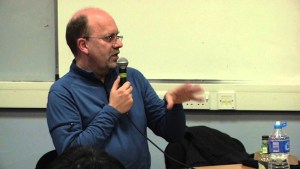
- The true sovereign of the world is God and therefore under God, all people share equally the right to determine their own affairs.
- In the case of Scotland that derived sovereignity should belong to the Scottish people and their chosen government.
- Sharing that sovereignity with the Europeqn Union is a diminution not only of sovereignity but also and more importantly of democracy, because the effective rulers of the EU, the commissioners, are not elected but appointed.
- An independent Scotland would have more power as part of an “interdependent UK.” than as part of the EU.
Most people will notice some strange things here. At present, the Scottish people, in a referendum, has chosen to be governed within the UK. If that’s their use of their God -given right, then presumably God gives it his tentative approval, however much Rev David (Elijah) may disapprove. In fact the whole article suffers from the ambiguity as to whether it is arguing against a future independent Scotland or Scotland now as part of the U.K., remaining in the EU.
The point about the lack of full democracy in the EU has been made by many others, but it cannot be honest to ignore altogether the EU Parliament and its elected representatives including those from Scotland. An argument that pretends the EU is simply non-democratic is inaccurate.
In fact we must contrast the existence of an EU Parliament with the utter lack of any institutions that might allow an independent Scotland to have influence in an “interdependent” UK. Indeed this “interdependence” is a prophetic vision which must be God-given as there is no earthly evidence for it at all.
These elements are curious. There are also some good elements, such as a genuine concern for grass- roots democracy, for the Scottish fishing industry, and distinctively Scottish social justice proposals, like banning tax- avoiding companies from bidding for public contracts.
But as a fellow theologian I find myself suprised by the absence of any genuine biblical perspective. I imagine David (Elijah) will have one which he has chosen not to use when arguing a secular issue, but its absence permits him to be more positive about nation states, such as Scotland, than the Bible is. The desire of the confederation of tribes called Israel to become a nation state and be governed by an elected monarch is viewed by the biblical prophets as rebellion against God. The people are warned that their new King/ government will rip them off and lead them into dynastic war. And even after the successful reign of King David, his successors are judged by whether they worshipped God or idols, and gave justice to the widow and the orphan, that is, to those who had no social power. The best that the Old Testament expects of the nation state and its rulers is that they are not idolatrous and protect the weak and powerless! That’s it.
The New Testament is no more positive about the nation state. Jesus announced a Rule of God which had no place for either the rule of Rome or of Israel/Judah, nor did he propose a caliphate or theocracy that would implement God’s Rule. He expected that God’s Rule could be exercised in communities of those who accepted it, underneath, within, and alongside the nation state or empire. The only teaching we have from Jesus that is directed at “nations” is in Matthew 25 where the nations are gathered before the true king and judged as to how they have treated the hungry, the thirsty, the immigrant, the naked, the sick and the imprisoned, with whom the true king is identified. This goes further than the Old Testament, but does not expect more of the nation state than basic social justice and care.
I make this point to suggest that Christian people ought not to assume that the nation state itself is a boon to humanity. It tends towards unrestrained competition with other states which is ultimately resolved in war. This pessimistic realism about states is characteristic of the biblical tradition and of the best Christian political writing. From this perspective we cannot assume that an independent nation is always desirable or that full sovereignity is always better than international association. With this in mind we might see the founders of the EU as looking at the history of their nation states in two world wars, and recognising that their full sovereignity had become demonic and required restraint; and that their mutual ignorance had issued in bigoted hatred of neighbouring peoples. Shared sovereignity could accustom legislatures to decisions made for the good of neighbouring nations as well as their own; and the freedom of people to learn work and play in other nations could foster transnational community. These, as well as free trade, were the hopes of those who founded what has become the EU. From a biblical perspective they could be seen as ways of undermining the self- idolatry of nation states.
But perhaps David ( Elijah) has thought of all this and dismissed it, either because he thinks that the EU Is seriously oppressive or that the Scottish nation is especially just, or would be, if only it could free itself from Brussels. He would have to justify either of these positions by more coherent argument than he has provided.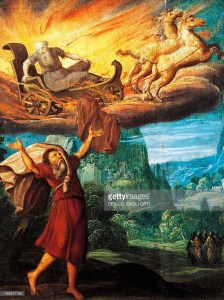
Although I am not a prophet, I do judge politics from a biblical perspective, which leads me to ask the following questions about the referendum:
- Which choice is more likely to restrain our government’s and neighbouring governments’ worship of their own powers?
- Which choice is more likely to provide justice for the poor, the migrant and the orphan in Scotland and Europe?
These criteria do not make for easy answers. For example, the poor of the UK are the most adversely affected by immigration, but they lead me, on balance, to vote to remain in the EU, which puts me at odds with D (E) our national prophet. But they led me to vote the same way as he did in the last referendum, so maybe there’s hope for me yet.


 Because love originates in the primary experience of family life we know that it will always be a source of joy and sorrow: sometimes we celebrate together, other times we weep by a bedside. Because love is so adapted to our needs we can say that in the imagined week of evolution, it originated on late on the Monday, with the first unicellular creatures and grew until it touched the strange life-forms that thought they could control their environment. But I would want to say that it was present before the Monday and after the Sunday, and continues to be the beyond in our midst.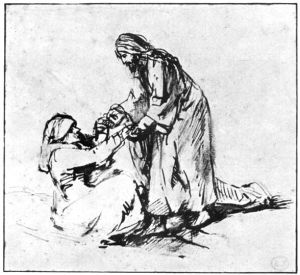

 It is my conviction that the Gospels were written to balance this kind of spirituality with the memory of Jesus, so that every generation of believers could be faced afresh with his character, actions and teachings. The gospel writers were in no way denying the salvation of men and women through the cross and resurrection of Jesus, but they wanted to flesh out the nature of “being saved” and of life in the Spirit, by providing vivid stories of Jesus himself. His actions were not to be imitated slavishly but meant to inspire actions of equivalent goodness; his commands were not to be taken as a new Torah but they were meant to be obeyed; his wisdom was not considered to be the finished truth, but to lead disciples into deeper revelation. They were saying, “Here is Jesus the Word of God. Let us take God at his Word, and build our communal life on our memory of what he was, for it will unite us with what he is now and forever.”
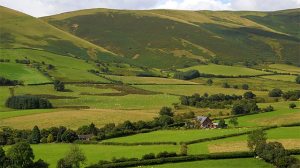
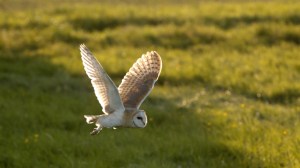
 My discovery was that my egocentricity dropped away when I was alone in a natural environment. Taking a holiday how ever brief from society was also taking a holiday from arrogance, which was and is still a blessing, the freedom not to be a competitive self but to be a member along with other creatures of a web of life. This was not at all the experience of an elated moment, but rather of being an ordinary creature, that is, of being created, along with other living things and therefore being in development. I want to emphasise the ordinariness of this experience which is characterised by ease, sobriety and trust.
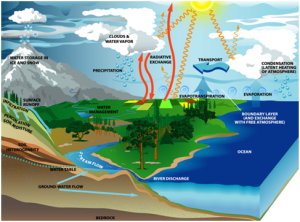
 The picture is of God in labour with the future of her creation.
 “So do you think they should have risked the life of the child rather than shoot the gorilla?” asks the comment from someone who read my last two blogs and is referring to the widely reported incident where a child tumbled into the Gorilla compound in a zoo, and was being pulled along by a large male gorilla who was then shot dead. The zoo staff explained that a tranquilising dart would have taken too long to work.
 The discovery that the nicotinides used by farmers to kill pests might kill the bees on which the fertility of crops depended, is a case in point. Most farmers were utterly unaware of the importance of bees. We live within a vulnerable ecosystem which we do not understand, and permit our children not to understand because we want their education to help them compete with other human beings for status and wealth. We need to learn of the green world and we need to make sure our children learn of it along with their alphabet.
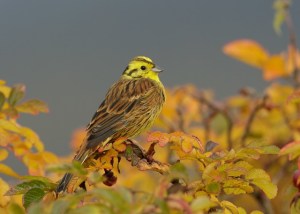 As I lumber round my favourite running route, through the Angus farmland, I recognise groups of Yellowhammers exploding from hedgerows to play hide and seek with me, disappearing and reappearing up ahead. They do so because they know I’m an animal and will inevitably stir up insects for them to eat. Their yellow heads and necks glitter in the sunlight.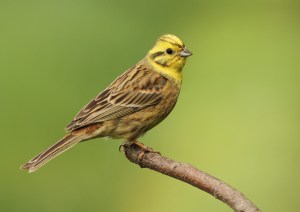




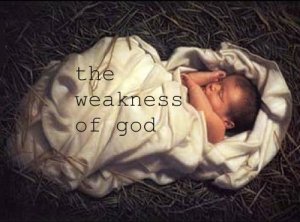
 I was writing earlier in the week about God’s “abandonment” of my youngest brother, still dangerously ill in hospital, but having been to visit him in the liver transplant unit of the Royal Edinburgh Hospital, I have seen those to whom God has abandoned him, namely the wonderfully kind and skilled medical teams there. Our medicine has grown on the basis that God will not heal people on his/her own, but has made available the spiritual, material and intellectual resources for human beings to discover and use. Although science often imagines itself in opposition to faith, I think it’s no accident that it was born in parts of the world influenced by the tradition of Jesus.