The quiet traditions of goodness…
Sometimes political writing seems to assume that most people are selfish and that there’s very little point in appealing to their altruism, because it may not exist. This leads to the conviction that only power can achieve any degree of justice, ignoring those who used to be referred to as “people of goodwill.” In the absence of goodwill, I believe, not much justice will ever be achieved, because small good things provide a basis for the larger ones.
“A small good thing” is the title of a marvellous story by Raymond Carver, in which a baker offers the bread he has just baked as a small good thing to a couple whose child has died. It is amongst the greatest things ever to have been written by an American because it expresses a profoundly democratic kindness.
There are traditions of civic kindness in the UK which should never be ignored in political thinking.
VOLUNTARY SERVICE
The lady who often serves me at the till in Tescos is a skilled first-aider who works with St John’s Ambulance to provide effective help at one of the local football stadiums. She does this with great cheerfulness, relishing the responsibility and the chance to use skills that are not often called upon in her daily work at Tesco. She is proud to be offering this unpaid service which is in no way inferior to any paid service that could be provided.
There are many similar traditions. I was talking last week to a man whose son is one the local lifeboat crew. He reminded me that not only does the crew give their work free of charge, but that the Lifeboat Association has to raise the funds for the vessels, which cost in excess of £1m. Many lives are saved every year. The mountain rescue service is another example of skilled labour proudly given for free. The Citizens Advice Bureau could not begin to provide its vital service to people in need without its trained volunteers.
I use the word traditions of these and many other forms of voluntary service because each one has a history, a modus operandi and an organisational structure which expresses a distinctive ethic, reminding citizens that there are some things that money cannot buy.
PRO BONO
A local lawyer surprised me recently with an account of the quite extensive work that her firm does free of charge because it is for public or indiviidual good. She indicated that colleagues valued the opportunity to do such work, and gave it as much energy and skill as any paid assignment. This is a crucial benefit in situations where legal skill is essential but cannot be afforded.
There are other professions and trades who contribute free labour for specific causes. I know a medical doctor who provides a months work free of charge every year to a hospital in central Africa. He says it allows him to remember why he became a doctor.
FUNDRAISING
I detest the paid fundraisers used by large charities. The use of them signals that the charity in question has lost its vision. But here, at Sainsbury’s today, is the man whose son is quadraplegic raising money for a small local charity that arranges holidays for such children. He is very grateful for the NHS but knows there are things it can’t do. He and his wife manage to find time from the ceaseless tasks of caring for their lad to administer an imaginative ancillary service, that requires substantial funds.
NEIGHBOURLINESS
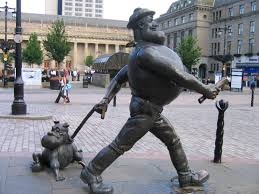
People say the old neighbourliness is disappearing but I saw countless instances of it in a Dundee housing scheme, where mums would provide free child care for other mums in difficulty. An older woman coming back home from hospital was overwhelmed with neighbours bringing her cooked food. Another older woman took into her house a boy whose parents had thrown him out after he was caught sellong drugs.
People who do these things are the salt of the earth, preventing society from becoming altogether rotten, and showing that kindness is possible, real and beneficial. They create hope that justice also can be done, for justice is more than kindness, but never less.

 As I say, I can only make suggestions for my tradition. The food bank I support is run by Muslim people and distributes to non-muslims. It is called, “Taught by Muhammed.” I am sure that true Islam has much to contribute to opposing the forces of hatred. My local Sikh temple with its open kitchen and fellowship is already breaking down barriers. Green politics, of which I am an ignorant admirer, will surely develop its own relevant opposition to those who hate their own planet. And so on.
 Yes, I suppose I agree with Scottish and English footballers wearing poppies at their match on Friday, but I do not agree that the poppy is not a political symbol. It used to be a-political, I think, as long as you weren’t a Kraut or a Nip, but in the last five years it has become a symbol above all of a kind of politics that elevates the UK, excusing all its crimes and glossing over all its current contributions to international disorder, at the expense of Johnny Foreigner, especially if he lives or works here. Hugh McDiarmid once said that Scotland would not be free intil the last minister was strangled with the last copy of the Sunday Post. I do believe that the UK will never be sane until the last right-wing bigot is buried with the last copy of the Daily Mail protruding from his mouth. Of course I hasten to add that Jesus loves even right-wing bigots, but He is famous for being less particular than most of us.
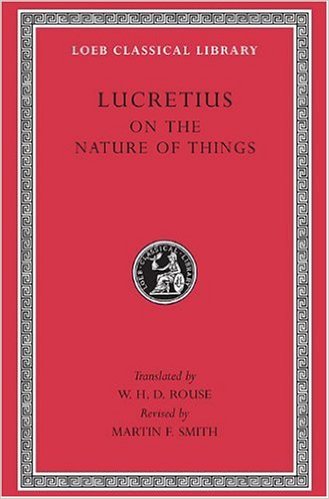 But maybe, just maybe, it was carried into modern speech by the Scottiish tradition of classical studies from the great Latin poet Lucretius. As all readers of his epic poem “De Rerum Natura” / “On the Nature of Things” will be aware, Lucretius wrote of how the universe is composed of atoms, and everything in the universe of combinations of atoms. But he notes that if the motion of atoms was completely regular they would fall separately through space and never collide with each other, so that nothing complex would exist. He therefore posits an irregular motion that moves atoms from a regulat path, and calls it “the swerve” (clinamen in Latin). This allows some indeterminancy into what would otherwise have been a completely determined and unproductive universe. If we are tempted to laugh at this notion we should remember that modern physicists have postulated a similar force which they call “inflation” to explain how the perfectly regular outward explosion of energy from the Big Bang produced the irregular clumps of energy which became stars and galaxies and bloggers.
 This week my main companions, apart from my family, have been St. Paul and James Kelman. I’ve been reading and translating from Greek Paul’s Letter to The Roman Church, while reading with great pleasure “Dirt Road”, James Kelman’s latest novel.
 James Kelman would tell me to be very careful about any specious categories that diminish the uniqueness of persons and their pain. The hero of his book is scathing about the religious and social conventions which deny the fact of personal life and death. If there is goodness, it is neither an addition to life nor a philosophy of it, but there, in it, within the predetermined chain of events, a grace arising from it, as the music which the hero loves arises from his culture and his character.

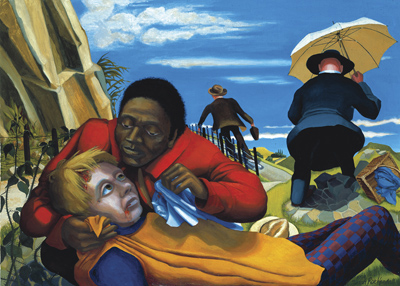 The Geneva Accords, which govern the treatment of civilians and combatants in war are amongst the noblest documents of humanity, because they push kindness in the direction of justice, as Jesus did, as Moses did, as Mohammed did.

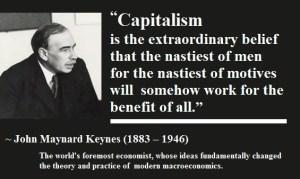
 Such opposition should be patient, peaceful and popular, encouraging people to see the source of their discontents and to channel their anger into building effective restraints upon its power. In this work, the church would not be alone. The Scottish Green Party in its conference this week, showed a grasp of economic truth and a willingness to devise policies that would limit the destructive powers of capitalism. At least they sounded as if they were living in the same world as me. And there would be other allies also. It’s time the church put its shoulder to the wheel.

 These are not scholarly commentaries. I have of course read many of those and benefitted enormously from them, but my blogs are simply evidence of how I read these writings “under the guidance of the Holy Spirit and within the fellowship of the Church” as my tradition urges me to do. They are closer to what used to be called “devotional reading”, a claim that will arouse derision amongst those who know my impious character.
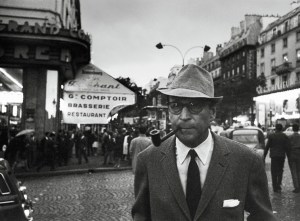
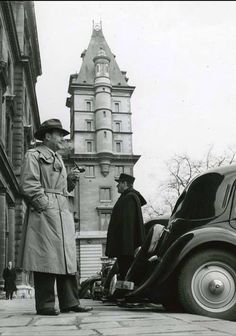 When I’m tired, as I am for some reason this morning, I choose to read rather than write, and more often than not I read one of the Maigret novels by Simenon, which are being re-issued by Penguin. He is one of the masters of plain storytelling, combining speed of narration with an incomparable skill in inventing the right detail to engage the reader’s imagination. His sentences have an elegant logic, mapping the minutiae of events clearly for the reader to follow. Once he gets you hooked, you stay hooked.