
 Dietrich Bonhoeffer, the Greman theologian killed by the Nazis, sketched out the way Christian theology had increasingly found the presence of God where human knowledge was incomplete, such as the origin of the universe, or where human strength gave out, such as in dying. He urged believers rather to find God in the achievements of human knowledge and in the strength of human living. If God was relegated to being a “God of the gaps” he said, then his significance would always diminish as human competence advanced.
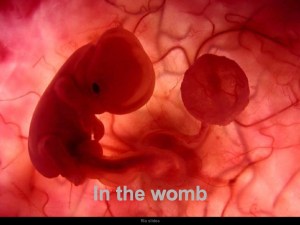
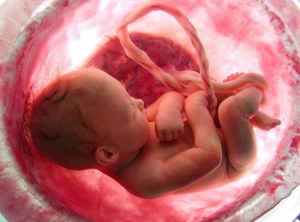
For me, this means that the reality of God is not some strange supernatural substance present in the universe. God is not an object or force within the universe, but is beyond all worlds. I do not see a different universe from that discovered by the sciences; I learn from the sciences how to understand the vast, intricate web of galaxies which is still developing and still partly unknown. When I say that God is the creator, I do not mean that God acts like some extra- powerful force, but rather that God is the source of all forces and all energies and all life as a mother is the source of life for her unborn child ( yes, yes, I know I’m sidelining the dad, but stay with me); and that God is present to creation as a mother is present to the child in her womb: it is within her and dependent on her for its growth, but she does not directly influence its progress. I guess people may ask why on earth I invent such a complicated picture. If the thing works without a God, why introduce one?
The answer is that the Christian tradition tells me a story which chimes with my own experience, that although the universe and I have come about by a mixture of ordered development and accident, I am neither an accident nor merely the result of cosmic process, but intended with all creatures to be an expression and sharer of God’s goodness. I see the same universe as the scientist, but I see it and my own life as a gift and a responsibility. Indeed, as in my own lifetime human knowledge of the universe has been hugely increased, so also has my faith in the creator God, because I have become more aware of what has been, and is still being, created.
The stimulus for this way of thinking about God is the Council of Chalcedon 451 CE, which described the person of Jesus Christ to be of two natures, divine and human, without “confusion, change, division or separation”. Jesus is not half man half God, but rather wholly human and wholly God. If he is able to heal people, that is not because he has godlike abilities; if he suffers that is not because he is merely human. There is no confusion and no separation. When the son of God heals people we know that God heals. When the son of God suffers we know that God suffers. But the healing of God is not separate from this human healing; this is how God heals. Nor is the suffering of God separate from this human suffering; this is how God suffers. God is not in Jesus like the genii in the bottle. He is Jesus without ceasing to be God; their lives are completely shared in the inter-being that is the Holy Spirit.
This is the model for thinking about God: the eternal Father/ Mother is known in the human son Jesus. The Creator of all worlds is known in his/ her creation. The Holy Spirit is known in the openness of creatures to God’s life. God is not known as another fact to be added to the encyclopaedia of the universe; but rather as the person within whom all creatures live and move and have their being, whose life we shall come to share in love.
I know this because God is revealed in the midst of the world, in Jesus and the Holy Spirit. But I must never forget that God is the “beyond” in the midst of the world. God never ceases to be the one beyond all worlds, who cannot be used or defined or tested. I must approach this One with humility and reverence but also without the smelly trappings of religion. All the mumbo-jumbo of religion is invented as a way of getting to God and getting God on my side. This is totally unnecessary for the God who in love has come to me.
That neatly brings me back to Dietrich Bonhoeffer who spoke of “Christianity without religion” by which he meant a faith that doesn’t try to carve out a special religious realm for itself but lives boldly in the good and evil of the world as it is.





 Another ecological necessity we share with other creatures is death: the arrangement of molecules which permits life does not last forever. The fingers that type these words have been around for 74 years today, and have been useful, but already they are neither as agile nor as strong as once they were, and like the brain that articulates these thoughts, they have a term. If biological organisms are programmed to survive, while being made of perishable stuff, reproduction allows the mortal organism to project its life beyond its own death. Indeed, the organism may have done all that it is programmed to do when it has reproduced. Creatures die when they are no longer able to adapt to the changing environment of each new day. Species die when they can no longer adapt to a changing ecosystem, although altered or mutated versions of them may survive, as for example, a smaller sort of cod is proliferating because its human predators want big fish.




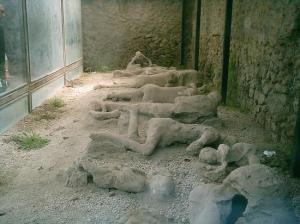 For human beings, as the Christian tradition bears witness, are forever inventing themselves as masters of the world, and creating deities in their own murderous image. This is not just true of the monstrous empires of history, Rome, Spain, Britain, Germany, Russia, USA and their present day successors, but also of other human institutions, groups and individuals. The Bible word for this tendency is “sin.”
 But at the heart of my religious tradition is a victim, Jesus of Nazareth, the crucified Messiah. Here we are dealing with a real and not an invented person, although of course his whole life and death has been presented by the creativity of believers. His story encourages me to see him not only as a victim of worldly power and prejudice, but also as my victim, the one whom I have subjected, rejected or at best, failed to support. He points me to all the others whom I have made my victims.


 xtremejesus