
The latest 10 Commandments by Arthur Hugh Clough
Thou shalt have one God only; who
Would be at the expense of two?
No graven images may be
Worshipp’d, except the currency:
Swear not at all; for, for thy curse
Thine enemy is none the worse:
At church on Sunday to attend
Will serve to keep the world thy friend:
Honour thy parents; that is, all
From whom advancement may befall:
Thou shalt not kill; but need’st not strive
Officiously to keep alive:
Do not adultery commit;
Advantage rarely comes of it:
Thou shalt not steal; an empty feat,
When it’s so lucrative to cheat:
Bear not false witness; let the lie
Have time on its own wings to fly:
Thou shalt not covet; but tradition
Approves all forms of competition.
This savage little poem by the Victorian poet Arthur Clough came to mind when I was taking in the revelations about the behaviour of rich and powerful people in their use of offshore tax havens. It is very unsurprising that a bunch of Russian thugs connected to the chief thug who rules their country, should have been hiding their dubiously obtained fortunes in the tiny remaining parts of the British Empire, but to many people, perhaps, more surprising that a late member of the British PM’s family did so. Of course, as all reports of these facts have to say, there’s no suggestion of anything criminal.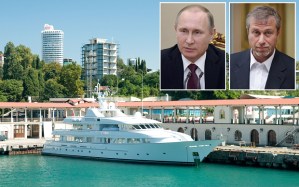
“Thou shalt not steal; an empty feat
when it’s so lucrative to cheat.”
My own lifetime experience is that rich people will go to any lengths to protect their advantage over others, and to pass on that advantage to their offspring. While they are doing so however, they prefer to think of themselves as decent law-abiding and even Christian people. We live in a capitalist society as a consequence of which our laws protect wealth and its possessors from any serious exercise of justice; it’s often possible therefore, for the wealthy to be law-abiding. But Christian?
The often-hidden secret of Christianity is that Jesus was extreme about wealth. He did not teach that wealthy people should be reasonably philanthropic while maintaining their wealth, but rather that they should speedily get rid of their wealth before it damned them. It’s quite clear that he regarded the possession of wealth as one of the main dangers to a person’s salvation. This seems to have been his own distinctive understanding, which surprised and disturbed his disciples. When he sent a rich young man away with the message that he should sell up his properties, give the money to the poor and join his group of followers, he reportedly spoke about how difficult it was for rich people to squeeze into God’s kingdom. This astonished his disciples, who believed, as did most people in their society, that wealth was evidence of the blessing of God on a good life. Jesus’ words about camels and needle’s eyes left them in no doubt where he stood. He explained that you could not simultaneously serve God and Money. If this sounds a prejudiced view, we should recollect that Jesus showed none of the cold-heartedness of political or moral zealots; but kept company with rich people who had made their money dubiously, the collaborating tax-collectors and other riff-raff, while making it clear, as in the case of Zacchaeus, what they needed to do. In the case of the rich young man who wanted salavation, the account mentions that Jesus felt affection for him. 
All this is so very clear in the Gospels, and in the practice of the early church, that it can only be ignored by means of a serious and deliberate distortion of the faith of Jesus. Yes, people may rightly argue that a living faith has to have intellectual space to grow and change and make itself relevant to new circumstances, but Jesus’ teaching about wealth is so clear and central that I can’t imagine why anyone who disagreed with it, would want to be Christian in the first place. And the teaching is certainly not out of date or irrelevant, as the current revelations show. Rich people believe that their wealth owes nothing to the society in which they made it, to its material infrastructure, legal framework, political freedoms, nor to their fellow citizens. No, it is their money, their property, earned by their own hard work or that of their ancestors. They owe nothing to anybody, and are certainly not responsible for the condition of the poor in their own nation or elsewhere:
“Thou must not kill, but needs not strive
Officiously to keep alive.”
The contemporary assault on the benefits of state provision and the value of taxation is a the kind of barefaced self -interested tactic that Jesus would have expected: the rich serving mammon to the exclusion of social responsibilty, the very hard-heartedness he satirised in his story of The Rich Man and Lazarus, which imagines the rich man frying in hell while reminding God of His social responsibilities. Anyone who thinks these views are outrageous, should remind himself of the outrageous change which has taken place in my society over my lifetime. I grew up in post- war Britain, where many key industries were publicly owned, and top salaries taxed at over 90%. Public service of all kinds was considered honourable. Of course such a society had faults but I remain convinced that even its faults were more humane than the trumpeted virtues of the neo-liberal paradise in which I now live.
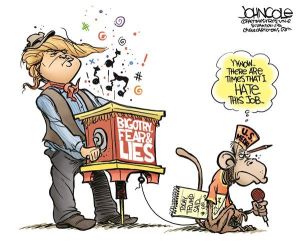 It is not the job of the church to rule society, but rather to make its tradition available to citizens who are deciding their society’s future. As the referendum on Europe and the elections for the UK devolved assemblies approach, I consider that since Jesus’ teaching about wealth is more accurate than anything else we are likely to be offered, it should be made public by his churches.




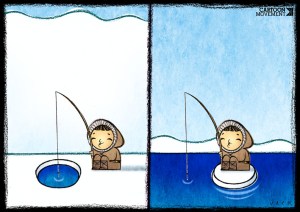
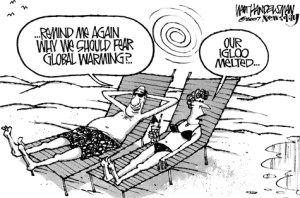 That phrase of Shakespeare’s has been in mind for a few days as an accurate description of what I see when I look at the activity of the human race. We face an increasing threat of devastating global warming, which has already begun to affect many countries and will soon affect all, and the response of the rich and powerful of the world is to try to run things so that they will become richer and more powerful even if they end up in artificial environments poised on the surface of a burnt out planet. This means conspicuous consumption of earth’s diminishing resources, complete carelessness with the lives of the poor and the creatures or the earth, and vicious brutality towards anyone who gets in the road. And the Islamic jihadis who claim to stand for justice in opposition to the power of the rich, are touched by a hysterical self-righteous extremism that simply adds to the evils they try to oppose.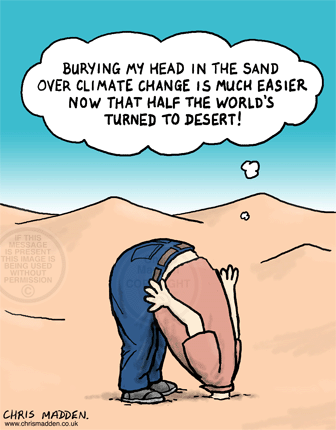

 Come on, come on, someone will be saying, all this is some kind of provocation, you don’t really think this. Ah but I do, and one of the strongest supports for my argument is myself: why haven’t I fought harder? Why have I sometimes added my own evil and destructiveness to the common pile? My only excuse is that I’m a human being.

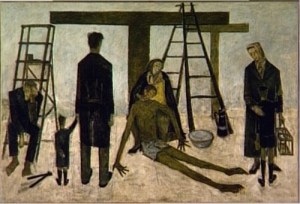 The cross is not the grim story of a psychopathic God who demands satisfaction from his Son, but the sober story of the Son of God who poured out the Father’s generosity in life and death, the victim of moralism, meanness, prejudice, hatred and fear, yet still undefeated. Jesus faithfulness unto death to the generosity of God, is as St Paul recognised, the end of all religious systems designed, like the Torah, to secure the blessing of God. As Jesus knew, the blessing is already given to those who turn to God, in spite of their sins. Now, in that blessing, they have to start again, and again and again.
 Writing blogs about matters of faith may create an image in the mind of readers of someone constantly taken up with the great teachings of Christianity, while leading a life of disciplined piety and virtue.


 Giles Fraser is a priest of the Church of England with an honourable record of putting his own interests at risk for the sake of justice. He writes a weekly column in the Guardian newspaper in which he reflects on political and social issues from a religious perspective. Today his article is a denunciation of Donald Trump, who is certainly a deserving target; but the arguments used in the article are lazy, trite and prejudiced about American Christianity in particular, and Americans in general.
 George Clooney, speaking as a concerned fellow citizen has called Donald Trump a fascist. This may not bother someone who knows as little history as Trump, but it invites Americans to look at the the policies Trump has articulated and to compare them with those of, for example, Mussolini. That’s unfriendly but fair, because it can be examined and found to be true or false. It is part of a debate between fellow citizens.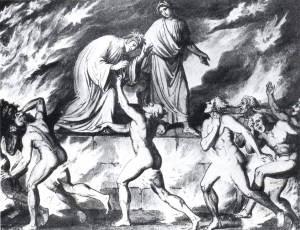
 xtremejesus