Some of my best friends are in hell.
This blog is a kind of interlude in the closely theological stuff I’ve been dishing up. It is in fact a simple whoop of joy at having purchased and begun to read Clive James’s translation of the Divine Comedy. People who are not readers of serious poetry may find that declaration a complete turn- off, but I can assure them that this is a vivid story-teller’s version of the great poem. There are some bits that may involve historical or theological knowledge but ignorance of these would not spoil enjoyment of the poem which takes the Christian view of salvation and damnation seriously enough to make it into an extended story, a pilgrimage through hell, purgatory and heaven. Dante is determined to find out how this sacred story plays out if it is imagined precisely and at length. This is a daring and possibly troublesome thing to do, for the preacher can threaten people with hellfire but the poet has to imagine even his friends in the fires of hell. Dante is brilliant at this. He imagines in great detail what it’s like for a human being to be in hell or purgatory or heaven.
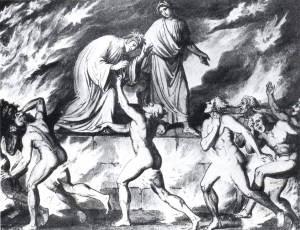
Even now, in a society which is very different from Dante’s Florence, and which has largely abandoned the Christianity of the Middle Ages, we can recognise the kind of people Dante meets and estimate the meaning of their punishment or reward. It risks, in other words, looking in detail at what God is said to do to people and why. Milton wrote that his Paradise Lost was intended to “justify the ways of God to Man”, but Dante is less didactic. He says, “this is a journey we can all make. Come with me and see what you think.”
Dante calls it a comedy, in spite of the hopelessness of hell, because all his characters, even those he loves, end up where they want to be. Those in hell want to be there; its pain and squalor are preferable to abandoning their wrongness. Those in Purgatory make progress according to what they truly want, even if takes years and pain. Those in heaven are truly happy because they are where they want to be, even if they in the lowliest position. God’s terrible love, which cares for all, but will not override the will of any person, permits human beings to take their own decisions, which gives an appalling dignity even to those who have chosen hell.
That sounds more positive than the poem, which is full of pain. Also there are times when Dante’s precise imagination, leads him to question the justice of God. He is not noisy or outspoken in these instances, but his precision allows the reader to detect a question.
In Canto 15 Dante meets, amongst the souls who are being punished for sodomy, his old teacher, Brunetto Latini, who had seen his youthful promise and helped him in his calling as a writer. Dante is shocked to find him in this place, “You here, Master Brunetto!” he exclaims. Brunetto is a pitiable figure, his face “well cooked” by the fires that punish his lust, yet Dante continue to address him as master, using the Italian reverential pronoun. Of course we have to remember that Dante is both in the poem as a character, and outsider it, making it up. But it is clear that the poet wants to depict affection, maybe slightly embarrassed affection, between his pilgrim self and his old teacher of rhetoric.
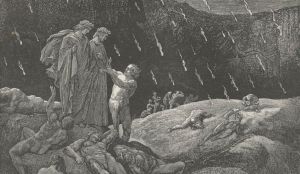
There is no criticism of the church’s doctrine against sodomy, it is built into the very structure of hell, and yet Brunetto is described, when he runs to catch up with his fellow sodomites, as one who runs to win not lose. Perhaps Dante is thinking of Brunetto’s book, Treasure, which Dante thinks ensures his lasting reputation, the kind of reputation that Dante desires for himself. Yet, surely, giving such a positive image of such a serious sinner, must have indicated in his own time, that Dante was sympathetic to Brunetto.
The subtlety of Dante’s narrative is that it doesn’t often make judgements but presents the judgements of the Christian tradition with unmatched clarity, leaving his readers to arrive at their own response. This reader disagrees with the Christian tradition on homosexual acts and responds to Dante’s presentation by asking, “if Dante can feel affection for this old sodomite, why can’t God?”
Over the course of the Comedy there are many characters that engage our pity, admiration and our fascination as Dante lets us see how fundamental desire has placed them where they are. His depiction of divine love is broad, profound and often unexpected.
Dante’s Divine Comedy, translated by Clive James and published by Picador, is a splendid book, which I recommend to anyone interested in theology, morality, God or human beings.
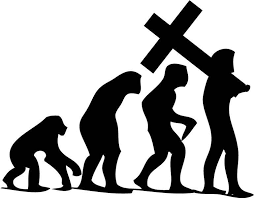 Dietrich Bonhoeffer, the Greman theologian killed by the Nazis, sketched out the way Christian theology had increasingly found the presence of God where human knowledge was incomplete, such as the origin of the universe, or where human strength gave out, such as in dying. He urged believers rather to find God in the achievements of human knowledge and in the strength of human living. If God was relegated to being a “God of the gaps” he said, then his significance would always diminish as human competence advanced.


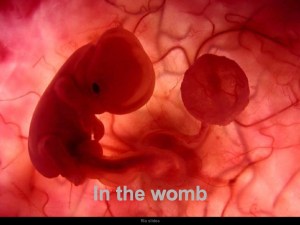






 Another ecological necessity we share with other creatures is death: the arrangement of molecules which permits life does not last forever. The fingers that type these words have been around for 74 years today, and have been useful, but already they are neither as agile nor as strong as once they were, and like the brain that articulates these thoughts, they have a term. If biological organisms are programmed to survive, while being made of perishable stuff, reproduction allows the mortal organism to project its life beyond its own death. Indeed, the organism may have done all that it is programmed to do when it has reproduced. Creatures die when they are no longer able to adapt to the changing environment of each new day. Species die when they can no longer adapt to a changing ecosystem, although altered or mutated versions of them may survive, as for example, a smaller sort of cod is proliferating because its human predators want big fish.




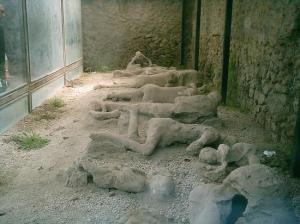 For human beings, as the Christian tradition bears witness, are forever inventing themselves as masters of the world, and creating deities in their own murderous image. This is not just true of the monstrous empires of history, Rome, Spain, Britain, Germany, Russia, USA and their present day successors, but also of other human institutions, groups and individuals. The Bible word for this tendency is “sin.”
 But at the heart of my religious tradition is a victim, Jesus of Nazareth, the crucified Messiah. Here we are dealing with a real and not an invented person, although of course his whole life and death has been presented by the creativity of believers. His story encourages me to see him not only as a victim of worldly power and prejudice, but also as my victim, the one whom I have subjected, rejected or at best, failed to support. He points me to all the others whom I have made my victims.