A recent report on life expectancy in the UK quotes amongst other figures the news that the poorest people in Glasgow have a life expectancy of 54 years while the richest can expect 82.  That’s a HUGE GAP by any standard. Our present government can always suggest that the shiftless poor actually enjoy doing without heat in winter and visiting food banks, but they have so far not argued that they enjoy being dead, although given the harshness of their lives, that might be so. An economic system which produces that amount of inequality ought to be examining itself rather than maintaining that the struggle for scarce resources ( such as life) is the engine of growth.

Those who argue for social equality are often accused of a) attempting the impossible and b) wanting to make everyone the same.  I would argue that a very great reduction in inequality in the UK is both possible and desirable, but I’m a socialist. Almost everyone would agree however that gross social inequality is unjust and dangerous to social cohesion. image

Certainly Jesus thought so. His parable of Dives and Lazarus addresses this issue.

Luke 16:19-31New Revised Standard Version, Anglicised (NRSVA)

The Rich Man and Lazarus

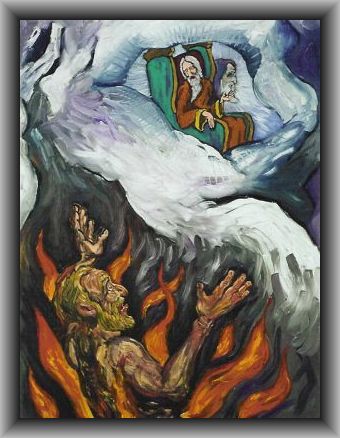
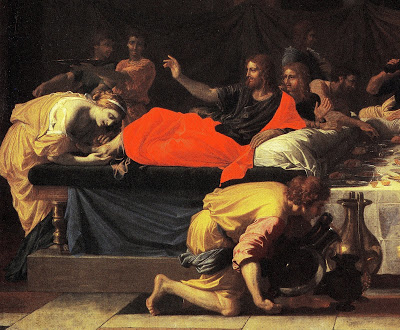
19 ‘There was a rich man who was dressed in purple and fine linen and who feasted sumptuously every day. 20 And at his gate lay a poor man named Lazarus, covered with sores, 21 who longed to satisfy his hunger with what fell from the rich man’s table; even the dogs would come and lick his sores. 22 The poor man died and was carried away by the angels to be with Abraham. The rich man also died and was buried. 23 In Hades, where he was being tormented, he looked up and saw Abraham far away with Lazarus by his side. 24 He called out, “Father Abraham, have mercy on me, and send Lazarus to dip the tip of his finger in water and cool my tongue; for I am in agony in these flames.” 25 But Abraham said, “Child, remember that during your lifetime you received your good things, and Lazarus in like manner evil things; but now he is comforted here, and you are in agony. 26 Besides all this, between you and us a great gulf has been fixed, so that those who might want to pass from here to you cannot do so, and no one can cross from there to us.” 27 He said, “Then, father, I beg you to send him to my father’s house— 28 for I have five brothers—that he may warn them, so that they will not also come into this place of torment.” 29 Abraham replied, “They have Moses and the prophets; they should listen to them.” 30 He said, “No, father Abraham; but if someone goes to them from the dead, they will repent.” 31 He said to him, “If they do not listen to Moses and the prophets, neither will they be convinced even if someone rises from the dead.” image

It depicts two HUGE GAPS, one between the rich man and the poor man in life, the other between them after death. Jesus describes the social gap in its obscene injustice. The two men are part of the same society but there is no contact between them because of the economic gulf which both accept, the rich man  contentedly, the poor man desperately. After death, when the positions are reversed the rich man still expects the poor man, as befits his lowly class, to serve him. Abraham puts him in the picture: not only is he being punished for neglecting the poor in his life, but there is a great gulf fixed between Hades and heaven which cannot be crossed.

Is Jesus giving a lesson in the geography of the afterlife? No, he’s making God’s justice into a divine parody of the kind of justice accepted by the rich man, whose crime has been precisely his comfortable approval of the great social gulf. There is a bitter wit in this reversal of fortunes and in Jesus’ characterisation of a man so used to privilege that even in hell he wants to order people around for his own benefit.image

So is Jesus just having a laugh, while criticising the complacency of the rich? He doesn’t really mean that God will judge in this way? That would be a perilous mistake. Doubtless he did not mean people to take his story literally, but there is plenty other evidence of his view that rich people should fear the justice of God. He was appalled by the HUGE GAP in his society, and I’m sure he’d be appalled at the facts of life in Glasgow, and elsewhere.

Unexpectedly to members of his own party, predictably to the bookies, Jeremy Corbyn, an old fashioned left wing MP was elected leader of the UK Labour Party a few days ago, since when our national media have been stunned by a man who hasn’t been and doesn’t want to be, packaged for public consumption. They are terrified at the prospect of someone who might want to go home for supper at the end of the day rather than give a series of bland sound bites to satisfy the ridiculous appetite of news media for 24 hour information. You only need to look at the various news bulletins of the BBC throughout the day to realise that there is simply not enough information of the right kind to satisfy its feeding frenzy. Of course there are plenty real stories from all round the world that actually matter, but it doesn’t want them. The news media only favour politicians who bow to their power to determine which politicians the public will be allowed to like. It is often said the the Murdoch press is like this, but in fact the neutral BBC in all its dignity is just as guilty of this childish self-importance as the Sun. Or maybe it’s not so childish. Maybe if the public rejected this nonsense, some journalists would be out of a job. image

In any case, the press has of course subjected Mr. Corbyn to as much scrutiny as it could devise, much of it utterly trivial. Will he wear a red poppy on Remembrance Day? ( He’s a pacifist) Will he sing the national anthem? (He’s a republican) I have to remind my non- British readers that our national song does not praise our nation but prays for our Queen, that she may be glorious and victorious, especially, in the verse we never sing, over the uppity Scots. In fact, at a ceremony remembering the Pilots of the Battle of Britain he simply kept a respectful silence during the anthem.

This has raised a ridiculous howl of condemnation even from members of his own party. How could he have respect for the dead if he didn’t have respect for the Monarch?

People really have to grow up. Basic lack of education may have something to do with these people not having heard of republicanism, nor ever asked whether they would not prefer to be citizens rather than, as they are, subjects of the Queen. It also seems likely that they will be ignorant of the history of the Royal Family before the second world war, showing all manner of admiration for Hitler and interest in fascism. They headed a class of Britons whose blindness to the dangers of Nazism, meant that the nation was  so unprepared for war, it had to sacrifice young pilots with a few day’s training to halt Hitler’s offensive.

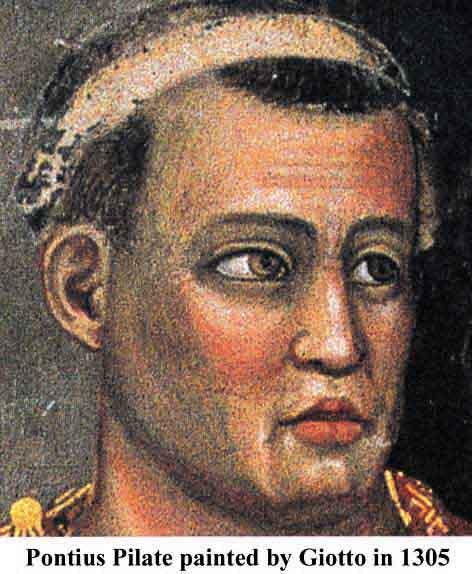
imageThe compliance of the established churches, namely the Church of England and my own Church of Scotland who perpetuate various forms of servile grovelling to the monarchy in the name of Christ, is in my view, regrettable. The story of Jesus shows little respect for monarchs. Right from his birth Jesus’ life is threatened by the muderous King Herod, according to Matthew. Given that there is no contemporary  corroboration for the terrible massacre alleged by Matthew, we may be inclined to disregard his story, but true or false it expresses no respect for the royal family. Mark tells the reader that early in Jesus’ ministry the religious leaders were conspiring with Herod’s party ( a different Herod) to eliminate him. Mark also gives a lengthy comparison between King Herod, who almost literally consumes his people ( the head of John the Baptist in a dish) and King Jesus who feeds his people ( the feeding of the 5000). Luke notes that when Jesus was warned that Herod was trying to catch him he replied, calling Herod, “that old fox”. Faced with the question of recognising Caesar Jesus reminds people that whereas the Roman coinage may bear Caesar’s image, every human being bears the image of God. Finally John tells us that Jesus was courteous to Pilate but did not give way to him, claiming that the source of his authority was greater than Rome.

This brief survey suggests that in Jesus’ view, as recorded in the Gospels, monarchs and rulers were entitled to no more respect than others, and like others, were accountable to the one true king. But we should also note that even when dealing with Pilate who had shed the blood of his countrymen, he remained open and courteous. image

I think Jesus would have been unimpressed by the medieval trappings of royalty in the UK but would have recognised Elizabeth as a  modest, dutiful and very hard-working head of state. As such she would have had his respect. I do not think he would have respected our national anthem.

Although the Church of Scotland has not put itself in the abysmally servile relation to the crown accepted by the Church of England, I believe it should be disestablished, as I’m sure it would have to be in an independent Scotland. Church people should offer to monarchs the respect they offer to all women, men and children, but not more.

The latest news on this issue tells me that Mr. Corbyn has been bullied into agreeing to sing the anthem next time. If so, he will have lost a tiny bit of my respect for him.

Centurion: Atten- shun!

Soldier: Sir!

Centurion: At ease, soldier. You have the prisoner in the guardhouse?

Soldier: Yes, Sir. image

Centurion: How is he?

Soldier: He’s a bit of mess, Sir, after the lashes. But he’s a stubborn bugger, beg pardon Sir, a stubborn man, insists on standing up, when he could sit down.

Centurion: I’ll take a look at him myself to see if he’s fit to carry the stake. You go off and tell the men I’ll be ready for them in five minutes.

Soldier: Sir!

Centurion: Jesus of Nazareth, greetings, I’m Marcus Severus Graecus, centurion charged with your execution. Please be seated.

Jesus: Excuse me for standing. Your men with the lashes have made my back and buttocks too raw to sit.

Centurion: I understand. I’ll come to the point as we have little time. I saw how you maintained your dignity with Pontius Pilatus and wondered if you could maintain it during the lashes. But you did.

Jesus: Just about. A few more and I might have been screaming.

Centurion: Yes,  that’s just the point. You may have seen crucifixions…. No? …Well let me tell you that nobody maintains his dignity on a cross. Oh sure, I’ve seen some very tough men, who didn’t scream when the nails went in, and even laughed and joked for the first hour, but after two or three hours they were broken creatures pleading for death.

Jesus: You’re telling me this because you thought I might be looking forward to it?

Centurion: No I’m telling you because I think you’re a good man and I don’t want to see you lose control, you know, lose control of your bladder and bowels as well as your courage, so I’ve come to offer you an alternative.image

Jesus: Yes?

Centurion: A good Roman alternative,  such as we’d offer any Roman who had offended.

Jesus: Ah!

Centurion: A quick death. Best,  I can run you through and tell my men you struggled to escape.

Jesus: No, I can’t agree to that. It is not your place and it is not the truth about me.

Centurion: Very well. the second best is I leave you this sword and you’ll have time to do it yourself. Think, you’re going to die anyway, but cruelly, painfully, without dignity, causing great suffering to yourself and to any of your people who are present. No, don’t argue. Your life is in your own hands. You can end it if you want.

Jesus: Thank you, Marcus Severus, for your kindness. I hope you are not disappointed in me.

Centurion: Farewell!

( Jesus picks up the sword, looks at it for a moment or two, then lays it gently on a bench. He smiles. Soon he hears the noise of the crucifixion detachment arriving outside.)

Yesterday the UK parliament debated a motion to legalise assisted suicide and rejected it in spite of many sincere and suffering people supporting it.

Not many people in the UK will have heard of WENDELL BERRY, farmer, poet, novelist and ecologist. He is a very American character and somewhat more famous there, although his persistent opposition to most USA policies, domestic and foreign, has not endeared him to conventional patriots.image

He is now an old man, but still farming in Kentucky, where he was born. His writing includes a linked set of novels about life in an imaginary US town; many books of poems,  all accessible to the average reader, especially his Sabbath Poems, and collections of his incisive essays on farming, ecology, violence, peacemaking and above all, kindness to people, animals and the land.

He is available in the UK from most good book suppliers, and can be found in Kindle and Google Play.

I am appreciative of him because a) he is opposed to the destruction of human beings and their environment by technologies of violence, and b) because is is a very practical theologian. He has said of himself, with a sense of surprise as he lives in one the most religious nations in the world, “I am a man who takes the gospel seriously.”

Like Karl Marx he sees the history of capitalism since the industrial revolution as an explosion of new technologies used in order to make wealth for their owners without much concern for others or the natural world. Unlike Marx, he sees many of these technologies as intrinsically violent, demanding the tearing apart of the earth for power to run them, damaging the bodies, minds and souls of the human beings who tend them, and obliterating the kinds of rural communities which existed in the past. It is true that he tends to idealise these historic communities in ways that would be unlikely in a reader of say, John Galt’s novels or indeed of the Kirk Session minutes of any 18th century parish in Scotland.

imageHis concern is for what he calls kindness, that is, treating our neighbours and environment as kin, which becomes almost impossible if we do not know our neighbours, as is frequently the case in both rural and urban Scotland, and never settle long enough to call any landscape or cityscape our own. The pervasive unkindness of modern life, from the driver who threw his half- eaten Big Mac on to the street in front of my house yesterday, to the scattering of millions of booby- trapped explosives in war zones, reveals to Berry what can happen when neither people nor land are recognised as any kin to us. He has fought a long and good-tempered battle against all forms of endemic violence by his writing, lecturing, demonstrating, and not least, he thinks, by his farming.

He is also an old-fashioned moralist, holding to many traditional Christian commandments; he affirms marriage, neighbourliness, humility, gratitude, courtesy and grace. He is opposed to abortion ( though he would not legislate against it) pornography, most TV, most internet, wealth and ostentation, speed and noise. He loves the sabbath rest and has written several beautiful series of poems in celebration of it. Perhaps he sounds like a cranky old bugger, but that’s because he believes above all that any belief is without value unless it is practised by individual people in individual places, including by himself and in his farm. He interprets Jesus ‘ command to take no thought for the morrow as reminding people that the kingdom starts today.wendell

Along with others, however, he is sponsoring ” the fifty-year farming bill” because he thinks that in order to get a viable environment for crops and animals in fifty years time, we have to start now with the most rigorous laws against wanton destruction and pollution.

In the end he believes that nothing is good unless it is done with love.

His latest book of essays is “Our Only World”

His latest collection of poems is “This Day, Sabbath poems collected and new”

These are available in paperback or in Kindle/ Google

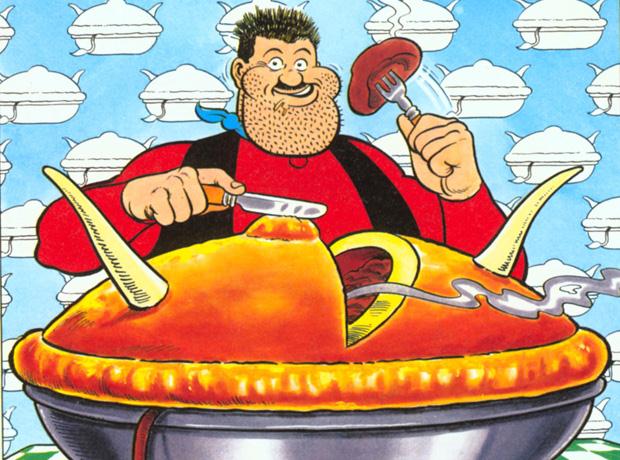
It may be that another cranky person, Desperate Dan, also comes originally from Kentucky.

FRONT_07-09_Splash_2477444a-1620

Yes, that’s the brave headline in the Scottish Sun today. Faced with common-sense responses from candidates for the Labour Party leadership, they have heroically gone to the barricades and called them cowards. It does my old heart good to think that we still have people of this calibre in Scotland, who are able to ignore the carping criticism that it may not be the height of heroism to send others into battle; and that even if the young fliers are licking their lips at the prospect of bombing targets from a great height, they may not like footage of the civilian deaths their bombs will certainly cause. Of course the Scottish Sun has the balls to fly in the face of the evidence that similar raids on Libya not only failed to hoover up the mess but actually blew the bloody stuff all over the region.just-war

In fact given the prediction that air attacks may not quite cut the mustard in the battle against Isil, I’m sure that the stalwarts at the Scottish Sun would volunteer to be the first to put their boots on the ground. This would have the double benefit of giving Isil a laugh and of ridding Scotland of their nonsense. It would also be a first that would make the Guinness Book of Records: the first time that the warmongering little willies (Scots: affectionate diminutive for male organ) who clamoured for a war, actually had a taste of it themselves.

Of course I realise that some may think it’s unfair of me to give journalists the task of fighting, inasmuch as they are not trained for it. Sure, I probably did go over the top there. It might be better and fairer to deposit the Sun warriors in the battle zone to use the skills honed over years of working for the Murdoch press. Doubtless their phone tapping skills could be used to intercept enemy communications. They could camp outside Isil barracks day and night to ask persistent questions about how they were coping with their friends’ deaths.They could try tapping up the surplus wives of Isil fighters to be photographed in semi-naked poses for the pleasure of British boys. All this, if they were not taken over by Isil to run their propaganda machine because they had proved time and again that facts were of absolutely no importance to them.

There may be some others apart from me who think that if any of those tub-thumping tumshies (Scots: affectionate diminutive for big stupid boys) ever got within a hundred miles of having their heads removed with a blunt knife, they’d run screaming back homewards, tae think again.(Scots: words usually applied to violent Englishmen)

Just at the point where many people in Europe have discovered that we can deal with the refugee problem by patient compassion and rational planning, the Scottish Sun gets an itchy trigger finger and tells us we can “solve” it by raids on Isil. If one lesson emerges from twenty years of UK policy in the middle east, it is that violence has solved nothing and in many instances exacerbated the problems.way_of_life-3

There were many of Jesus’ fellow Jews who though the Roman problem could be solved by a mixture of suicide attacks and armed rebellion. There was ample provocation: the Romans had invaded their country and were ruling it for their own benefit. Even in that situation Jesus rejected the call to violence, counselled patience and even more scandalously, love for enemies, only to find himself executed by the Roman authority. He counselled that those who use violence by die by violence, a saying that is not only a warning to anyone tempted to use it, but also a promise that violent thugs who seem so powerful now, will one day get theirs.

There may be need to protect people from Isil, and if so, it should be done through the UN with a relatively massive commitment of troops, so that even those courageous killers of helpless men women and children are deterred.

Meanwhile it would be an improvement if instead fuelling their spurious abuse, Sun journalists used their hot air to fill a balloon that could whisk them skywards to join all the other balloons (Scots: puffed-up people) who preach war.

I’m going to be asked soon at a church meeting to disclose my ” favourite bible passage” which is slightly embarrassing because I don’t really have such a thing. The question comes from a Protestant training in youth that encouraged us to learn things like the Ten Commandments and the Beatitudes by heart, with the laudable aim of filling our minds with something more wholesome than Elvis Presley. Over a lifetime however, that’s not the way I’ve used scripture, preferring to tackle whole books or the kind of jigsaw of passages provided by the Lectionary.

Still there are passages to which I keep returning, one of which is Mark chapter 1 verses 40 – 45. It is the familiar story of Jesus healing a leper and restoring him to community life.

40 A leper came to him begging him, and kneeling he said to him, ‘If you want, you can make me clean.’ 41 Moved with pity, Jesus stretched out his hand and touched him, and said to him, ‘I do want  Be made clean!’ 42 Immediately the leprosy left him, and he was made clean. 43 After sternly warning him he sent him away at once, 44 saying to him, ‘See that you say nothing to anyone; but go, show yourself to the priest, and offer for your cleansing what Moses commanded, as a testimony to them.’ 45 But he went out and began to proclaim it freely, and to spread the word, so that Jesus could no longer go into a town openly, but stayed out in the country; and people came to him from every quarterimage

The feature that interests me most in this passage is at the beginning of verse 41 “moved by pity” which in Greek is expressed by a word which means “gut- wrenching emotion” like the public reaction to the by now famous pictures of the dead refugee child on the beach. There have been pictures of dead men and women on beaches and in trucks for some time but these have apparently not troubled the guts of many people, because of course they were “migrants” or, as you might say, “lepers.”

Lepers in Israel were obliged to notify their disease to the Levites, and to live out of touch of family and community, warning people of their approach in case they should pass on their disease to them. The noisy approach of this leper to Jesus gives an opportunity for everyone to put some distance between themselves and this outcast.

But verse 41 is not quite reliable. Most of the best ancient manuscripts say “moved by pity” but one family of manuscripts which often provide good evidence for the original text, says,”moved by anger.” Now one can see why pious scribes might have replaced this difficult reading with the more respectable, “moved by pity”, while it is quite hard to imagine why anyone would replace a more respectable refacing with a difficult one. So I have always concluded that Mark wrote “moved by anger”.

Why might Jesus have been angry? The abject condition of the man might well have aroused his anger, especially his plea, “if you want, you can make me  clean”! He doesn’t doubt Jesus capacity as a healer, but he doubts his willingness to help. How many refusals must have led the man to this bitter recognition; that even when people could help, they didn’t want to. The way the man has been treated and the effect it has had upon him makes Jesus angry, and he acts, not out of compassion but out of indignation that a man has been reduced to this extremity of accepting a gulf between himself and healthy people. His hand crosses that gulf and touches the man. He orders him to be clean, a command that is in the same league as “let there be light”; it is a creative word.

I don’t trust the pity aroused by the pictures of the dead child. It may vanish as quickly as it came, when the image fades into the background of news. I do trust the profound anger expressed particularly by those who have been advocating the cause of refugees for some time. They have known that people do not lightly leave their homes and homelands to make dangerous journeys over thousands of miles. Doubtless their determined exodus has emboldened others whose plight is not so severe, to risk danger for the sake of a better life. In a connected world, people in dire troubles can view the life of people in safe and affluent societies, even while they stand in the midst of bombed out streets or desertified farms. Their appearance at the gates of Europe signals the start of what may become the greatest movement of peoples ever seen.

Their plight should arouse anger, as should the shameful selfishness of the people and politicians who want these refugees kept at a distance. “Make them a camp in Syria!” say the voices of people who’ve never lived anywhere rougher than a London flat or a mock.-Tudor street in a leafy village.

Angela Merkel is not so much more compassionate than most other heads of Government, as simply a much better politician who’s not blinded by prejudice and apathy. She has seen and her people have accepted that this is not a temporary crisis but an event which will shape politics for a generation. She took action long before the rest of the world burst into tears, by settling thousands of refugees in Germany.

If we allow the passage from Mak’s gospel, in my emended version to influence us we should:image

  1. Feel anger at the condition of the refugees
  2. Express our solidarity with them as our brothers and sisters ( reach out a hand to them).
  3. Make the kind of creative decision taken by Jesus ( the transforming command such as Germany has already issued)

Of course as many have said, there remains the problem of what to do with Syria and Eritreia and other nations where all rule has failed. But whether we who helped cause the problem in the first place by our interfering violence in the region, are the right people to make decisions about its future seems doubtful to me. With regard to intractable problems cautious compassion may be the best response, whereas the imminently resolvable problems of refugees should arouse anger and action.

Nicola Sturgeon emailed me last night – well it was a circular to all members of her party -promising action for refugees. I’m sure that the churches in Scotland should help her by promising to welcome and support a certain number of refugees, as that will help turn good intentions into the miracle of rescue.

If only we could access an authentic image of God, our religious searching and our religious squabbling would be ended.

Or would it?

  1. See! He’s smiling. I always said he’d be smiling….
  2. Whaddya mean smiling? Just look at the corners of his lips! He’s frowning!
  3. That’s just typical of you men! I know it’s only a face, but She’s clearly a woman!

Yeah, it would be something like that. Nevertheless, ever since human beings invented God, we’ve produced image after image to embody our notion of what God or Gods are like. Some of these are meaningful and beautiful even to those who don’t share the religion of the maker. For example I find the Hindu representation of Šiva as Lord of the Dance very moving as He dances the creation and destruction of the universe. I’m sure many atheist scientists also find it meaningful.image

The Hebrew tradition of faith is explicitly against images of God. The God whom they invented forbade them to make material images of Him. They made this prohibition for two reasons:

1. They knew that if their invention of God was to have any value it had to point beyond itself to One who could not be fully grasped by the human imagination. They therefore used images only in words, names, phrases, prayers, stories and commands to point to this One who out of his mystery, spoke to them. This is an extraordinary discovery. They knew that as soon as you accept this or that image of God as real, you become a slave of the one who invented that image. But when you know that any image of God is by definition wrong, you remain free to listen to the whisper that comes from beyond the edge of the universe.

2. They believed that God had placed his image in the midst of creation, in man and woman, not wholly in man nor wholly in woman, but in man and woman together. They believed that this was God’s selfie, the creation of man and woman. But what a confusing selfie! Because of course, questions immediately arise. What man and what woman? Tom Cruise or Nelson Mandela or Pol Pot or Buster Keaton or Albert Einstein or  Ludwig Van Beethoven, or Julius Caesar or Plato or Abdul Mohammed Saq? ( who’s that last one ? He’s my next door neighbour.) Hilary Clinton or  Sarah Palin or Marilyn Munroe, or Eleanor Roosevelt, or Mother Theresa, or Miley Cyrus or Joan of Arc or Cleopatra or Elma Taylor? ( Eh, who’s that last one? She as my first girlfriend.)  Did it mean powerful men and women rather than weak? Good people rather than bad? Or does it just mean that we should see God as the creator of humanity?

The Hebrew and Christian bibles in effect answer these questions by saying, yes, all of the above.

imageThe big story the Bible tells tries out the image of God as the creator of all worlds and all life but is forced to see contradictions in the story of a creator who is always being foiled by the wicked cunning of his precious human beings. Still the storytellers stick to their task and leave their readers to puzzle out the contradictions.

They also tell stories of how God lets himself be seen in the lives of particular people, like Abraham Isaac and Jacob, or David or Solomon, not because they are perfect people but because they are prepared to allow that strange whisper to influence their lives. They become part of the story of how God is creating a good universe. This story therefore is not merely an invention, as it includes human lives. This means that it has real sex, real births, real pain, real blood, real death, in and through which, its storytellers and editors believed, the image of God becomes clearer, if only in the sense that all the easy, trite options are ruled out, and the non- human nature of the mysterious One becomes evident.

The story of Job is how a man pits his own notion of God’s justice, his own image of God, against God’s power, and finds himself utterly routed, brought to his knees, by a vision of a creative process beyond his understanding.

Jonah is the story of a pious Israelite who pits his own image of God’s exclusive love of Israel against God’s command to go to a foreign city, and finds himself utterly routed, by God’s perverse humour which has him swallowed by a whale before doing what he is told. Even  when he has done his duty with a bad grace, God laughs at his sulking.

A selfie I took today

Jesus, whom Christian believers see as the true image of God, also told stories which offered people new images of God. The most famous of these depicts God as an indulgent parent who unwisely lets one of his sons have his inheritance and independence early, enabling him to go off and make a mess of his life. When he eventually returns the daft old man is waiting for him and welcomes him back so enthusiastically that he insults his other son who has served him well. But when he is made to face his own folly, the father excuses his crazy love by saying it’s as if his son has come back from the dead.

Yes, that’s Jesus unflattering, almost blasphemous picture of God’s love for humanity, and we can only take it seriously because he, the righteous son, made his life an offering on behalf of all the unrighteous ones. The story of his life becomes for believers the true image of God. Does that mean that no other images of God have anything to add? Far from it. The story of Jesus is a shining image that enables us to see in other religions , philosophies and people, aspects of God we could not have known otherwise.

I haven’t watched much of the Beijing Games but enough to be reminded that athletics is one of the great glories of humanity. One history of the ancient Greeks is that they came into Europe as one of a number of tribes devoted to a warrior cult which made them successful invaders of territories occupied by more peaceful people, but also led them into destructive conflicts of honour such as the war at Troy, which killed their best leaders and impovershed their settlements. Over time, they learned to modify their aggression and to appreciate the arts of peace,channeling their competitive desires into physical and artistic competition. The creation of something splendid, either in art or athletics, became for them one of the highrest expressions of humanity. This is one the great discoveries of their civilisation: that the true virtue (Greek: arete) of humanity is to transmute the desire to conquer into the creation of intellectual, artistic and athletic splendour.bolt

Yes, modern athletics like all modern competetive sport is defiled by nationalistic and financial concerns, not to mention the damaging use of drugs, but watching Mo Farah or Usain Bolt or Jessica Ennis-Hill in full flight is to witness a special form of excellence, that unites people in appreciation of human worth. Of course animals have instinctual physicalities which exceed all human effort, but they do not have to learn them through harsh self-discipline and precise control, as humans do. Physical sport unites the diverse poles of human nature, the wit of homo sapiens with the instinctive grace of the animal body, providing at its best a struggle that damages no one.

Some people feel that when thousands of human beings are dying from violence and impoverishment, such spectacles are at best a distraction and at worst a wicked waste of resources, but I feel that if nations could focus on competing in human excellence rather than in power and wealth, tyrants and warmomgers might be seen for the idiots they are.

Well, what’s all that got to do with Jesus? At first sight, not a lot. Amongst all people in the Greek empire of Alexander the Jews were the least impressed with Greek ideals of art and sport. The use of Greek gymnasia in Palestine was forbidden to faithful Jews, who saw the naked display of the human physique as a provocative arrogance towards God and one’s neighbour. Sober men and women had to cover their bodies and control their instincts, so that they could live decently as God’s people. Genuine human worth in Jewish eyes was seen in faithful family life, neighbourly kindness, social justice and the worship of the one God. Jesus was raised in that tradition, which he reverenced and modified; and there is nothing in his life or teaching, that encourages an interest in intellecual, artistic or athletic excellence.

So, is that kind of excellence foreign to Jesus and therefore to Christian faith?

Ennis-GettyThere may be an answer in Jesus use of the phrase usually tranlsated as “eternal life” (Greek: zoe aionion, “the life of ages”). This can be intepreted as life that lasts for all time, or as life of everlasting quality. Allan Dale who translated the heart of the New Testament for school pupils, called it “splendid living”, that is, llife that expresses the nature of human beings as God’s children. St. Paul wrote of the “glorious freedom of the children of God.” Of course, for Jesus, no kind of splendid living can by-pass God and one’s neighbour, but rather must include them, as can be seen in the splendour of his own encounters with people in which the rule of God and the need of his neighbour are always acknowledged.

Perhaps the closest connection between the gospel of Jesus and the Greek ideal of excellence is his ministry of healing. The Jesus tradition has doubtless exaggerated the miraculous nature of this ministry, but it can hardly have invented the ministry itself. Jesus was a  healer, one for whom the diseased human being was an offence to the creator, who used his skill to restore the whole person to family and community life. His special indignation was reserved for those who thought some religious observance was more important than this liberation of human bodies and souls..

Perhaps we can recover the image of Jesus as one who lived splendidly and enabled others to do the same. On the other hand, our contemporary notions of sporting excellence could benefit from reconnection with the ancient Greek tradition, and with Jesus’ more comprehensive practice of the splendid life.

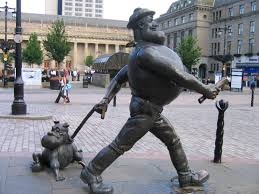
(Desperate Dan’s exceptional fitness and physical prowess are of course due to a healthy diet of cowpies and long walks with his dog Gnasher.)

I was just cutting the photo of the three American men who tackled the train gunman, so that I could add it to my blog, wondering like most other men who read the story if I would have had the bottle to do what they did, and answering “no”, when I became aware of his presence in the room; medium height, well-built, forty-ish, with dark curly hair, elegant casual clothes and a sceptical smile.

” Nice to see you appreciate some genuine excellence,” he says.

I ask him what on earth he means.

“Day by day you write hundreds of words about God and Jesus and all sorts of religious virtues but you never praise the kind of thing these men did.”

” I praise the virtues of the Christian tradition”

” Yeah, but do you suppose all your mild-mannered, God-fearing, self- sacrificing heroes and heroines make the slightest improvement to the world? They may be very heavenly minded but they’re no earthly use!”

“I’m don’t accept your description of my heroes and heroines. The Bible for example is full of pretty robust characters…”

” Yeah, the Old Testament has some tasty types, but of course that’s the bit you only accept in a patronising kind of way, whereas your bit, the New Testament, has scarcely one interesting character, they’re all so bland, they hardly ever do anything human or exciting.”

” Come on, come on, surely Jesus is interesting even to non-believers…”

“So you say. But OK, let me ask you a question. You’re on a train or a plane when a guy with a gun and a grenade stands up and threatens to kill everyone on board. Now, who do want sitting beside you, Jesus or one of these Americans?”

The three Americans and one Brit who tackled the train shooter

“Eh…..”

“Now, come on  Mr. Bible Blogger, it’s a simple question. Give me a simple answer.”

“I suppose the honest answer is the Americans, but…”

“No buts please, I’m impressed by your honesty, so don’t mess about with it. Let’s just admire your answer: at a critical moment in your life, you, a bible -believing Christian would prefer to have three young Americans by your side than Jesus Christ your Lord…”

“Now hang on a minute…”

” And shall I tell you why you would make this choice like most other sensible people? Because two out of the three were actually trained to do something useful. They were ex-marines. They had chosen to learn how to cope with danger. So they didn’t even have to think. They knew how to respond in a way that maximised the chances of some good happening and minimised the chances of evil…whereas Jesus, with all his virtues would have been practically useless. He’d be telling you that if someone blows your first head off, you should turn the other towards him!”

” But Jesus never pretended to be the answer to all life’s problems; only to show people God’s Way.”

“I’m not just talking about situations of danger here. I mean almost anything ordinary and practical. Does Jesus help you to have better sex? Or to choose between GM and Organic farming? Or to cope with your husband who’s got Altzheimers, or to make good pasta, or solve the Greek debt crisis, or get rid of Donald Trump, or paint a masterpiece, or bring up a teenager? And if God’s Way is not do with all these things, what the hell is it to do with?”

I want to tell him that Jesus is not a substitute for human wisdom and skill, but rather the one who equips me to be the best that I can be, ready to learn all that I can learn for this life and the life to come, but I know I haven’t thought this through, and anyway, he’s already taking his leave, with a quick bow. I can hear him whistling as he goes down the road.

Gendarme 1. ……it’s a word I saw in the crossword today, eh, “detritus” meaning sort of, rubbish, eh..JUST KEEP WALKING QUIETLY YOU…..D’Y HEAR ME? D’YE HEAR ME? (sound of baton on shoulder) They pretend they don’t understand, ’cause they’re from Syria or somewhere…..D’YE HEAR ME NOW ABDUL? RIGHT, THAT’S BETTER…. what was I saying?

Gendarme 2. You were speaking about detrite….

Gendarme 1. Yes, detritus. It means garbage, stuff left over or thrown away, you know, so if the wind’s blowing onshore you get detritus from all parts dumped  at the tide line, eh,

Gendarme 2. ….plastic containers, polythene packets, paper, sanitary wear ….WHAT D’YE MEAN WHERE ARE WE TAKING YOU, WE’RE TAKING YOU WHERE WE WANT….AND YOU DON’T HAVE ANY RIGHTS, SO SHUT UP. YOU JUST BEEN CAUGHT TRYING TO CLIMB INTO A  LORRY. D’YE THINK WE WANT YOU HERE? IF IT WAS LEFT TO ME I’D SEND YOU ALL TO ENGLAND WITH A LITTLE TAG SAYING PRESENT FROM FRANCE, OK?  …Jesus, they should get some of these bleeding- heart- treat- them -with -dignity people out here at night on overtime in this rain and see how they feel….. …..eh condoms..

Gendarme 1.. …what d’ye mean condoms?

Gendarme 2. like you were saying .. eh … detrite…. stuff washed up on the beach…..

Gendarme 1. Detritus. Yes. So nobody wants it, it’s no use to anyone, it’s leftovers from every part of the world, see what I mean?

Gendarme 2. No, what you getting at?    OK YOU GET FRISKED BY THE MEN AT THIS GATE AHEAD. IF YOU GET FUNNY THEY’LL BEAT YOU SO JUST BE GOOD BOYS…..

Gendarme 1. Hadn’t you noticed…(laughs) … they’re both women?

Gendarme 2. Jesus, so they are, not my sort of women mind….

Gendarme 1. What I’m getting at is what these migrants are. They’re detritus, they’re what some one else has thrown away and now it washes up here, in Europe, in France….detritus! Oh-oh we’re going to have trouble. They’ll object to being searched by men….

Gendarme 2. Well they’ve just finsihed with that bloke, they want us to escort him as well,  how many hands do they think we have?

Gendarme1. GET ON GIRLS, DON’T STOP, YOU’LL ENJOY SOME NICE FRENCHMEN CHECKING YOU OVER, I SAID MOVE ( sounds of baton on body) MOVE!

Gendarme 2. MOVE BITCHES! (sounds of baton on body), JESUS!

Man. You shoud be ashamed of yourselves….

Gendarme 2. YOU STAY OUTA THIS PAL, YOU’VE BEEN FRISKED, SO SHUT YOUR MOUTH UNLESS YOU WANT SOME TOO….

Man. You should be ashamed. hitting helpless people, hitting women who’re only asking for decent treatment….(sounds of baton on body)

Gendarme 1. WE WARNED YOU STUPID DON’T GET IN OUR ROAD….

Man: I have memorised your numbers and will report you to your officers….

Gendarme 2. SO WE’VE GOT A SMARTARSE HERE…. ARE YOU SURE YOU’LL STILL HAVE A MEMORY WHEN WE’VE DONE WITH YOU…..

Gendarme 1: WHO ARE YOU ANYWAY?  HAVE YOU ANY PAPERS?

Man. I have no papers and my own country doesn’t want me

Gendarme 1. SO THESE WOMEN ARE NOTHING TO DO WITH YOU. DO YOU HEAR? NOTHING TO DO WITH YOU.

Man.You should think of your own mothers and wives, would you want anyone to treat them this way?

Gendarme 2. NOW THAT WAS A BAD MISTAKE PAL. ME, I GET REALLY ANGRY IF SOMEONE COMPARES MY FAMILY TO SCUM…

Man. You have to ask who is behaving like scum here….

Gendarme 1. WE WARNED YOU, YOU’VE ASKED FOR IT (many sounds of batons hitting body, groans).

Gendarme 2. OK, OK, he’s had enough, think he’s unconscious,

Gendarme 1. Yeah, he’s out but still breathing OK, even if his nose is smashed, call the paramedics, report him as injured resisting arrest, then we can leave him with our colleagues here until they pick him up, eh are you listening, what are you looking at?

Gendarme 2. Look at his body ….

Gendrame 1. What?

Gendarme 2. How did we do that….bruises and scars all over him, we didn’t do that, must have happened some other place…

Gendarme 1. Probably somewhere he wasn’t wanted. Like I said. Detritus. Let’s go, now.