On Friday the Chinese authorities announced the death of Liu Xiaobo, from advanced liver cancer which had not been properly treated during his incarceration for his part in Charter 88, a movement which agitated peacefully for democratic politics amd human rights in China. Even in his last weeks of life the Chinese government refused to allow him to leave China, and even now it keeps his widow, who has committed no crime, under house arrest, although her mental and physical health is very fragile. All this is a great tribute to the power of Liu’s protest, and a complete confession of the fear that a regime, replete with every instrument of tyranny, feels in the face of one man’s integrity.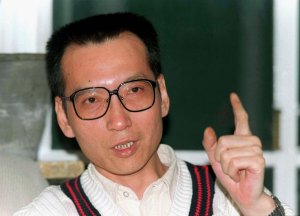
It is hard indeed, in response to this crime, not to lapse into hatred of the Chinese regime and those, including many of our senior UK politicians, who have kow-towed to it in hope of preferential trade agreements. But Liu had denied himself the right to hate his oppressors, while declaring his trust in the efficacy of justice and love:
“Hatred can rot away at a person’s intelligence and conscience. Enemy mentality will poison the spirit of a nation, incite cruel mortal struggles, destroy a society’s tolerance and humanity, and hinder a nation’s progress toward freedom and democracy. That is why I hope to be able to transcend my personal experiences as I look upon our nation’s development and social change, to counter the regime’s hostility with utmost goodwill, and to dispel hatred with love.”
This kind of faith makes him a much more troubling person than most agitators for justice, none of whom are negligible, but very few of whom have renounced hatred and violence as thoroughly as Liu. The whole course of his life places him alongside such mighty figures as Gandhi and Luther King. He was a successful literary person lecturing abroad, when in 1989 he heard of the protest which would culminate in Tiannanmen Square, and decided to return to China to support it. His insistence that the protesters should remain non-violent and his negotiation with the authorities on their behalf are credited with saving many lives at the time. He was arrested and jailed, but having admitted his fault, released. For ever after he regretted this admission, as an insult to the souls of those who had died. His later involvement with Charter 88 was uncompromising and led to his conviction for “Trying to destroy the Chinese State” and the eleven years of imprisonmemt which led to his death. The words which I quote in this blog come from the declaration he made at his trial.
One of his remarakable strengths was his ability to see goodness wherever it existed, even for example, in Chinese prison functionaries:
“In 1996, I spent time at the old Beikan (located at Banbuqiao). Compared to the old Beikan of more than a decade ago, the present Beikan is a huge improvement, both in terms of the “hardware” ‑ the facilities ‑ and the “software” ‑ the management. I’ve had close contact with correctional officer Liu Zheng, who has been in charge of me in my cell, and his respect and care for detainees could be seen in every detail of his work, permeating his every word and deed, and giving one a warm feeling. It was perhaps my good fortune to have gotten to know this sincere, honest, conscientious, and kind correctional officer during my time at Beikan.”
This magnanimity is a very rare quality which fed his resilience and his hope that what he was doing was not a useless extravagance, but a dutiful contribution to the welfare of his fellow citizens. He did not see himself as a hero, but as a human being committed to private and public values which are for the good of all:
“It is precisely because of such convictions and personal experience that I firmly believe that China’s political progress will not stop, and I, filled with optimism, look forward to the advent of a future free China. For there is no force that can put an end to the human quest for freedom, and China will in the end become.a nation ruled by law, where human rights reign supreme. I also hope that this sort of progress can be reflected in this trial as I await the impartial ruling of the collegial bench ‑ a ruling that will withstand the test of history.”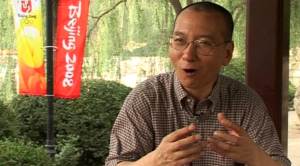
He was also a private person, a lover of literature, a poet and essayist, known for the boldness, elegance and wit of his writing. He acknowledged openly that he had made a mess of his first marriage, but his second, to Liu Xia, now his widow, brought him great joy, which he expressed in his declaration to the court that would separate their lives:
“If I may be permitted to say so, the most fortunate experience of these past twenty years has been the selfless love I have received from my wife, Liu Xia. She could not be present as an observer in court today, but I still want to say to you, my dear, that I firmly believe your love for me will remain the same as it has always been. Throughout all these years that I have lived without freedom, our love was full of bitterness imposed by outside circumstances, but as I savor its aftertaste, it remains boundless. I am serving my sentence in a tangible prison, while you wait in the intangible prison of the heart. Your love is the sunlight that leaps over high walls and penetrates the iron bars of my prison window, stroking every inch of my skin, warming every cell of my body, allowing me to always keep peace, openness, and brightness in my heart, and filling every minute of my time in prison with meaning. My love for you, on the other hand, is so full of remorse and regret that it at times makes me stagger under its weight. I am an insensate stone in the wilderness, whipped by fierce wind and torrential rain, so cold that no one dares touch me. But my love is solid and sharp, capable of piercing through any obstacle. Even if I were crushed into powder, I would still use my ashes to embrace you.”
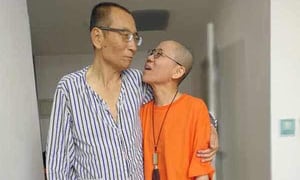 These words show a loving heart that will arouse affection for their speaker in all who read them over the years, and scorn for the regime which has silenecd him.
It is sometimes the case that the suffering and death of great witnesses to goodness, arouse in Christian believers a comparison with the passion of Jesus, usually as a way of dignifying the former. So we call Gandhi or Luther King “Christlike.” For me the comparison works the other way round: Gandhi, Luther King and now Liu Xiaobo help me to understand Jesus better.
Like Liu, Jesus brought a message which was utterly unacceptable to the ruling elite of his own people, but he delivered it, as Liu did, with warmth, humour, and devastating bluntness. Like Liu he was repeatedly warned as to where his behaviour would lead him but chose nevertheless, with a discipline that liberated him to be joyful, to risk the consequences. In his arrest, trials and pain he remained, as Liu did, appreciative of human goodness. They had no enemies and no hatred but rather a trust in things invisible to their opponents, humanity and justice for Liu, God’s Rule for Jesus. Their opponents imagined that they had silenced them and are mistaken.
St Paul wrote of those who by their lives “filled up the sufferings of Messiah Jesus;” this very great Chinese man is one of them, I think.
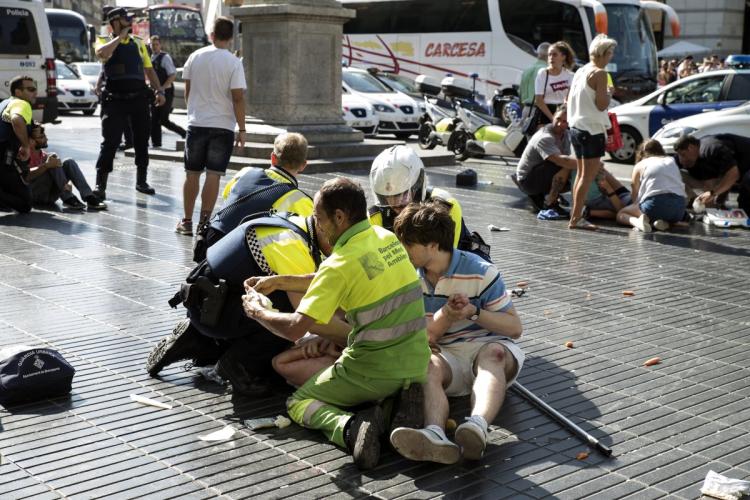 Yesterday in every university of the earth, some scholars found happiness in handling the material of their discipline, rather than worrying about research ratings.
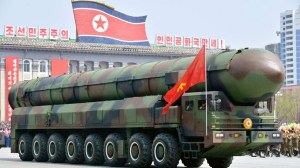

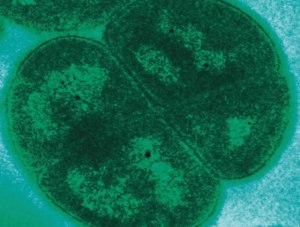


 My alien pal Marty is normally a stand -out, what with his green skin, lizard-like hands and chinless head, but suitably dressed he merges seamlessly into any gathering of the European aristocracy, of which there were many representatives at the Passchendaele remembrance ceremony earlier this week. I had urged him not to go, but he was anxious to understand one of the great tragedies of earthling history, which he had come here to study.
 Tell me things I don’t know, baby,” he said in that irritating Martian drawl. “All you’re saying is that they belonged to a stupid society. A society too stupid to have a press that thinks and writes independently; too cowed to oppose the crime of conscription; too conventional to have churches that might stand up for the views of Jesus. No, it’s true the young men were failed by their culture and their religion, but still, they knew what they were being asked to do: to go and kill other young men who were in the same position as themselves. By the time of Passchendaele, many of them had heard some facts from older men about the nature of the conflict, yet still they went like lambs to the slaughter, because they hadn’t learned to think for themselves or to organise together against the establishment. I am not saying these men were thick and unable to think, but that they were stupid because they did not use the brains they had. Those who have youth and strength and vitality and courage will always be used by older people who lack these qualities but possess cunning, unless they have a humane ethos and learn to question any departure from it.”
 I have been reading a very remarkable book “Fall down seven times and get up eight,” by Naoki Higashida translated by David Mitchell and his wife K. A. Yoshida. Naoki is what we have called “autistic” or what he calls “neuro-atypical.” In this book, which was serialised last week on BBC Radio 4, he gives glimpses of what this difference means. For example, here is his outline of his thought process when his mother hears rain and rushes out to save her washing which is on the line: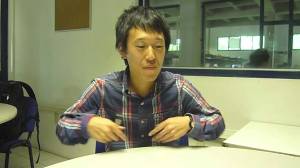


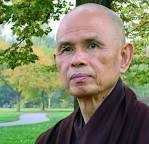
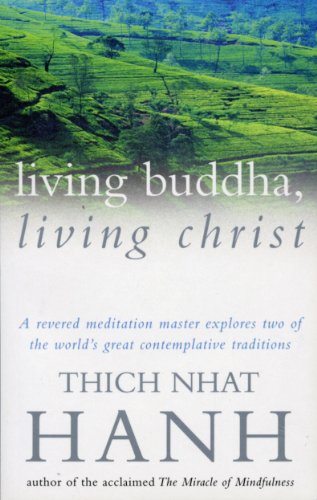 Buddhism is a profound revelation of wisdom, but it has become the ideal religion for busy capitalists, who benefit from its mindfulness training and meditation while neglecting its teachings on compassion. Its denial of a “real self” fits well with capitalism’s denial of meaningful life to both its devotees and its victims. Thich Nhat Hanh has throughout his pilgrimage shown his own commitment to the fruitful life of all creatures, including the victims of war and oppression. I think there is an issue to do with the intersection of fact and faith, history and mystery, which demands his further consideration.

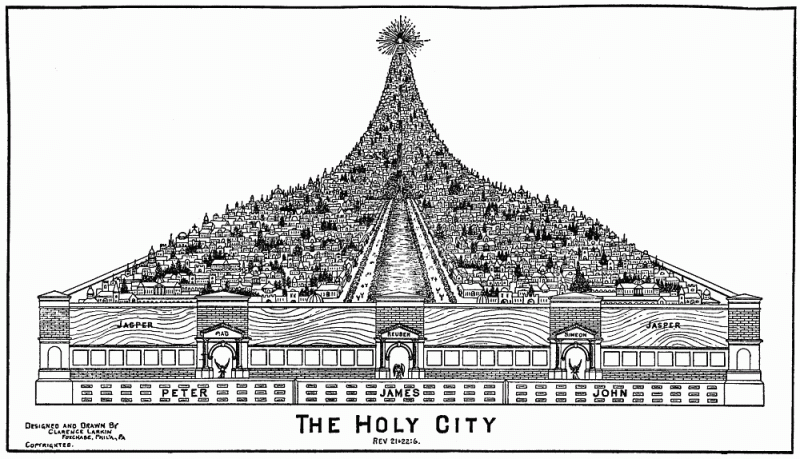 Is this still the case today or should we admit that there has never been a city whose benefits outweighed its appalling injustice and that there never will be; that even God cannot bring together hundreds of thousands or millions of human beings without also bringing injustice and squalor. Should we admit that the human dream expressed in the creation of cities is a busted flush, an idol that has presided over oppression and bloodshed for 10,000 years, which cannot be cleansed even by the blood of the Lamb?
