
 “The facts are friendly; God is in the facts….”
I’ve often used this phrase which is based on a working rule of Richard Rogers, the psychotherapist, who insisted that the facts were always preferable to any distortion or concealment.
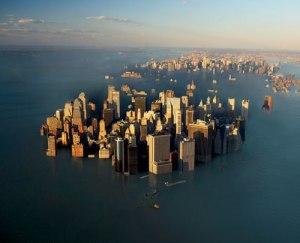
But then I wonder why my own sermons are light on facts and heavy on ideas, feelings and beliefs. For example, I am utterly persuaded of the human contribution to what may become overwhelming climate change, yet I have never outlined the facts of this development in any sermon. Doubtless I have mentioned it as a present danger, but I have avoided any serious recital of facts. This is not because I don’t know rhem, but because I know the congregation would prefer not to be faced with them, especially in church. In the context of Sunday morning, the facts seem unfriendly, divisive, challenging and impolite.
That’s because they are.
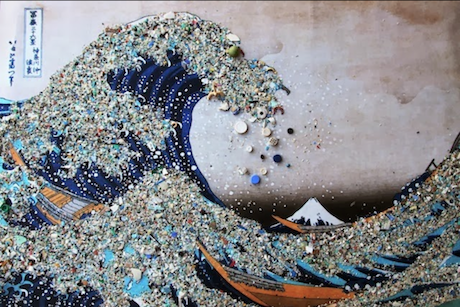
I live near the sea, on the estuary of the river Tay, so daily I benefit from its loveliness, while daily also I can see its extensive pollution by human and animal excrement – in truth the water is not safe for swimming- and less visibly by tiny balls of plastic which havee become part of the marine food chain, affecting the lives of millions of creatures. Even before I look at the even more disturbing facts of the effects of the melting of the arctic ice cap, I have encountered facts which lead me to question my way of life, our assumptions about waste disposal, our industrial carelessness – and our irrelevant politics, which even at their best are about the division of the cake, at a time when the cake, and probably the table, may disappear altogether.
So yes, the facts are unsettling, and mentioning them is unlikely to increase church attendance.
But there are even more unfriendly facts. It appears from surveys that although more than 50% of Scots accept that humanly generated global warming is happening and dangerous less than 5% allow this issue to affect their political choices. This may be evidence of a people sleepwalking to disaster. In comparison with the projections of what may happen as global warming continues at its present rate, the facts of the human assualt on nature are kind indeed, because if people can accept them and act upon them, they will change in a benign rather than catastrophic direction. 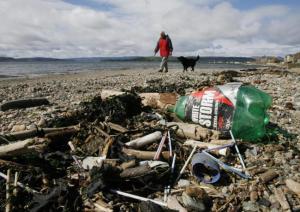
Pope Francis has spoken of the filth with which human beings have besmirched God’s creation; he has described capitalism as the devil’s dung. This plain speaking has not won him many friends, but it has emboldened many priests worldwide to speak out in turn. That will surely contribute to a political climate where people might just vote in favour of their grandchildren’s safety.
The witness of the Bible is that God will not intervene to save this planet from his human children: God will only act in partnership with them, just as he/she works in partnership with all life and all energy. God is present to humanity in the facts offering the hard choices that lead to life. The ministers of the church, like me for example, ought to direct people clearly to the friendly facts.

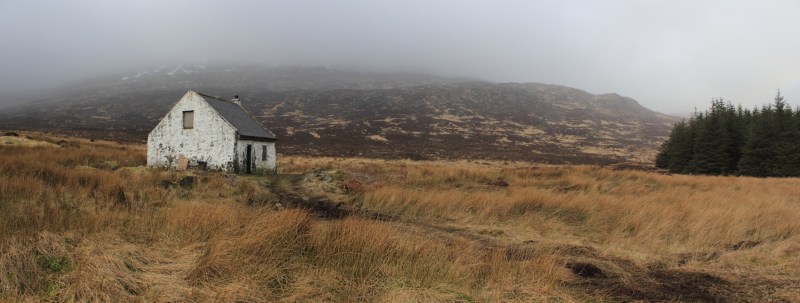
 Later I remembered that the first time I climbed it, I was a student, not yet working, unmarried, carelessly strong. I envy that young man the spring in his footsteps, his easy energy. I still share his sense of walking into miracles on every trek. Yet how much arrogant nonsense was in his head that required the erosion of years and experience to reduce to common sense! That recognition of loss of energy and a small gain in wisdom, makes me long to go back, to relive past splendours and excise past follies and crimes, to hear once more that music, to silence that idiot boasting, to be there for the one in need rather than avoiding them.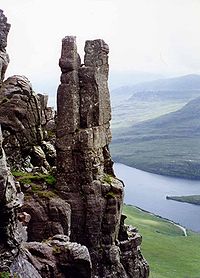
 But maybe he asssumed that we all love sameness, because change is ultimately destructive. But when I think precisely about my own feelings, I want to say that I am attracted to sameness, but I love change. My Christian tradition tells me that God is the spirit of change, because God is the spirit of life, that in its grace and ruthlessness, continues, in this world and beyond, the process of God’s evolving creation, the erosion and rebuilding of all things. That too is something I need to get used to, and girn about.
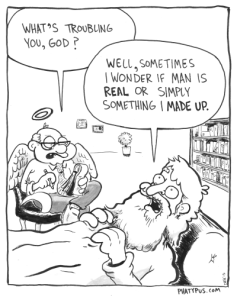 The Jewish bible begins with the story of a creator God who makes a universe and creates life in it, including that of creatures made in his/ her own likeness, who will look after it all on his behalf. Instead these human creatures decide to grasp the knowledge of everything and to rule the world on their terms rather than the creator’s, who is left scarmbling to catch up with his rebellious creatures without wiping life out altogether. After repeatd failures, God realises that he cannot command human cooperation in his wish to bless his creation, and that he must therefore ask for it, by starting with just ine family, that of Abraham. In the end of the day this God has to trust human beings to help him bring his creatives project to perfection, meaning that God has more faith in humanity than I do.






 xtremejesus