Eleanor Jane Mair, our daughter, died on the 21st April in Ninewells Hospital, as result of trauma caused by alcoholism. She was a beloved and loving person, who cared for everyone except herself, bringing joy through what she was but also sorrow through what she was doing to herself. She is with God.)

You suggested that we meet in places that were crucial in your life. Yesterday (see previous blog) we talked about our relationship as daughter and father, and one of the barriers between us. Moving on in your life, I suppose we come to your education…

Too bloody right we do. And especially to Broomhill Primary School, Aberdeen…

Yeah, OK it wasn’t great. Your mum was mentioning it yesterday as one of our mistakes.

One small mistake for you maybe, but a giant misery for me. Remember I’d started my schooling in Coventry where we lived. I went to Earlsdon Primary School, which was run on the child-centred principles which were common to good schools in England. Each child was important, and each process of learning. To come from there to a school where the teachers were all- important and the children mere vessels to be filled with knowledge, and the whole enterprise backed by a unearned middle class sense of superiority, was devastating. Of course I didn’t understand then what sort of institution it was; I just knew they didn’t like me and I felt afraid.

We were aware that you didn’t like school, but felt it was just an inevitable culture shock, which you would outgrow….

Yes, but you tended to believe them, at parent’s nights and such, rather than me, like I should talk less and concentrate more, meaning I should become the kind of pupil they wanted.

I did listen to your deadly accounts of your teachers, and tried to assure you I was on your side.

Oh yes, yes, that just made it worst, because knowing you agreed with me made me even less amenable and more likely to be in trouble. In effect you said, I’m on your side but fight your own battles. How could I win?

I hear what you’re saying…..

And did you really agree with me. Didn’t you and mum believe that education was a matter of knowing stuff, which a good teacher would know and communicate to the pupils. Isn’t that your view of school and uni, that there’s culturally valuable stuff which just has to be handed on? That it isn’t for pupils to argue over it?

Come on, that’s a parody of my attitude. Of course, there’s Shakespeare and Joyce and Hume and Wittgenstein and Darwin and Einstein and Beethoven and Bartok and…..

And not a woman or a black amongst them! The list of people worth knowing was skewed by prejudice, but more than that there was no attempt to teach us how to choose what we needed to know, and no guidance on how judge the relevance or value of any part of the cultural tradition. I can put it that way now, but then I was just presented with teachers who said, Take it or leave it, but this is the knowledge by which you will be judged. Even you and mum tended to judge me that way….there were hoops to be jumped through, and I wasn’t jumping very quickly or gracefully.

Never! I knew how oppressive school can be, and I certainly didn’t judge you by those standards.

I believe you now, but then I wasn’t sure because you did nothing; you didn’t rescue me. Well you eventually did when you got me out of an equally horrible secondary school, into a much better one..but by that time, damage had been done. I suspected I was a failure and would be found out.

Sorry, El…

But are you really? So even when I studied theology and trained for the ministry of the church you were always questioning if I had enough knowledge, whether I’d bothered to read the Desert Fathers, or Luther, or 2nd Samuel! As if that’s what faith is about. Admit it, you’re a theological snob, looking down on believers you call evangelicals or fundamentalists…

Now come on, there must be a place for knowledge in any human endeavour!

Love builds up, St Paul says, but Knowledge puffs up.

When you of all people start quoting St Paul to me, I know it’s time to stop. I’ll think about all this and then we can talk again, I hope.

(Eleanor Jane Mair, our daughter, died on the 21st April in Ninewells Hospital, as result of trauma caused by alcoholism. She was a beloved and loving person, who cared for everyone except herself, bringing joy through what she was but also sorrow through what she was doing to herself. She is with God.)

M: Yes, I believe you are with God, and maybe that should be sufficient comfort. You are of course presently in my dreams, vital and strong as you were once. I know that such dreams are the product of my own mind rather than supernatural information, but even so can they point beyond themselves to something more substantial? I don’t think you had an orthodox view of life beyond death, and you would certainly have been sceptical about my dreams, but if there’s anything in the classic Christian view of resurrection, tell me this: where shall we meet?

E: Maybe we can meet in the places that mattered to me, where I succeeded and where I failed, where I conquered and where I was wounded, where I was loved and where I was abused, where I had hope and where I felt despair, where I was myself and where I had to hide.

M: Did I hear you correctly? Remember, my dear, that all this is coming through my mind, which has its own agenda.

E: Maybe your own mind, like your own existence, is not as unconnected as you think.

M: OK but where to start? They say the basis of personality is formed by the experiences of the first three years of life. If so, we can go back to Dumbarton, where we lived from 1969 to 1975. You were born in 1971, to Janet who took leave from teaching, and to me, who continued full-time work as a minister. At the time I suffered the delusion that I was the Messiah. My task and my way of doing it was all-important and absorbing, so much so that I neglected you and my wife for at least the first year of your life. She however was your constant companion and carer. Soon however it became plain that our budget demanded a second income, so she returned to work, part-time initially, then full-time. This meant that at first I had to look after you mornings, then deliver you to and fetch you from nursery school.

That forced me into knowing you as my daughter, and enjoying the astonishing pleasure of being with you. I would like to say that this cured me of my arrogant male obsession with my important calling, but it did not; and I am sure there were subsequent times when I neglected you. I know this behaviour put unfair burdens on my wife, but doubtless it impacted you as well?

E: You think I’m going to answer questions now that you never bothered asking me in life? Still, confession of your messiah complex is new and overdue. It must have damaged many more people than your immediate family… your first congregation, your second, your last? Your friends?

M: How come you can’t answer new questions but you can ask them? Still I’ll try to answer. The complex itself was a desperate device to bury the sense of being a failure and a shit which was the outcome of my upbringing. And yes, it must have damaged the congregations I served. But it stayed with me for a long time until your mother’s capacity to see something better in me, wore it away. More or less. So I guess you, like me, were damaged by parental defects, but there, in that sweet and dangerous place, we can continue to meet. Please.

E: “They fuck you up your mum and dad

They do not mean to but they do.

They give you all the faults they had

And add some others, just for you.”

The great philosopher Philip Larkin, maybe we could read him together….

The BBC has been over many years a source of facts in our lying democracy. Its journalists are often conventional but many of them are capable of unearthing carefully concealed facts and making them available to the public. That is why the Tory Government of the UK wants to destroy it; and why sectarian elements of the Labour Party do not rush to its defence.

The Panorama programme of the BBC has discovered clear evidence that in spite of warnings the government did nothing to gather sufficient stock of personal protective items for medical staff, effectively sending them naked into a battle against a deadly virus; and then a) downgraded its rating of the deadliness of the virus and b) downgraded the minimum requirements for protection of medical staff, in order to disguise the extent of its carelessness.

Doubtless the Government will seek to deny these facts, by vapid arguments about the unprecedented nature of Covid 19 and claims that the BBC is biased. Nobody should listen to them. Facts are facts, and they have been avoiding these awkward facts for some weeks by simply refusing to answer journalists’ questions about their preparation for the pandemic. Their sneaky slogan about taking the right advice from the right people and doing the right thing at the right time, is designed to suggest that any sensible person would have done nothing at all to prepare for a pandemic.

Some may ask in bewilderment,

BUT WHY DID THEY DO NOTHING?

That question is linked to another:

HOW DID BORIS JOHNSON RECOVER FROM CORONAVIRUS?

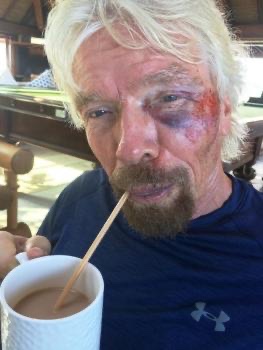
Recent photo

I can only ask the unbiased reader to look at the evidence above:

BORIS IS ONE OF THE UNDEAD. NO VIRUS CAN BE FATAL TO HIM!

Naturally the UNDEAD are not that concerned about loss of life. That is in fact their deep desire and their mission: the more dead, the more potentially undead. Now some may think that this is an extreme and cranky explanation of Government policy, but I want you to think this out very clearly:

WHY, IN THE FACE OF A MEDICAL EMERGENCY DID A GOVERNMENT MAKE SURE THAT ITS AVAILABLE MEDICAL STAFF HAD TO RISK DEATH TO DO THEIR JOBS?

You may say incompetence (I’ve said that too), you may say hatred of the NHS ( yeah ok) you may say its a complete F-up ( sure..) you may say they only care about themselves and they’ve all got private medical insurance (true enough) but NONE OF THESE EXPLAINS THEIR BRUTAL UNCONCERN. THEY ARE THE UNDEAD, ANXIOUS ABOVE ALL TO SPREAD THEIR HALF-LIFE TO AS MANY AS POSSIBLE.

So I have to issue a WARNING.

If you start to feel that your personal importance is not being recognised…

If you think that immigrants are taking over………

If you suspect that your neighbours may be against you….

If you want to bring back capital punishment…..

If you want politicians that put our country first……

If you read the Daily Mail …..

IF YOUR RIGHT CHEEK IS A BIT CRUMBLY….

YOU’RE CATCHING UNDEAD…..AND IT MAY BE TOO LATE!

Christian hope of resurrection comes from two sources

1. The Judaism of the Pharisees, for whom it was an extension of classic Jewish faith in a Creator God, who had a special relationship with them, as those who would reveal his nature to the world, as part of his inclusive plan to perfect his creation. Within the first century BCE Pharisees taught that the dead would share in the world to come, and would not be left in Sheol, the abode of used-up people. Because the dwellers in Sheol were bodiless, it is likely that resurrected people were seen as embodied. It is notable that personal fulfilment beyond death was linked to the fulfilment of all creation. Jesus himself held to this teaching, and defended it against a satirical story which featured a seven times married woman: who would get her in the resurrection? Jesus dismissed this as making the error of seeing heaven as a continuation beyond death of earthly habits. “In heaven they neither marry nor are given in marriage, but are as the angels in heaven.” He meant that resurrection was a transformation beyond human understanding.

2. Reflection on the life, ministry and death of Jesus of Nazareth. Notice I do not add his resurrection to this list. Let me be clear: I think it a likely historical fact that his followers had experiences of him after his death, and that they formed a community which continued his ministry and looked forward to his return as God’s agent in the time of cosmic transformation. “That God raised him from the dead on the third day” became their witness to his presence amongst them. Resurrection in the form of firstly, lists of witnesses to his risen life, and then, detailed stories of the resurrection event, developed later in the life of the community, and are variously retold by the writers of the gospels.

3. These stories embody the result of the community’s reflection on its memory of Jesus, and his continuing influence on their lives. They embody common elements which were seen as essential doctrines:

A. Jesus of Nazareth was killed by the Roman Administration and buried.

B. The same Jesus was alive.

C. He was seen by many followers as possessing a body which bore the marks of crucifixion, although it was not subject to the same restraints as human bodies.

D. He was present in the community, for example in the Community Meal, but was also present with God in heaven.

E. He was seen as having overcome evil and death

F. He commanded his followers to take his story into the gentile world.

G. His intimate role with the community was taken over by the divine spirit which was also his spirit.

H. The forgiveness of sins remained as much a part of his risen life – in and through his community – as of his earthly ministry.

These are doctrines embodied in story and preaching. They are not historical events. By means of narrative and metaphor, they express the convictions and practice of a believing community. But they are perceived as “what must have happened.” They are an attempt at a magical realism which narrates a fuller version of events than a video camera. So we would be mistaken in trying to cut through to find what “actually happened.” Rather we have to ask what they mean.

The Implications of Jesus’ resurrection for the doctrine of personal resurrection, were considerable, and can be detected in the letters of Paul. At first, in some communities, the emphasis was on the return of Jesus to end the present evil era of the world. At that time, envisaged as imminent, he would reward his true disciples with eternal life. But as the end was delayed, people asked Paul about those disciples who had died meantime. Paul answered that they would be resurrected, to share in the new world.

A complication arises with the notion that the return of Jesus will also be a judgment on the world.In Matthew 25, we find a parable of judgement, in which the King identifies with the needy and least important, rewarding those who have cared for them, and condemning those who have not. Resurrection life is seen as reward and not entitlement.

The Greek notion of the immortality of the soul also contributed to the teaching of the church communities, especially when the majority of such communities were Greek -speaking. This notion explicitly excluded the material body from life after death. Hybrid teachings, for example that souls would be given separate life after death, until the day of judgment when they would be reunited with their bodies, were developed.

As belief in an imminent return of Jesus faded, the intimate connection between personal and cosmic renewal was lost. Resurrection was of disembodied souls, and sometimes judgment was envisaged as consequent on death, with an immediate allocation of the soul to heaven or to hell, and later, purgatory. Nevertheless hope in an imminent return was not completely lost often surfacing in the life of fervent communities who might think they had been given the date and time of this event. For them, resurrection was primarily an eschatological event. It’s interesting that such communities, often considered as nutters by the mainstream church, have rediscovered an important theme of early Christianity.

There are two images of God that for me make sense of resurrection:1. The universe exists IN God, who has withdrawn in order that there may be space within God for all the independent processes of evolution and life. Think of this space as a womb and this earthly life as development. Dead persons are born into the life of God who will ask them to share it.2. God is the Cosmic Persuader who relates to every event in the universe luring it towards perfection. Because this often fails we can also call God the fellow sufferer who understands. If we are willing however, God completes our falling short, in this life and beyond. To the persuasive God, no event, or cluster of events like a human being, is ever forgotten and left behind.

These images arise from thinking of God and human life in the context of a universe which is still being created. In God’s love the perfection of the universe excludes nobody who wants to be part of it.

This seems far from the cosy notion that granny’s still doing her knitting up there, but Jesus had already knocked that on the head. A theory of resurrection involves a theory of the universe.

POEM BY HUGH MACDIARMID

On the Western Seaboard of South Uist

……Los muertos abren los ojos a los que viven

I found a pigeon’s skull on the machair,

All the bones pure white and dry, and chalky,

But perfect,

Without a crack or a flaw anywhere.

At the back, rising out of the beak,

Were domes like bubbles of thin bone,

Almost transparent, where the brains had been

That fixed the tilt of the wings.

This is famous firstly because almost all of its words were taken without acknowledgment from a story by the Welsh author Glyn Jones. McDiarmid made them into this poem, but refused to give any credit to Jones. Secondly, because it is very beautiful. It is a meditation on life and death. The skull is perfect because it is dead, white, delicate, and complete; complete that is, apart from the brains, that are said to have fixed (almost mechanically?) the tilt of the wings. This modest word “tilt” reminds the reader of the absent live creature. The poise of the moving creature was fixed by an absent organ called brains. It is often carelessly printed as “brain” which is completely wrong, hinting at a mind, whereas the plural suggests something of the same kind as “bubbles of bone” but with a different function.

The huge gap between the skull and the living pigeon is not minimised but rather emphasised by the last line, and yet the difference is only a matter of material brains. Sentient life is reduced to the tilt of wings and death to an absence of brains. Somehow, nevertheless, the poem is not reductive but celebratory of life which like the skull is delicate, beautiful, natural and marvellous.

MacDiarmid was against the Presbyterian “sure and certain hope of the resurrection to eternal life” because it seemed a heavy act of force majeure against natural process. Of his father’s death he wrote, “A living man upon a deid man thinks/ and ony sma’er thocht’s impossible.” In Island Funeral” one of his greatest poems, he celebrates the naturalness of death and burial as a statement of ecological wisdom that includes humanity. “Every force evolves a form” he says, but the form, however lovely or significant, does not last forever. But whenever and wherever the force recurs, so will the form.

Is it possible to hold on to this wisdom, while also hoping for resurrection?

Consider these analogies:

MacDiarmid had a fierce love of the natural world, which he envisaged as a partner who cooperated with his human nature in the creation of beauty. The force of that love evolved into many forms including this poem, which is nothing if not alive.

Indeed, although the poet is dead, I value his memory, and receive his work with loving appreciation. Out of the force of my encounter with this poem, MacDiarmid takes form and lives for me, perhaps also for those with whom I share it.

I have always suffered from biophilia; I love the world and all its creatures. I sense that their forms have evolved from a force of love. Human children too have evolved not only out of their parents’ love, but out of that love which moves the sun and the other stars.

This love which is God shares and remembers the poem written by every life, in its particularity, contingency and uniqueness, enabling its force to take a new form in his/her presence.

This is part of God’s persuasion of the universe towards perfection: no life is perfect but no life is lost.

At my daughter’s funeral service today, we heard from the scripture of John’s gospel, Jesus saying: ‘I will lose nothing of all the father has given me, and I will raise it up on the last day.”

The edge

Our daughter Eleanor died 21/04/2020

M:

Suddenly it seemed you were telling me to piss off

And let you be dead; then you went incommunicado

Like a disconnected phone, leaving me

Still trying your number, too sad to

Stop. Now I question all our contact since your death:

Was our dialogue my own invention only

And you, my dear, a character in a play

Designed to make me feel less lonely?

I knew the words were mine yet hoped I’d heard them

Spoken from the other bank of the river.

It was too easy, I guess I hadn’t reckoned

With the cold wind that makes me shiver

To be a walker on this edge from which so easily

We fall to nothingness. Do something, God,

I shout, prove yourself, for if there’s no

Resurrection, you don’t exist. What sod

Could make a world like this without a heaven

For millions whose lives are only pain? “Facts,

You must start with the facts, the facts are friendly,

Even when they show the odds are stacked

Against you, they also bring your hope of healing.”

So let me accept that you are my late

Daughter, and say a true goodbye and weep

And learn how to be quiet, and to wait.

DR. MARGARET MCCARTNEY – A SHINING LIGHT FOR LIFE

One of my favourite voices on BBC Radio is Dr. Margaret McCartney, a Glasgow GP who writes and broadcasts on medical issues. Her virtue and her notoriety is her refusal to isolate medical from social and political issues. It’s already scandalously clear that if you are poor you have a greater chance of dying from Covid-19 than if you are well-off. Dr. McCartney has always understood this disadvantage and campaigned against it. “Poverty kills,” she has written, “ and Statins are not a good treatment for poverty.” She has shown that a regime which forces the poor to argue for their right to benefit has added huge numbers of ill people to the NHS, without any recognition of that cause, or any repentance for having destroyed peoples’ dignity and health.

Dr. Margaret McCartney

At the same time, she has written beautifully of the vocation of medicine, and of her commitment to it. Any half-decent medical system would place a high value on a skilled practitioner who is also an analytic questioner of what she does, but so far, at least, she lacks any national recognition. She has written,” Problems are more effectively fixed if they’re first understood,” and in relation to commercial medicine’s advertising, “Doctors should call out bollocksology when they see it.” She is a free and joyful spirit, in whom I hear the voice of Jesus. Not that I want to lessen her distinctive identity; Jesus communicates by enhancing rather than diminishing the identity of a prophet. She has described herself as an atheist, so she may be dismayed by my enlisting her as a comrade of the first century healer and advocate of the poor, but she shouldn’t be: they are both on the side of life as opposed to death.

I contrast her to THE GOVERNMENT OF THE UNDEAD, which has over the past ten years starved public services of sufficient funds to do their jobs and attacked poor people by claiming that they are a) incompetent and b) lazy. That a bunch of privileged idle bastards should have got off with this imposture without exposure, is almost beyond my comprehension, unless it is due to the extensive networks of the undead in our society.

One of the UNDEAD disguised by our flags

One of their little-known triumphs is that foreign citizens who work for the NHS have to pay an annual fee of £400 per annum per family person for their use of the NHS. So family of parents and one child will pay £1200 per annum; and if their permit of work is for 5 years, they must pay £60,000 up front, to continue providing an essential service to our nation. This policy arose from the hatred of the undead for foreigners. Obviously for them, anyone on the side of life is an enemy.

Readers should not make the mistake of thinking I am joking with this stuff about the UNDEAD. I admit an element of fantasy, but I am serious about the presence in government of people whose whose allegiance is to death rather than life. This necrophilia led them to the invention of unnecessary AUSTERITY and their cheerful destruction of some of the best public services in the world. A realistic estimate of how many lives were blighted or shortened by austerity is long overdue. Anyone who thinks that the present gang are reformed characters should ask how many lives of NHS staff have already been lost to Covid-19, because of their smiling incompetence.

St. Paul said that followers of Jesus were fighting against the “rulers of the darkness of this world” and “spiritual wickedness in high places.” I think he was right, and my own language in these blogs is an attempt to be faithful to his insight. I hope to continue spotting the shadowy figures of UNDEAD but even more importantly, the warriors for life.

I have been inspired to write this blog and its successors by listening to the daily official updates on Covid-19 by the government ministers and officials. Let me describe the symptoms:

1. The delivery is slow, not to say ponderous, because the speaker wants us to know that he is dealing with A VERY SERIOUS ISSUE, and that he has to communicate with ORDINARY, NOT TO SAY, THICK PEOPLE, whose brains work slowly.

2. At certain points in the narrative an oily tone of sympathy must he used because PEOPLE ARE DYING, a fact barely worth mentioning in the case of deaths from poverty, smoking, alcohol or being non- British.

3. The update will include many expressions of gratitude – “I want to convey my deepest appreciation”etc- to NHS workers, bin men, delivery workers, care home staffs, in other words TO POORLY PAID SUPPLIERS OF ESSENTIAL PUBLIC SERVICES NORMALLY IGNORED BY THE GOVERNMENT. This is done through gritted teeth in order that some of the public appreciation of these good people may be hoovered up by the government.

4. The ability to jump from the past to the present or even the remote future when asked a question that means, “ YOU MADE A RIGHT ARSE OF THIS, DIDN’T YOU?

5. The frequent use of journalist’s FIRST NAMES, in the hope that they will not ask the above question.

These are the symptoms, what is my diagnosis?

These people betray none of the usual signs of life, human, animal, vegetable, bacterial, or viral, and must therefore be diagnosed as MEMBERS OF THE UNDEAD, who have their own unique modes of existence.

(The difference between UK movies and Hollywood is paralleled by that between UK UNDEAD and USA UNDEAD, the latter having a behaviour akin to Nelson’s putting a telescope to his blind eye, in this case to report I SEE NO DEATHS, I SEE NO PANDEMIC, I SEE NO FAILURE JUST KEEP ON TAKING THE MALARIA PILLS, BABES. NOW WHERE’S MY ORANGE SLAP?)

They are doubtless the UNDEAD, who have been gone from life for some time, and have returned surreptitiously with tell-tale bits of soil festooning their garments and with an uneasy conviction that if they don’t hold their pose immovably BITS OF THEIR HEADS MAY DROP OFF.

My point is that if we listen to them too often we may forget that they are FROM ANOTHER PLACE.

To prevent this I would recommend:

1. Don’t listen to them too often, above all don’t believe what they are saying. (Would you believe a CROCODILE?)

2. Make sure you keep listening to real people who are alive. I made a point this week of thanking, from an approved distance, the man who empties my bins. He listened courteously, then replied, “Ach it’s jist the same F-ing job it was last year.” He is alive and not impressed with his own heroism. Or I read the Scottish novelist A L Kennedy who wrote that anything good ultimately comes from love. She is alive and impressed by what human beings can do at their best.

3. When Jesus rose from the dead, he came back ALIVE, according to reports. Alive enough to put up with daft questions and having fingers stuck in his wounds. He no longer speaks directly in this world, but his unmistakeable, irreligious aliveness is seen and heard in people like my binman and A L Kennedy.

For the next while, this blog will try to spot both the UNDEAD and the ALIVE in our midst.

Here it is:

Eloi, Eloi, lema sabachthani? My God, my God, why have you abandoned me? (Mark 15: 34)

Firstly, let’s get the preliminaries out of the road. Given that Jesus was dying on an execution stake at the time, when no male disciples were present, and the female disciples were at a distance, it seems unlikely that anyone actually heard these words, which are the first verse of Psalm 22 in the Hebrew bible. Scholars suggest that it’s more likely he gave a “cry of dereliction,” which was later interpreted in these words. Ah, yes, that’s a well-known sort of cry, immediately distinguishable from a cry of pain, a cry of anger, a cry for help, or a cry of surprise at the arrival of death. The idea that scholars sitting in their studies would be good at reconstructing the agony of a person on an execution stake is a little dubious.

No, the fact is that the gospel writer Mark, about whom we know nothing, presented Jesus as shouting these words, because they communicated his view of the meaning of Jesus’ execution: his Jesus says these words. A glance at the psalm shows how the gospel writers, starting with Mark, used it in their narrative of the crucifixion.

…….I am poured out like water,
and all my bones are out of joint;
my heart is like wax;
it is melted within my breast;
my mouth is dried up like a potsherd,
and my tongue sticks to my jaws;
you lay me in the dust of death.

For dogs are all around me;
a company of evildoers encircles me.
My hands and feet have shrivelled;
I can count all my bones.
They stare and gloat over me;
they divide my clothes among themselves,
and for my clothing they cast lots………..

Mark borrowed from the psalm the details of the division of Jesus’ clothing amongst his killers, and of the jeering of his opponents. But his most vivid borrowing is the Psalm’s first line, “My God why have you abandoned me?” because it acknowledges the truth that you don’t end up on an execution stake without being abandoned – by human help and also by God. If like Jesus we trust in a loving God, then we also have to trust that if he could have intervened to save Jesus, he would have. We have to conclude that God abandoned him because he couldn’t intervene, just as he cannot intervene to stop the spread of the Coronavirus, or the rapid warming of the earth. But what’s the point of a God who can’t intervene to help? Wouldn’t it be better just to admit that there is no God? This issue is what makes Jesus’ reported words so terrible.

Grunewald Crucifixion

Yes, yes, some may reply, but there’s the resurrection for goodness’ sake! There’s God’s intervention, delayed to be sure, but totally effective. The resurrection, however, is not a public event; it is only evident to the eye of faith; God’s intervention in raising Jesus to life is not available to the Chief Priests or the Romans but only to the Maries and Salome and Peter and John and the other disciples. God acts in the world only by persuasion and never by brute force. Paul’s phrase for this truth is “the weakness of God.”

This word of abandonment upsets so many religious apple carts that I sometimes wish that Jesus had not said it, or that Mark had not made it part of his story. It requires us to leave behind a whole load of religious theory and practice that is based on the idea that God will do things for us if only we sing the right hymns and pray the right prayers; and instead to discover new words and actions that are appropriate for a God who only ever offers love. How do we talk about a creator who persuades the particles of matter to form a universe or the particles of a human being to become an eternal person?

And yet…. it’s realistic isn’t it? God abandons us to deal with the world as best we may. He/she does not even force a spiritual presence on our souls, only an invitation to trust in absence of compelling evidence. Is such a God worth our worship, a God who does nothing for us, but only enables us to do it for ourselves? Is such a God worth our prayers if no miracles are on the menu? Yet all the time we have known that God leaves us to get on with it, because we are already inventing a new cure for the Coronavirus rather than a new prayer.

There is a real, truthful, honest faith, struggling to escape from the trappings of religion. It will not be popular, but it will do honour to the one who is the father/mother of Jesus and of us all.

Here it is:

“I tell you then, whatever you ask for in prayer, believe that you have received it and it will be yours.” (Mark 11:24)

Mince (Scots) = nonsense

This is mince, surely; a simple untruth that anyone who has ever suffered can refute. It denies the most basic facts of life. The young woman who had just given birth to her first child, praying that she would survive the leukaemia with which she had just been diagnosed, died within three months. The hundreds of people praying for David Haining to be spared death as a hostage of ISIS, learned of his decapitation, or saw it. Over 52 years of ministry I have often prayed for parishioners to be spared harsh suffering, only to acknowledge that they were not.

And I suppose I must add, Jesus of Nazareth who prayed that he might not undergo crucifixion, ended up on an execution stake. Apologists for Jesus will point out that he asked to be spared but also for God’s will to be done. Ah, yes, if in the end all our prayers are guarded by “nevertheless, your will be done,” there will never be any problem, for whatever happens can be called the will of God. Obviously, that procedure makes nonsense of prayer, and especially of Jesus’ teaching above. If he just meant, pray for God’s will and you’ll get it, he should have said so. Moreover the interpretation of every human disaster as God’s will, doesn’t do much for the reputation of God.

Well then, maybe the words don’t mean what they appear to mean? Maybe biblical scholars can help us solve the problem?

The context of Jesus’ words is the story of him cursing a fig tree for being fruitless and returning the next day to find it withered. Between the cursing and its result is the story of Jesus’ attack on the temple traders. Obviously Mark is using the fig tree as an image of the temple, which in Mark’s day had been destroyed. When Jesus said that faith could move “this mountain” he was doubtless meaning the temple mount. It’s possible that the teaching about prayer is primarily meant to reflect the prophetic action -parable of the fig tree: the temple was destroyed.

That however takes us away from the plain meaning of Jesus’ words.

Ah, well, maybe they are not the words of Jesus, but of Mark, or of Mark’s source? It is always possible that what the Gospel writers attribute to Jesus is a creation of the tradition they received. All scholars reckon with the possibility that the representation of Jesus’ actions and words in the gospels reflects varying traditions and their own creativity. Nevertheless, Jesus’ confidence in prayer is well-attested throughout the gospels.

The circle of the sun takes in the arms of the cross. Defeat and victory are simultaneous realities.

But no other account of his teaching on prayer states this confidence quite as baldly as Mark. For example, Matthew who composed his gospel using a copy of Mark’s, recounts the same teaching in slightly different words:

“If you have faith, everything you ask for in prayer, you will receive.”

Matthew obviously considered Mark’s bit about “believing you have received it”, cut it out, and opted for a more general assurance, which still asserts confidence in prayer but leaves room for interpretation. But can I think that all the prayers mentioned at the start of this blog, went unanswered because they lacked faith? Surely not. So, although different, Matthew’s version is no more acceptable.

Back to Mark, then. It seems he thought the instruction to believe one had received the thing prayed for, was important. Could it be something I haven’t ever done?

I prayed for my brother that his cancer would be cured, but he died of it. What would it mean for me to have believed that I had received what I asked for?

So, I guess, that while it was perfectly evident to me that he was dying painfully of cancer, I would have held in my mind the counterfactual conviction that he was being healed and would live, even if this conviction was certainly not in his mind. That seems mince and yet it does bear some resemblance to what was in my mind. I do believe that death can be healing and that we will have life in God. The teaching given by Jesus in Mark brings close together the worldly fact and the heavenly counter-fact, so that the contradiction is stark, as it is in the crucifixion and resurrection of Jesus: the women go his tomb to be told, “He is not here, he is risen.” In my faith, the dead body and the risen body are equal parts of the one reality; we are at one and the same time in the material universe and in God. There is no room in my faith for conjuring tricks: my brother died and we cremated his body. Jesus died and his body is in Palestine. People really suffer but their prayer for healing is being answered.

The version of Jesus’ teaching given by Mark emphasises the role of human imagination: as I pray I have to imagine the vast universe with all its suffering as included in the reality of God, and to believe I have been answered. Of course it may be mince, and often my doubt is so painful I wish he hadn’t said it.