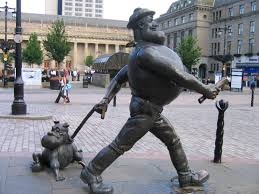
Joshu’s Dog
A monk asked Joshu, a Chinese Zen master: `Has a dog Buddha-nature or not?’
Joshu answered: `Mu.’ [Mu is the negative symbol in Chinese, meaning `No-thing’ or “Not!”)
Mumon’s comment
To realize Zen one has to pass through the barrier of the patriachs. Enlightenment always comes after the road of thinking is blocked. If you do not pass the barrier of the patriachs or if your thinking road is not blocked, whatever you think, whatever you do, is like a tangling ghost. You may ask: What is a barrier of a patriach? This one word, Mu, is it.
This is the barrier of Zen. If you pass through it you will see Joshu face to face. Then you can work hand in hand with the whole line of patriachs. Is this not a pleasant thing to do?
If you want to pass this barrier, you must work through every bone in your body, through ever pore in your skin, filled with this question: What is Mu? and carry it day and night. Do not believe it is the common negative symbol meaning nothing. It is not nothingness, the opposite of existence. If you really want to pass this barrier, you should feel like drinking a hot iron ball that you can neither swallow nor spit out.
Then your previous lesser knowledge disappears. As a fruit ripening in season, your subjectivity and objectivity naturally become one. It is like a dumb man who has had a dream. He knows about it but cannot tell it.
When he enters this condition his ego-shell is crushed and he can shake the heaven and move the earth. He is like a great warrior with a sharp sword. If a Buddha stands in his way, he will cut him down; if a patriach offers him any obstacle, he will kill him; and he will be free in this way of birth and death. He can enter any world as if it were his own playground. I will tell you how to do this with this koan:
Just concentrate your whole energy into this Mu, and do not allow any discontinuation. When you enter this Mu and there is no discontinuation, your attainment will be as a candle burning and illuminating the whole universe.
Has a dog Buddha-nature?
This is the most serious question of all.
If you say yes or no,
You lose your own Buddha-nature.
To understand we have to know that Buddhism tells us that all sentient beings can be enlightened and enjoy the nature they share with the Buddha. So in a conventional sense a dog has a buddha nature. But Joshu sees that this way of talking turns Buddha Nature into a thing we can either possess or not. He knows this is excatly the kind of lazy thinking that the Buddha rejected, so he shouts a resounding, NO, to the question and the thinking behind it. He says NO to dull religion, NO to lazy minds, NO to thinking that reality can be pinnd down, NO to the comfy notion that faith gives us easy answers. That’s why the commentator tells us to hold on to this disturbing, life-giving NO. Joshu was telling people to wake up.
The Spanish poet, Antonio Machado saw Jesus the same way:
I love Jesus, who told us:
‘Heaven and earth will pass away.
when heaven and earth have passed away
My word will stay.’
What was your word, Jesus?
Love? Forgiveness? Affection?
All your words were one word:
‘Wakeup!’
There are so many surprising words of Jesus: how blessed are the poor, let the children come to me for God’s kingdom belongs to them, you must be born again from above, those who do God’s will are my mother, my sister and my brother, why do you call me good? no one is good except God alone, inasmuch as you have not done it for the least important of my brothers and sisters, you have not done it for me, love your enemies, do good to those who hate you.
He was disturbing those who imagined that the power structures of the world, fixed by the fotunate, with God at the top of the power pyramid, were just the way things are. He knew that these realities were made by human beings and could be changed by them. And he knew that ordinary compromised people could waken up to share in the creation of a better reality, in partnership with a God who would not act without them. Living within the dynamic to and fro of “forgive us our debts as we forgive our debtors” was to cut through the fixed categories of economy and righteousness to expose the chaos out of which new life might emerge. Living in Jesus’ way was to wake up to to a universe still in the throes of creation.
I have only gradually come to appreciate the extent to which Jesus demanded enlightenment from his followers. It is immensely exciting to explore the world that Jesus reveals, but having discovered this so late in life makes me dissatisfied with much of what I have taught in the past, and aware of how little time there is to do better.






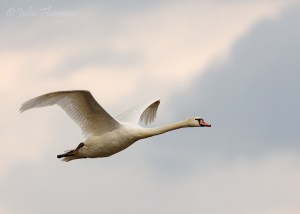 As I write the day is becoming cloudy, but earlier it was a bright, warm, late-summer day with sunshine, blue sky and scudding clouds. I grabbed my bike and rode by the River Tay, following a good asphalted track from Monifieth to Broughty Ferry and back, stopping frequently to look at things of interest, like the recently created wildflower meadow, with its splendid cornflowers, or the great gathering of swans at the outflow of the Dighty Burn. These birds are often to be found there, along with geese, duck and curlew, as well as numerous small waders.
 Why do I find it beautiful? I might reckon that someone who didn’t find the drawings of Rembrandt beautiful was entitled to his opinion, but someone who didn’t think swans beautiful I would regard as odd. I don’t think anyone taught me that swans are beautiful, or that there is any evolutionary advantage in swan appreciation, as there might be in my appreciation of a beautiful woman.

 Of course the author of this remarkable story was a Jew who shared Jewish faith in God. There are many references throughout the story to God, the Lord, but the voice of the One who is beyond all worlds is only heard in one place in the book, namely in Ruth’s declaration quoted above. Yes, it is a human declaration, mentioning lodging, people, gods and death; it is an authentic expression of our passionate dust. And yet it also expresses for its author, the passionate and faithful love of God, promising a loyalty to the beloved that goes all the way to death. In its humanity, this is the word of God, the Beyond in the Midst.
 The morning mail brought me a pleasant surprise in the form of a book I had ordered from a used book supplier in the USA and then forgotten. But here it emerged from its packing, “TImes Alone, Selected Poems of Antonio Machado translated by Robert Bly.” Machado is one of my favourite writers, whom I can just about read in Spanish provided I have a translation nearby when I’m stuck. So this was a pleasure indeed! I have also to admit to a particular additional pleasure that the book is second hand. In this case there is no inscription to give me any glimpse of the original owner, nor any marks in the text to tell me which poems he or she especially enjoyed or was puzzled by. But I do know from the condition of the book that the unknown owner was careful of it and that he/she read it with clean hands. I like to think of this person in the USA somewhere, perhaps with a better knowledge of Spanish than I, reading Machado’s poems, looking through the volume for favourites, as I have already done, pleased at the fact that there are so many that are new. I can fantasise that this original reader, probably now dead -since surely they wouldn’t have given the book away – would have approved of it finding a new life with me. Like all great literature this book will change me as it also changed the life of of its first possessor.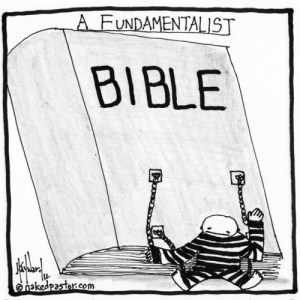
 I’ve chosen to spend much of my time these days working through the chunk of tradition we call The Bible, in the hope that I can pass on the practice of faithful, critical reading of the Bible to some of my descendants in faith. In an era when the fundamentalist distortion of Christian tradition appeals to those who want to be sure they are right, I want to set an example of how to receive the gift of Scripture as being, like its Lord, divine only in humanity, weakness, fallibility, and unbelievable liveliness. If I can hand on a little of that to a new generation, I’ll be happy.

 xtremejesus