In chapter 8 of his Gospel Mark records how Jesus’ lieutenant Simon Peter gains credit with his boss for blurting out his recognition of Jesus as Messiah; then almost immediately falls from grace by “rebuking” Jesus for his prophecy of his rejection and death. In turn he receives a pretty stern rebuke from Jesus, “Get behind me Satan.”

In fact Mark’s narrative shows again and again how the disciples misunderstand and disagree with Jesus, who nevertheless does not dismiss them as unworthy of his trust. From the start of his mission, Jesus knew that he needed help, and welcomed the growth, not just of the twelve, but of a larger community of men and women who gathered round him. The gospels tell us what they learned from him, but not what he learned from them, as he must have done. Perhaps their love of him was their greatest gift to him, but doubtless even their misunderstandings helped him to define his mission. The survival of his mission, indeed its transformation into a multinational community after his death is proof that his trust in his disciples was not misplaced.

Yesterday Boris Johnson sacked from his cabinet all who were not singing from the same hymnsheet as himself and his henchman Dominic Cummings. Most politicians who commented on this process accepted the conventional wisdom that it is the right way to build political strength. Nobody seemed to think that ridding your enterprise of possibly critical voices might be a catastrophic weakness. Dispensing with all possible criticism was increasingly the preferred management tactic of Adolf Hitler until he finally established his Reich in his bunker.

Jesus on the other hand found that his disciples were capable of communicating his story, while changing completely the outward forms of his community to meet the demands of new times and places. In my own ministry I started out with the conviction that my way, albeit often poorly researched and dubiously planned, was the best way for the church. Repeated evidence that my way had often been mistaken, led only to an increased insistence on its perfection. It took a long time before I was forced to admit the truth. Had I been more democratic and listened to critical colleagues, I could have spared myself and the church lots of grief.

The followers of Jesus ought to be able to offer to their societies, models of collaborative community and critical fellowship which they have learned from him, but in practice they have not always been able to do so, because of defects in the nature of their own organisation. The reformed churches have often made such a gap between the status of pastor/minister and members of the church that he/she has asserted authoritarian rule; while in the Roman and Orthodox churches powerful hierarchies have stolen authority from the people. Pope Francis, for example has tried to root out sexual abuse from his priesthood but has found his bishops to be the greatest barrier to his plans.

The hysterical teenager who is Johnson’s chief advisor and the Fat Controller himself, may put the UK through a lot of unnecessary suffering before they realise the benefits of greater modesty and collaboration. There is a tendency, obvious to those who read the news carefully, for entire societies to prefer what they call, “strong-man government”; bullies prefer to be governed by a bully, as is sadly evident in the USA, India, China, Russia, Hungary, Brazil, and perhaps the UK. Against this trend, wise citizens should argue strongly for the greater efficiency as well as the greater justice, of democratic practices at all levels of decision-making.

In Jesus’ group of disciples authority was exercised by service and persuasion, and even critical voices were cherished. I offer this model of leadership free of charge to the Prime Minister.

I see there is controversy about the evangelist Franklin Graham of the USA being denied public venues to hold religious rallies. Some local authorities, universities and other owners of large facilities justify their refusal of venues by pointing to Franklin’s views on abortion and same-sex relationships. Users of abortion, lesbians and gays must be protected from the offensive utterances of this Christian fundamentalist.

I totally reject the kind of Christianity peddled by Franklin, but I wonder at the readiness of people who have themselves been the beneficiaries of vigorous public campaigns to deny public utterance to views they detest. I suppose Franklin’s mixture of quotations from Leviticus with his own right-wing prejudices could be classified as hate-speech, but that would ignore the sweet gospel gravity with which he expresses them.

A better case against him might be made based on his view of Islam as inspired by the devil, but perhaps Islamists who have shouted against truthful relationship education in schools are not best placed to argue against free speech.

No, let Franklin promote his pernicious nonsense, but let him be subject to the same public scrutiny as any other snake-oil salesman. The media especially should not be fooled by his so-called Christian faith into treating him with reverence.

There are many ills in the world, but fundamentalism is a disease of religion, and therefore one that religious people like me must try to diagnose and cure. I’ve thought about this responsibility over many years, and beg my readers’ indulgence for quoting a previous blog:

It is an urgent task, I think, for all genuine belivers in all religions to call time on all fundamentalisms. Secular societies are responsible for many evils but this one is the responsibility of religion. But how should we tackle it?

The first necessity is to identify it, and for that purpose I would like to offer to the world a cultural product of my native Glasgow: the bampot test. I should explain that “bampot” is a Scots term for a “foolish, worthless fellow,” otherwise called an “eedjit” or “nutter”. The chief characteristic of a fundamentalist bampot is his hatred of facts, especially those that might get in the way of his convictions. So, if you are in the business of electing a Minister, Imam, Rabbi or Guru, the first question prescribed by the bampot test is:

Is every word in our sacred writing equally and literally the word of God which must be believed and obeyed?

If the person answers ,”yes” he or she is a bampot, because he refuses to recognise the fact that all writings are written by fallible human beings.

If you have any doubts about the person’s bampotism, a second question can be asked: How did the universe come into existence?

If the person tells a story of how it was raised from the deeps by the sacred turtle of the south seas, or fashioned from nothing by the Creator God in one week some four thousand years ago, he or she is a confirmed bampot, because he refuses to recognise the facts about the universe established by the sciences.

image
Tea house in Toronto

Once you have made a firm diagnosis of bampotism, you should refuse to allow the sick person to exercise any authority in your religious community, while gently offering him or her free access to the debampotification course which I have devised and can deliver, under the title:

THE FACTS ARE FRIENDLY; GOD IS IN THE FACTS.

Once fundamentalists are refused employment and deprived of influence over decent believers, that is, once this illness has ceased to confer power, prestige or wealth, it may cease to be endemic to religious communities.

Christian readers may have noticed that my definition of fundamentalism applies mainly to the Reformed Churches with their reverence for the scriptures, while Roman Catholic Churches and Orthodox Churches may seem to escape these strictures. Far from it. It’s just that in these cases the place of the Bible is taken by the Ruling Hierarchy of the churches. A Catholic who thinks that the Pope and the Bishops of his church are infallible is just as much a fundamentalist as any bible-basher from Bathgate. He or she is suffering from a bad case of Sancta Ecclesia Bampotissima and requires urgent treatment.

So, let good religion, allied with good common sense and good humour expose Franklin as a miserable bampot and laugh him back to the USA; but let’s keep a robust respect for free speech.

Mark 6: 30

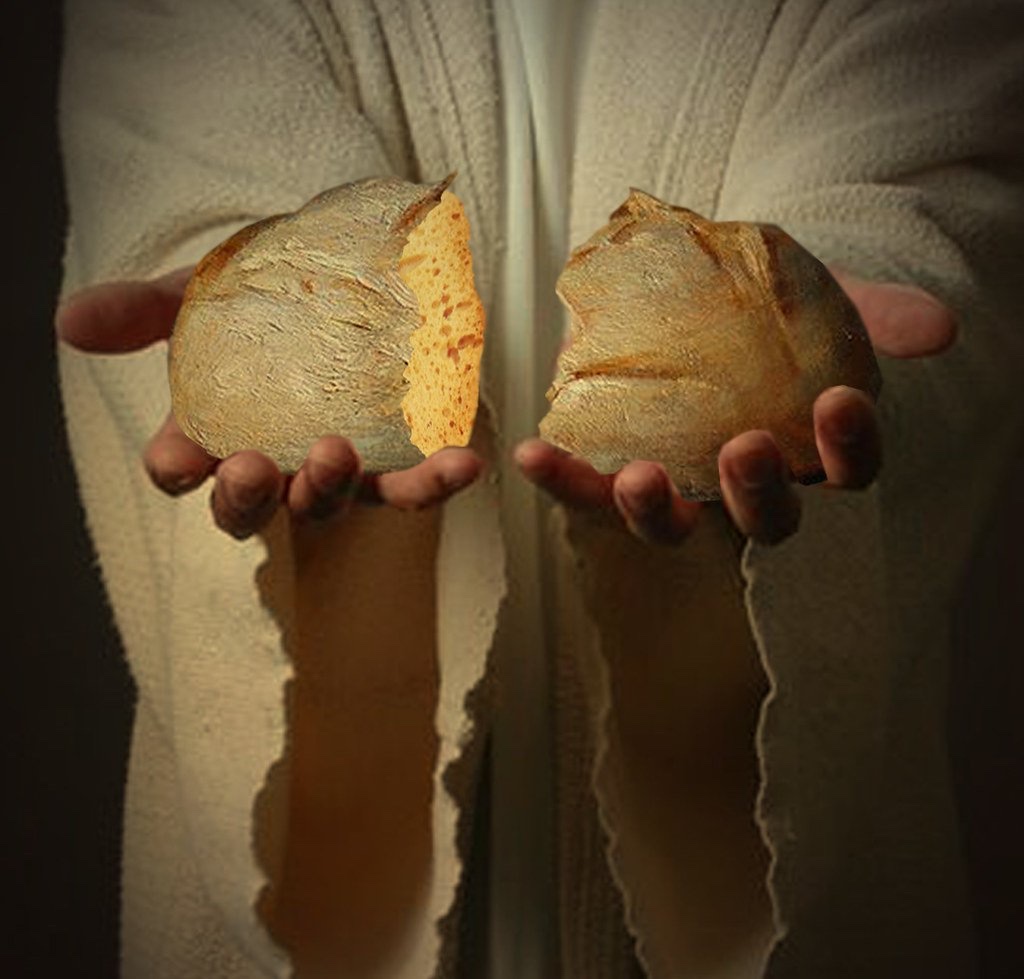
The apostles gathered around Jesus, and told him all that they had done and taught. He said to them, ‘Come away to a deserted place all by yourselves and rest a while.’ For many were coming and going, and they had no leisure even to eat. And they went away in the boat to a deserted place by themselves. Now many saw them going and recognized them, and they hurried there on foot from all the towns and arrived ahead of them. As he went ashore, he saw a great crowd; and he had compassion for them, because they were like sheep without a shepherd; and he began to teach them many things. When it grew late, his disciples came to him and said, ‘This is a deserted place, and the hour is now very late; send them away so that they may go into the surrounding country and villages and buy something for themselves to eat.’ But he answered them, ‘You give them something to eat.’ They said to him, ‘Are we to go and buy two hundred denarii worth of bread, and give it to them to eat?’ And he said to them, ‘How many loaves have you? Go and see.’ When they had found out, they said, ‘Five, and two fish.’ Then he ordered them to get all the people to sit down in groups on the green grass. So they sat down in groups of hundreds and of fifties. Taking the five loaves and the two fish, he looked up to heaven, and blessed and broke the loaves, and gave them to his disciples to set before the people; and he divided the two fish among them all. And all ate and were filled; and they took up twelve baskets full of broken pieces and of the fish. Those who had eaten the loaves numbered five thousand men.

The first century audience of Mark’s gospel were smarter than us in that they understood narrative techniques which are now considered the property of highly educated intellectuals, in this case the techniques of magical realism and inter- textuality. The first of these is common to the whole of Mark’s Gospel which narrates events which are improbable or impossible with the greatest realism. The purpose of this is to insist that some so-called ordinary events can change the world.

The second technique is seen in all the gospels when the writers note that something which is narrated of Jesus has links with passages in the Jewish Bible. Here Mark chooses to alert his readers by the use of two of the words I have shown in bold, shepherd and green grass. The great king David had been a shepherd and was known, as were his successors, as shepherd of his people. In the story immediately before this one, King Herod has been shown as unworthy of this title, as he has no care for his people and orders the killing of a prophet. The readers are meant to remember the story of Israel’s kings, and to agree with Jesus that the people are without a true shepherd and are looking for one anointed by God (messiah) to rule them.

But the words, “green grass”, tease the readers also to remember the green pastures of Psalm 23. The Greek word “chloros” is used both here and in the Greek translation of the Hebrew psalm, which would have been familiar to Mark, who wants his readers to have the whole psalm in mind as they read his story: The Lord is my shepherd….I shall lack nothing….(Jesus plays the role of shepherd) he leads me in the right paths (Jesus teaches the people) You have prepared a table before me….(Jesus feeds them) …my cup overflows…(There are 12 baskets of food left over). These similarities encourage the reader to trust that Jesus will also be with them when they walk through the valley of the shadow of death. Of course the Psalm is speaking of God, whereas Mark is speaking about a human being, Jesus, who is playing out on earth the role of God the Shepherd.

That’s why Mark describes a miracle; the presence of God in Jesus means that Israel has its true king, that the way of justice is taught, that the hungry are fed from what is already available. Mark doesn’t mean us to go behind the miracle in search of something more ordinary. He expected his first readers to know that these miracles had happened in their shared lives in the assemblies of believers. He wants them to realise that the source of these miracles is Jesus. How did Jesus bring them about?

Certainly not by any open display of divine power! But rather by the set of linked actions which I have shown in bold. First of all he “takes”. He does not despise what his disciples provide. More generally he does not reject worldly resources. Then he engages with the God who is beyond him and yet with him; he is not superman, he needs help. Out of this encounter he blesses the bread as a gift of God, our daily bread, which is sufficient for the needs of all. Then he breaks it, for it cannot remain whole; it must be shared out. Lastly he gives it through his disciples for the benefit of all, who are no longer a crowd, but little assemblies of people. The resemblance to the story of the last supper is obvious. The miracle is the life of Jesus Messiah, broken, given and shared in the community of brothers and sisters for the benefit of the world. Here the leftovers are enough to feed the 12 tribes of Israel; in the linked story of the feeding of 4000, the leftovers are enough for the 7(x10) nations of non-Jews.

Mark’s magic realism and his mixing his own text with the text of Psalm 23, allows him to communicate these truths so much more beautifully than I have.

This blog is a result of reading the unsettling replies of Zen Master Chao-Chou, while thinking about Jesus. Both of them were quick on their feet, and witty in their wisdom.

The Question about Paying Taxes

Here’s an episode from the Gospel of Mark chapter 12

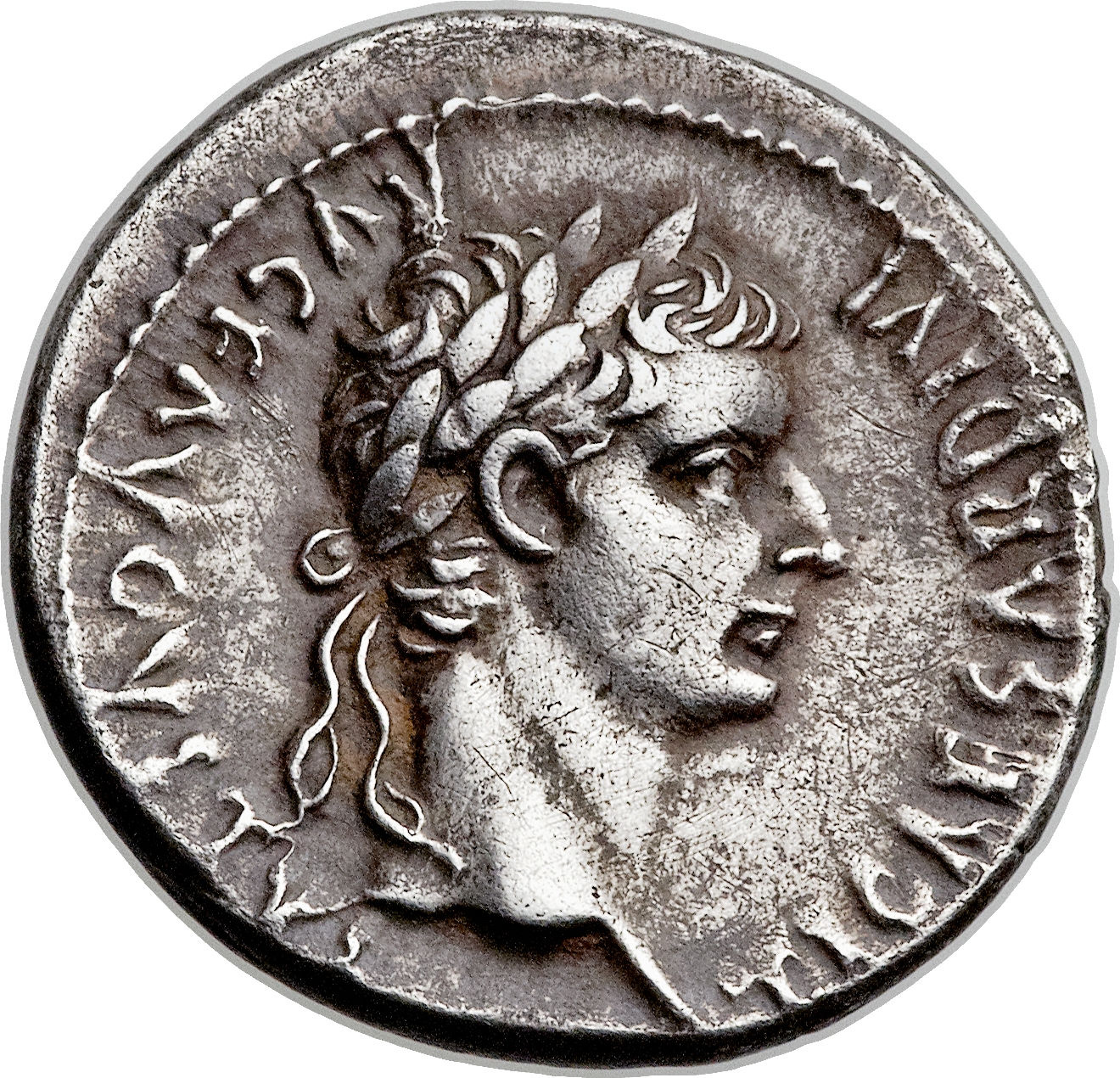
Then they sent to him some Pharisees and some Herodians to trap him in what he said. And they came and said to him, ‘Teacher, we know that you are sincere, and show deference to no one; for you do not regard people with partiality, but teach the way of God in accordance with truth. Is it lawful to pay taxes to the emperor, or not? Should we pay them, or should we not?’ But knowing their hypocrisy, he said to them, ‘Why are you putting me to the test? Bring me a denarius and let me see it.’ And they brought one. Then he said to them, ‘Whose head is this, and whose title?’ They answered, ‘The emperor’s.’ Jesus said to them, ‘Give to the emperor the things that are the emperor’s, and to God the things that are God’s.’ And they were utterly amazed at him.

Roman Denarius of Jesus’ time

The questioners were sure they could trap Jesus into looking like a Rome-lover (making him unpopular with patriotic Jews) or a dangerous radical (making him a legitimate target for the Roman administration). At first Jesus’ solution looks simply like a bit of smart repartee that got him out of a tight corner. But if we give it a little more consideration, it looks more profound.

Firstly, we should note that questioners were pushing Jesus towards a refusal of tax payments. That’s certainly the drift of their preface – “you don’t kow-tow to people in power”- encouraging Jesus to oppose the Emperor. This is interesting because it shows that Jesus’ preaching about God’s kingdom had political overtones.

Then we can recognise that “true Jews” would see the Roman denarius as the kind of “graven image” forbidden in the 10 commandments, and therefore never use it. Here, Jesus casual request shows that his questioners are not “true Jews” as they readily provide the coin.

Next, we can see that Jesus’ question is carefully worded: whose image and title are on it? His questioners give him the answer, the Emperor’s, which allows Jesus to advise giving the Emperor what belongs to him, and to God what belongs to God. But what belongs to God? Jesus’ audience, prompted by his language would have remembered the creation story in Genesis which teaches that men and women were created in the “image and likeness of God.” Jesus was reminding his questioners that the image of God is stamped on every human being, who therefore “belong to God.”

This is a stunning reply from a citizen of a country under foreign rule. It suggests that rather than becoming too tied up in the details of oppression – the Romans were taxing them for the privilege of being ruled by them – people should turn towards the source of liberation: they belong to God whose kingdom is even more extensive that that of Rome, and they should behave as citizens of that kingdom. Sure, this might involve actions as dangerous as tax evasion, but these would flow from an active assertion of divine citizenship rather than from a reaction to Rome’s imperialism.

It is quite clear that Jesus’ reply is not, as the protestant reformers taught, proposing a neat division between secular and religious realms. If ultimately the person belongs to God then the Emperor ought to walk carefully: the lives of people do not belong to him. And of course, all human beings, conscious of the divine image stamped on their lives, should hold their heads high in the face of emperor and all oppressive rulers. Jesus’ teaching is not an evasion of concrete action against oppression, but rather the basis of it.

I want to dedicate this blog to the members of the Hungarian Evangelical Fellowship, about which I wrote two blogs back, in recognition of their principled opposition to oppressive rule in their own country.

In the wake of attempted murder in Streatham by a young man steeped in a violent teaching which misuses the name of Islam, and the recent history in France of that same teaching, I could easily understand what led a French teenager called Mila to denounce Islam on social media, and then on national TV. She proclaimed herself an atheist and claimed the right to abuse any religion provided she didn’t abuse any person. I like the robust secularism of French law, preferring it to the imperial Christianity of the British law, or the piety of the US constitution, which asserts the equality of human beings with as much certainty as it permits the virtual slavery of so many of its citizens. I would like therefore, to approve Mila’s public attack on Islam but cannot, partly because she is attacking a violent distortion of Islam, and partly because of her give-away remark, “ I hate Islam, it’s a religion of hate.” It’s worth pausing just to appreciate the lovely absurdity of that sentence; and to hope that this spirited young person might also do so.

It is however true that from its earliest development Islam has been spread by conquest, and that non-violence as a moral commitment has no place in Islam so far. Sharia Law in a number of countries still demands very violent penalties for a range of crimes and especially for apostasy. If one listened too often to the hysterical violent outbursts of some Imams, one would get as poor a picture of Islam as one would of Christianity from listening to Trump-supporting evangelicals in the USA.

Tea drinking

Many Christian critics who have not read the Quran, and probably not much of their own Bible, have called Islam a violent religion. On behalf of them all, I have read and studied both, and can assure them, and my readers, that the Bible is incomparably more violent than the Quran. Indeed the God sometimes depicted in say, the books of Joshua or Samuel, is himself a violent thug. As a follower of Jesus I regard this depiction as simply wrong; a God who demands ethnic cleansing is not the ‘dear father’ of Jesus.

Research statistics in Europe and the USA show that a much smaller percentage of Moslems than of Christians are convicted of violent crimes or approve of the use of violence against civilian populations. If all citizens were as law-abiding as Moslems, UK costs of policing and prisons would be considerably less.

Religions, for better and for worse, come bearing the marks of their historic origins. How vital it is that believers interpret their holy books and traditional teachings in the light of the divine spirit who speaks in the present moment for the sake of the future. God is greater than the best human wisdom, but never less. A God who for example tells is to torture gays, is not the true God.

Religious people, often quite innocently, get trapped by their religious traditions.

The great Zen teacher Chao-Chou was visited at his retreat by a monk.

Have you been here before? He asked. The monk said, yes.

Have a cup of tea, said Chao- Chou. Another monk arrived.

Have you been here before, the teacher asked. The monk said, no.

Have a cup of tea, Chao-Chou said.

The Retreat Director hearing what the teacher had said, asked, I see why you said that to the first monk, but why did you say it to the second?

Director! said Chao-Chou

Yes, Teacher, said the Director.

Have a cup of tea, Chao-Chou said.

When we get too sure about our religious tradition, its theology or its laws, we need Chao-Chou to recall us to reality, to the blessed mystery of things as they are, and of ourselves, as we are.

It’s Brexit Day when the UK will boldly go from the European Union into the brave new world of unregulated capitalism, led by a small section of its population who may become wealthier, supported by a majority of poorer people who are likely to become poorer still. This is a needless folly. After all, as Jeremy Corbyn knew, the EU is a reasonably successful capitalist club, which provided, as he failed to recognise, some of the checks and balances that might keep at bay the self-destructive arrogance of the worshippers of “more” – more production, more goods, more purchases, more food….more CO2, more global warming, more severe weather events, more war, more death. The slogan of ‘taking back control’ by abandoning the institutions, laws and rules which have controlled the worst excesses of greed and nationalism, is a moronic oxymoron.

Yes, nationalism. Brexit also confirms me in a nationalism which I find morally distasteful. I am only proud of being Scottish because I have lived here most of my life. I do not imagine that I or my fellow Scots possess human qualities which are any better than those of say, Iranians or Congolese. Nor do I detest English people, whom I have found to be just as wonderful or vile as Scots. Yet English nationalism, combined with its determinative majority in the UK, has made me a separatist: I would rather be part of Europe than of the UK.

This saddens me, for I recognise that the nation state, which originated as the extended fiefdom of a bunch of aristocratic thugs, has made a huge contribution to human misery in every time and place. My Christian faith, moreover, schools me in belonging to a multi- national, multi-ethnic body which at its best promotes peace and justice.

This fact reminds me the the EU grew out of an appalled recognition of the damage done by nation states, and an attempt to forge broader and less damaging allegiances. It has been a unique attempt to overcome nationalism by fostering economic, cultural and personal ties. In being forced to leave this beneficial union, I want to give thanks for what it has done, and to commit myself a) to opposing the nationalism that has brought about Brexit b) to enjoying and maintaining the international friendships of the church, especially in Europe, and c) with great reluctance to promoting the independence of Scotland, as a preliminary to rejoining the EU.

Around Christmastime I read an article in the Guardian about the populist Christianity used by Hungarian President Victor Orban to bolster his very right-wing policies. He parrots the common neo- fascist myth that White Christian Civilisation is under threat from migrants, especially muslim migrants. He advertises himself as a saviour of the Christian tradition.

Ivanyi Gabor, (Gabor is his Christian name) , the president of the Hungarian Evangelical Fellowship, made a public declaration last year, denouncing Orban’s claims to Christianity, and upholding genuine discipleship of Jesus, who cared for the poor, the outcast and the stranger. It is unlikely to have increased Orban’s appreciation of Ivanyi who was once his close friend.

Ivanyi Gabor was remembering the Barmen Declaration of the anti- Nazi Confessing Church in Germany and the costly witness of Dietrich Bonhoeffer. He explicitly warned Orban and his party of the consequences of a politics of hatred against other races. In a democratic Europe we have become accustomed to various political philosophies and practices, which even if we disliked them, we saw as part of our liberal democracy. Now we are seeing in Hungary, Poland, Italy, Spain, France, Austria and The Netherlands, the rise of parties that question both liberalism and democracy itself. Typically, they are opposed to foreigners entering the nation from the outside and gays, transvestites, feminists and other “abnormal” people corrupting it from within. Their chosen language is prejudicial and brutal. Although such parties are small in the UK, the same brutality has been evident in some of the supporters of Brexit.

Ivanyi Gabor

Earlier in his life Ivanyi Gabor, now 70, was a leading activist against the Soviet-style communist rule in his country. Now he and his church are opposing a politics ,which he regards as equally dangerous in its love of “strong man” government and its intolerance of dissent. It is interesting that he and his church are doing this, not as fashionable liberals or fanatical revolutionaries, but as ordinary believers in the broad evangelical tradition of Christian teaching. They identify themselves as Methodists. The difference between them and larger denominations in Hungary such as Lutherans and Roman Catholics is not so much doctrinal as that they have seen a possibly demonic politics and faced it publicly with the gospel of Jesus.

Their faithfulness is a challenge to other European churches: how do they confront right-wing populism in their own countries, and how can they support the Evangelical Fellowship in Hungary, and each other?

It seems to me incontestable that Boris Johnson cultivated the support of English right-wing populists, but doubtful that he will govern according to their wishes. Boris is not Victor. Inasmuch however, as he owes his power to them, he may feel obliged to feed them. I hope that our churches will be inspired by Ivanyi Orban to offer a critical witness in the name of Jesus.

In this blog I am continuing my study of the imagination of faith, by turning to a typical passage of argument by St. Paul. You might think that, in comparison with the great visions examined in past blogs, argumentative material, especially by St.Paul would be relatively barren of imagination. I hope to persuade you otherwise. The passage below comes from the Corinthian correspondence, in which Paul is dealing with cliques amongst his converts, based on a kind of piety that elevated “knowledge” above mere trust in God, and favoured “strength” over “weakness.”

The message of the cross is daftness to those who are dying, but to those who are being rescued; it is the power of God. As Scripture says,

I will destroy the wisdom of the wise, and the opinion of the pundit I will disregard.

Show me the wise; show me the scholar; show me the intellectual of our times-God has turned their worldly wisdom into daftness; for since, in the wisdom of God, the world through its wisdom did not know him, it delighted God through the daftness of the Announcement, to rescue those who trust in him. Now Jews demand miracles and Greeks seek wisdom, but we announce a crucified Messiah, an obstacle to Jews and daft to Gentiles, but for those whom God has called, Jews and Greeks alike, a Messiah who is God’s power and God’s wisdom.

The daftness of God is wiser than human wisdom and the weakness of God is stronger than human strength.

Look at your calling, brothers and sisters: not many of you were wise by worldly standards, not many powerful, not many well-born; but God favoured the daft people of the world to shame the wise, and the weak people of the world to shame the strong. The low-born and disreputable people of the world, yes, people who barely exist, God has favoured, to bring to nothing the powers that be, so that no flesh and blood might boast in God’s presence.

The first thing to note is the shrewdness of Paul’ imagination. Although he was at a distance from Corinth , he imagined the kind of religious snobbery which looked down on ordinary believers as daft and weak in their simple faith, while preening itself on the possession of sophisticated knowledge. He imagined it and felt anger in sympathy with the ordinary believers. More than that, he imagined that God shared this anger. Of course, he had the example of the Hebrew prophets, who announced God’s anger in blunt terms. There may also have been a more personal impulse.

Paul had been a powerful Pharisee in his youth, full of religious knowledge and authority. As such he persecuted the Jews who trusted Jesus as Messiah, thinking that they were ignorant and of no account. He attributed his conversion to a revelation of Jesus as son of God,  but surely the suffering faith of his victims led him  to that turning point. Looking back he must have felt anger towards his knowledgeable, powerful, past self.

In the midst of this argument he makes the imaginative leap of creating a daft and powerless God. How could he have done so in the face of a Jewish tradition which saw God as supremely powerful, and a Greek tradition that identified deity with wisdom? Only through the story of the crucified Messiah and the suffering of his followers. He was aware of how offensive this was to Jews, and how crazy it seemed to Greeks, but he was happy to trust Jesus Messiah as the power and the wisdom of God; of a God, that is, whose true nature had never before been imagined.

Not many in the history of Christendom understood or approved of Paul’s daring theology; most resumed the image of God as supremely prudent and powerful.  But in modern times, under pressure of terrible events, both Jewish theologians like Abraham Heschel and Christian ones like Dietrich Bonhoeffer rediscovered the suffering God, who is weak and daft to worldly eyes, but whose persuasive love moves the universe. Events pushed them towards a new appreciation of Paul’s invention. Amongst others, theologians who use the process philosophy of Alfred North Whitehead have further developed a theology of the weakness of God. The last sentence of my extract from Paul has been particularly cherished by liberation theologians who believe that God has chosen people who barely exist to bring to nothing the powers that be.

The writings of Paul are proof that imaginative faith is not limited to the inspired prophets but is central to the work of reasoning about God. His invention of the daft God is just as impressive as Ezekiel’s divine chariot or John’s  Destruction of Babylon.


I had followed the news of the collapse of Jamie’s Italian restaurant empire, but didn’t grasp the whole story until I saw the picture of the Tudor mansion into which Jamie is currently moving his family. It looks a nice home for his wife and five children, but I wonder how this move will appeal to the 1000 or so former employees of Jamie who lost their livelihoods in the collapse of the business. I have no dislike of Jamie, nor do I judge him personally responsible for the plight of a thousand people, but I do see this event as a revelation of the evil of our current economic system. Priti Patel and other baby faced killers will of course see nothing wrong with what has happened, it’s the way capitalism works after all, rewarding those who work hard and wisely, and punishing those who don’t.

9E5DB935-4023-44B7-AB68-7FB756DA0979

Except that’s not how it works at all. In this instance it’s clear that although doubtless Jamie worked hard, he – or his advisors- wasn’t all that wise, falling into the temptation to expand in pursuit of bigger profits when the market was unable to sustain it in the longer term. He made a number of mistakes, the consequences of which I’m sure he regrets. When he expresses his concern for his former employees, I’m sure he is sincere. But because he is a successful possessor of capital, the results of this collapse are bearable (!) for him and his family, while for those who are dependent on wages, the results are disastrous. That’s a revelation which applies to all possessors of capital and all those dependent on waged labour. The words of Jesus directed at spiritual gains are precisely true of our economic system: “to those who have, more will be given; from those who have not, will be taken even the little they have.”

Note that this evil is not brought about by ill-will on the part of Jamie, who has at least as much social conscience as any owner of capital, but rather by the inevitable dynamics of the system itself, which tends towards the enrichment of rich people and the impoverishment of the poor. This bias in the economic system is evident in how it deals with the climate crisis. We should not be fooled when the president of the USA denies climate change. That’s camouflage. He is already planning – see his talk of buying Greenland- to make sure that the resources of poorer, smaller countries will be added to the resources of which his own country has been so careless. That’s how the system works. People may want to oppose it, and may even act against it, but they are working against the odds.

I don’t like writing about this truth. indeed I don’t like thinking about it. But it is already inscribed in the lives of Jamie and his family on the one hand, and those of his former employees on the other. Of course the world can be improved by programmes of social care and justice –  these are necessary to ameliorate the effects of the system – but they don’t touch the system itself, which does not exist by magic but by the compliance of all of us who are part of it. My pension comes from capital funds which make money for me because somewhere else, someone is not adequately paid for their work or their land. Profit always depends on someone being screwed, even if, in some cases, they like it.

Karl Marx understood this more than 150 years ago, describing the mechanisms of capital with love and accuracy. His own remedies, however, and even more those of his totalitarian disciples, created some of the worst tyrannies in history. But his democratic disciples, in Scandinavia and particularly in the Britain of 1945 -1960, created some of the best and most equal societies in history. They did so, not by abolishing capitalism as such, but by controlling its power for the common good.

This should be a clue for us, that as long as we have no vision of how to replace capitalism, we should determine to control it, without mercy, so that we cease to kow-tow to the Jamies (and much worse) of society, and give more power to the people he made redundant. I think many people would vote for such a programme, which might also be welcomed by religious people, for as Jesus said, “You cannot serve God and Capital.”


The greatest challenge that Bonhoeffer throws at the believer is when he states that “the New Testament is not the mythological clothing of a universal truth: the mythological – miracles, resurrection- are the real thing, only they must be interpreted in a non-religious way.”

I guess many have reacted as I have: great, but how exactly is this to be done?

Bonhoeffer defines religion as the practice of finding God in human weakness and at the margins of life, rather than in human strength and at the centre of life. Religion rests on the religious “a priori” of the existence of God. He sees Christian faith as accidentally caught up in religion, interpreting Paul’s struggle against the Jewish religious Law as a struggle for freedom from religion. If God has come to us in the weakness of Jesus, the man for others, we no longer have to seek God but have rather to share God’s weakness in the world.

So, how can we interpret, say, Jesus’ miracles, in a non-religious way?

1. Recognise that the miracles are not historical facts, but stories told by four different authors. Their meaning is embedded in the narrative of each Gospel.

2. Do not attempt to get behind what is often assumed to be naive credulity on the part of the writer, as for example, by explaining the miracle of the loaves and fishes as a spontaneous sharing of hitherto concealed resources by the crowd. That makes Jesus into an encourager of good behaviour. Mark however is making a contrast between King Herod, who consumes his people (the death of John the Baptist) and King Jesus who feeds his people. John on the other hand, wants to depict Jesus as the “bread of life, the true bread from heaven that nourishes human beings. In both cases the miraculous event is accepted as such by the author because it marks the presence of God in Jesus.

3. Do not then insist that we have to believe the miracle took place in the world as narrated. That’s the mistake of fundamentalism. But we do have to believe that it happens as narrated, IN THE STORY. We must not imagine ourselves to be wiser than the biblical author any more that we would think ourselves wiser than Tolstoy.

4. Does that mean we give up any direct relationship between the gospels and the historical events of Jesus’ life? Indeed,do we admit that Jesus is just a character in a book? Not at all. We note that the gospel writers want to communicate the gospel about a person who lived in history. Their united witness is that the person was a healer. Their different stories try to communicate the truth of his healings for readers who only have access to these events through their stories. If we look clearly at the differences amongst the four gospels, we can see that the authors allowed themselves a good deal of freedom in handling the traditions about Jesus. Perhaps the traditions themselves were already the result of such freedom.

5. See that the miracle stories of the gospels contradict the dominant narrative of Judaeo- Roman society in which power and stake holders are important and to be recognised, whereas the poor, the sick and the foreigner and their needs are considered negligible. The gospel miracles on the other hand show that God working through Jesus sees them as his dear children and is delighted to meet their needs. The stories subvert both the Roman imperial narrative and the Jewish religious narrative revealing the poor, the sinful, the needy, the outcast and the foreigner as key actors in God’s story.

6. Already the gospel writers were re-telling the miracle stories of Jesus for their societies which were different from his. We must find ways of re-telling them for our societies now, so that their critical and liberating power may be evident.